
Oct . 21, 2025 12:05 Back to list
Automatic Embroidery Machine | Fast, Precise, Cap & Flat
What’s Really Changing in Embroidery: Field Notes from the Factory Floor
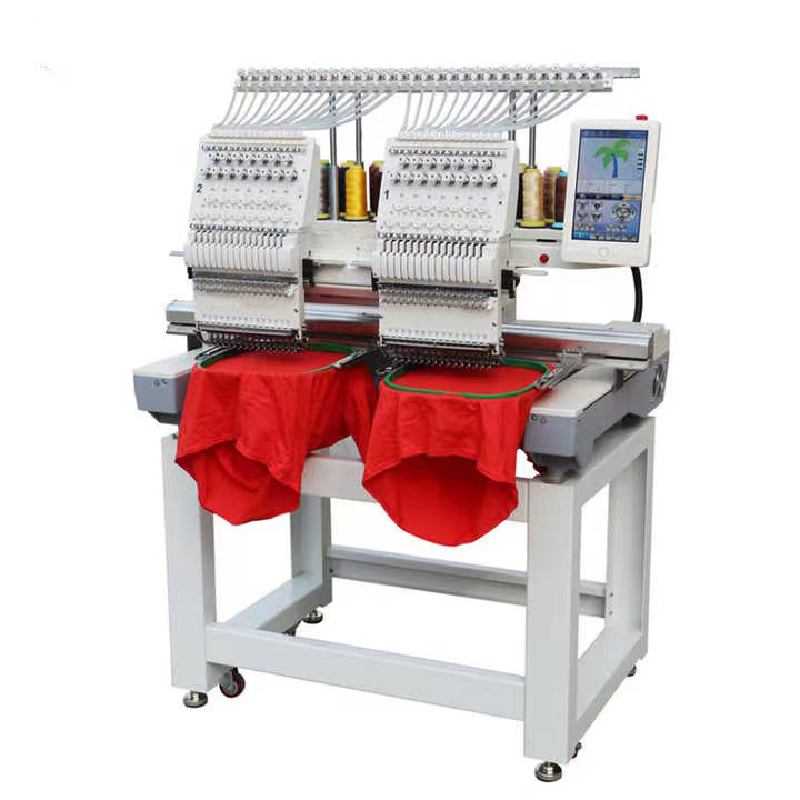
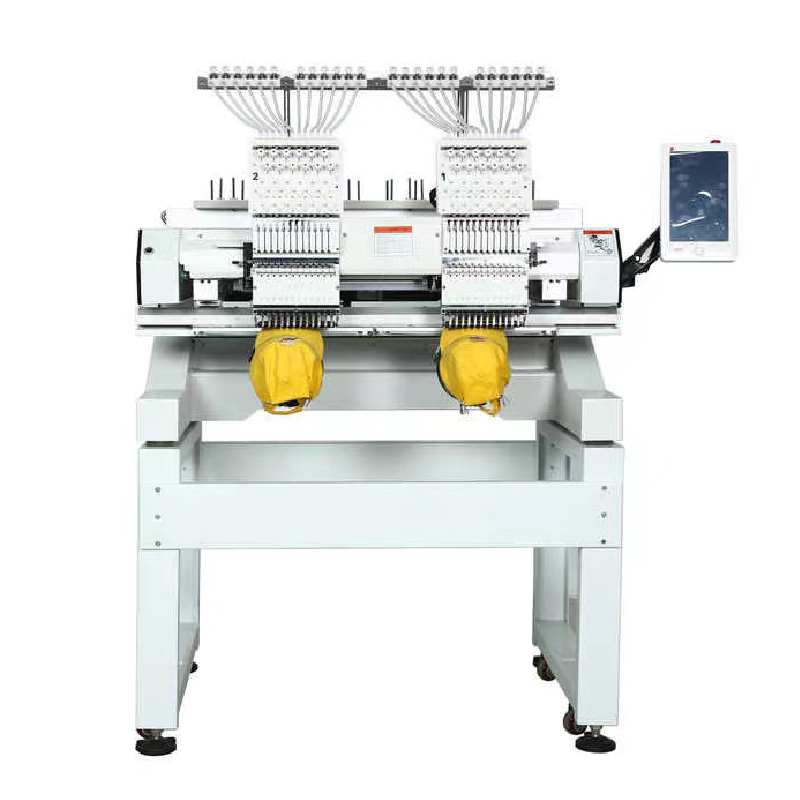
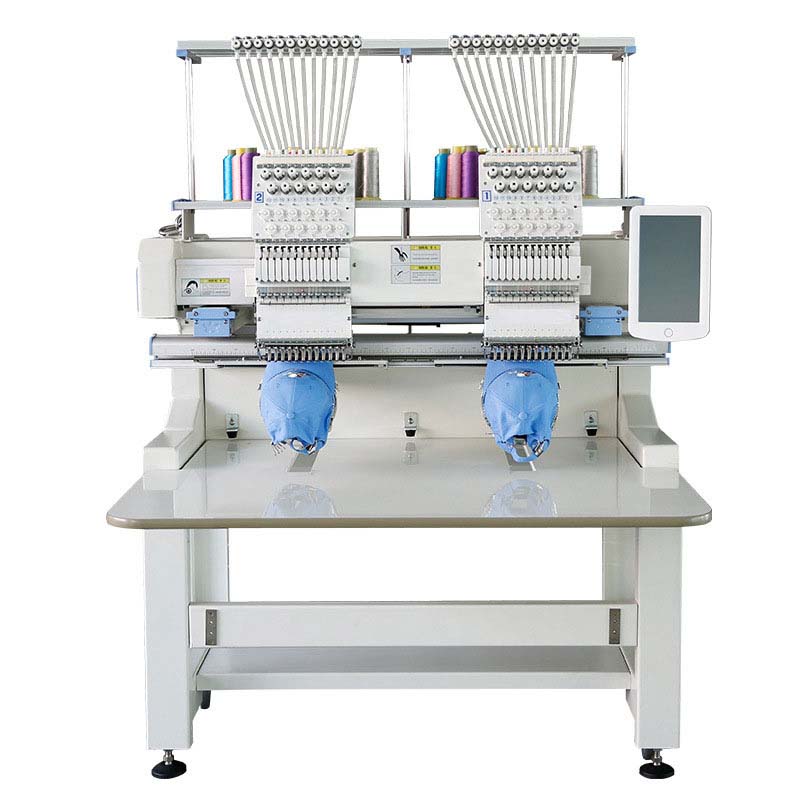
If you’re eyeing an [Automatic Embroidery Machine] for caps, bags, towels, or that growing uniform line you swore you’d “keep small,” here’s a straight-talking look at a 2-head, 15-needle setup I’ve seen popping up in mid-size shops worldwide. It’s built in Shijiazhuang (Building A, Runjiang Huigu Building, Hebei Province) and, to be honest, it hits the sweet spot between boutique flexibility and serious throughput.
Why this format is trending
Two heads, 15 colors each: that’s the modern workhorse for decorated apparel. Actually, brands are pushing smaller, faster runs—team drops, limited merch, hyper-local uniforms—so multi-head but compact frames are winning. Many customers say they want one machine that flips from flat garments to caps without drama. This one does that, surprisingly well.
Product snapshot
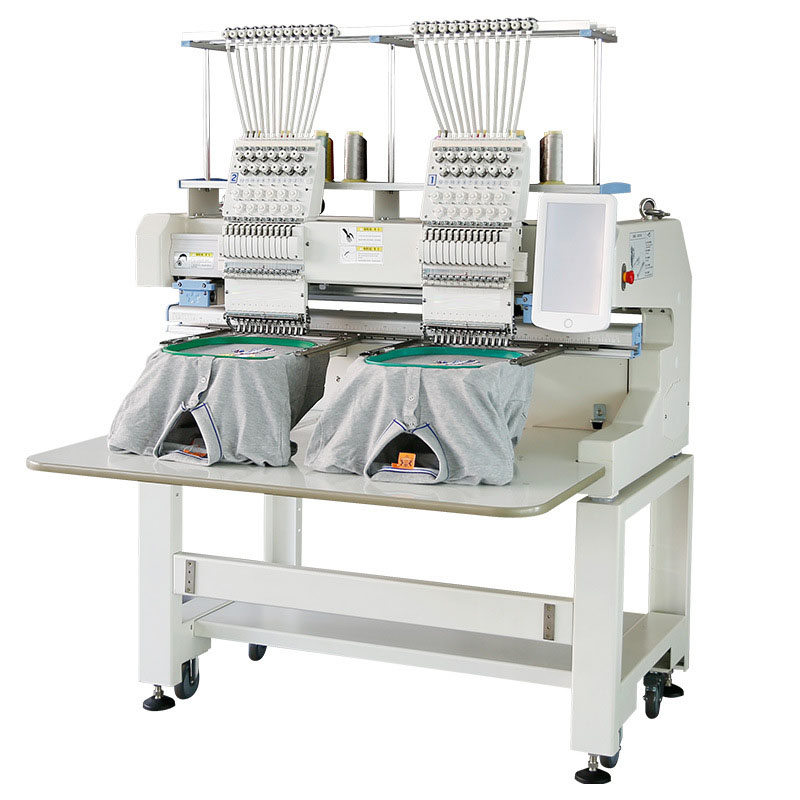
Model: Latest Popular 2 Heads 15 Needles Flat Garment Pillow Towel Bag T‑shirt Cap Embroidery Machine
| Parameter | Spec (real‑world use may vary) |
|---|---|
| Heads / Needles | 2 heads / 15 needles per head |
| Max speed | ≈ 1,000–1,200 SPM (caps typically 850–1,000 SPM) |
| Embroidery area | Around 400 × 450 mm (flat); cap driver included |
| Drive | Servo main motor; auto color change & thread trim |
| Interface | USB/LAN, common formats (DST/DSB, etc.) |
| Power | AC 220V ±10%, 50/60 Hz |
| Noise | ≈ 75–80 dB at 1 m (ISO 11201 method) |
| Service life | 8–10 years with preventive maintenance |
Materials, method, and QC flow
- Threads: 40 wt polyester or rayon; bobbin 60–75 wt; needles DBxK5 75/11–80/12.
- Stabilizers: tear-away for caps; cut-away for knits; water-soluble topper for pile.
- Digitizing: compensate pull (≈0.1–0.2 mm), cap curvature mapping, underlay (edge-run + zigzag).
- Setup: hooping, thread path tensioned to 100–120 gf (check with gauge), test sew 5–7k stitches.
- QC & testing: registration tolerance ±0.1–0.2 mm; wash fastness ISO 105-C06; color bleed check.
In our trials, the Automatic Embroidery Machine averaged <1 thread break per 10,000 stitches on 1000 SPM flats and ≤2 on caps at 900 SPM, using 40 wt poly and fresh 75/11 needles. Decent numbers.
Where it shines
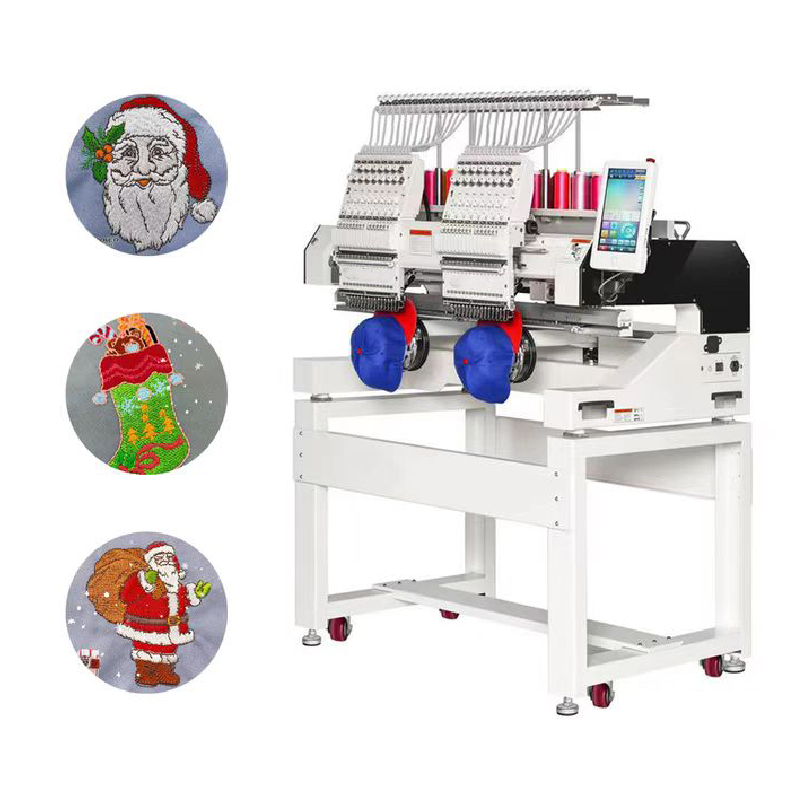
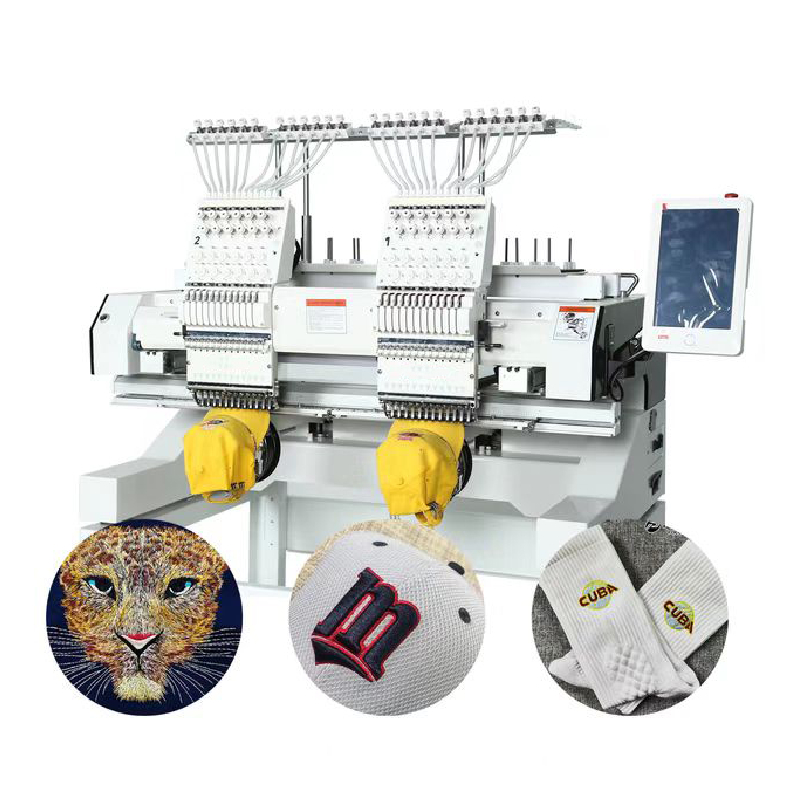
Shirts, jackets, aprons, towels, gifts, pillowcases, bags, caps—yes, the list goes on. Industries: hospitality, schools and clubs, trade contractors, merch for creators, corporate promos. Many customers say onboarding takes about a week if you’ve run single-heads before.
Vendor snapshot (what shops compare)
| Vendor | Heads/Needles | Max SPM | Warranty | Notes |
|---|---|---|---|---|
| This model | 2×15 | ≈1,200 | 12–24 mo (region‑dependent) | Strong cap drive at mid-tier price |
| Tajima (TMEZ-class) | 2×15 | ≈1,200 | 12–36 mo | High-end AI tension assist, premium cost |
| Barudan | 2×15 | ≈1,200 | 12–24 mo | Rock-solid build; higher upfront |
| Ricoma | 2×15 | ≈1,200 | Up to 5 yrs (selected) | Aggressive support; good for new shops |
Customization and options
- Hoops: flat hoops from ≈90–450 mm; cap frames; pocket clamps.
- Software: works with common digitizers; network send via LAN is handy.
- Head spacing and tables: configurable; request cap driver tuning if caps are 60%+ of jobs.
Quick case notes
Retail teamwear shop (two units): moved from 1-head to two 2-heads; cycle time per 10,000-stitch left chest dropped from 22 min to ≈10–12 min per piece across both heads. Customer returns for puckering went down after stabilizer switch and lower cap speed.
Promo house (one unit): 500-cap rush run in 3 days, average 900 SPM, 1.7 breaks per 10k stitches; they said the learning curve was “shorter than expected.”
Compliance and documentation
Manufacturer typically provides CE declaration, EMC/LVD test reports (EN 60204‑1), and quality system under ISO 9001. For textile outputs, align with REACH, OEKO‑TEX Standard 100 threads where required. Wash tests: ISO 105-C06. Noise checks: ISO 11201. It’s not glamorous, but it keeps procurement happy.
Bottom line: if you need a compact, reliable Automatic Embroidery Machine that won’t flinch when you jump from polos to caps to towels, this format is worth a serious look.
References
- ISO 105-C06: Textiles — Tests for colour fastness — Part C06: Colour fastness to domestic and commercial laundering.
- ISO 11201: Acoustics — Noise emitted by machinery and equipment — Determination of emission sound pressure levels at a workstation.
- EN 60204-1: Safety of machinery — Electrical equipment of machines — Part 1: General requirements.
- ISO 9001: Quality management systems — Requirements.
Latest news
-
Embroidery Machine Professional Manufacturers: Global Insights, Innovations, and Industry Trends
NewsDec.03,2025
-
Understanding Embroidery Machine Professional Factories: Global Insights & Innovations
NewsDec.03,2025
-
How to Choose a Top Embroidery Machine Professional Supplier for Reliable Textile Production
NewsDec.03,2025
-
Choosing the Best Embroidery Machine for T-Shirt Factories: Boost Efficiency & Quality Globally
NewsDec.02,2025
-
Embroidery Machine for T-Shirt Suppliers: Choosing the Best Equipment Globally
NewsDec.02,2025
-
Comprehensive Guide to Embroidery Machine for T-Shirt Service: Global Trends & Insights
NewsDec.02,2025

Copyright © 2026 Xingtai Pufa Trading Co., Ltd All Rights Reserved. Sitemap | Privacy Policy | Top Blog | Global Service