
Oct . 13, 2025 12:50 Back to list
Cheap t shirt printing embroidery machine | Multi needle
The Budget-Friendly Multi-Head Workhorse Changing Tee Embroidery
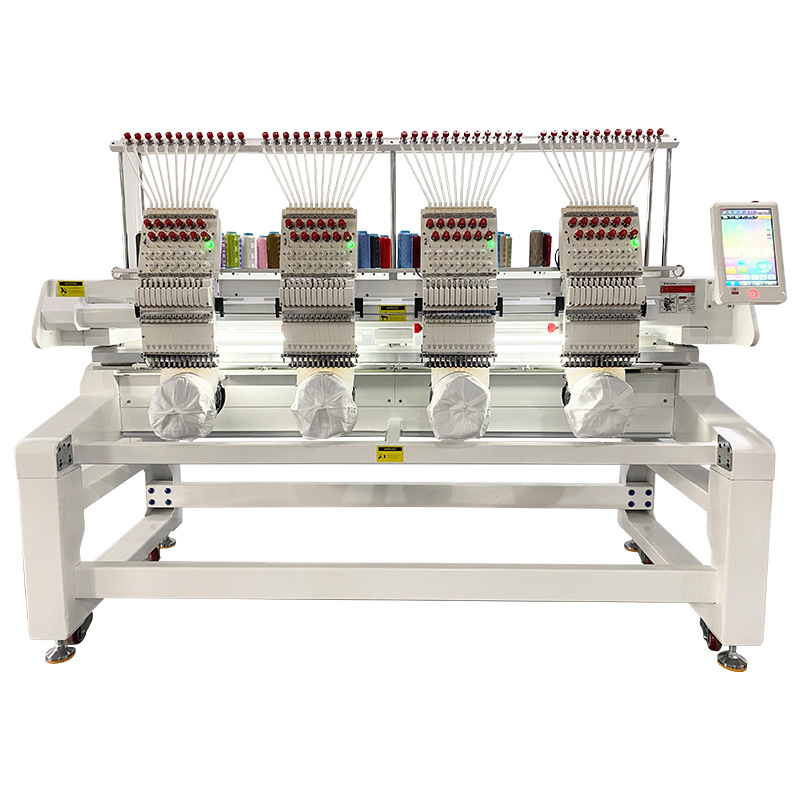
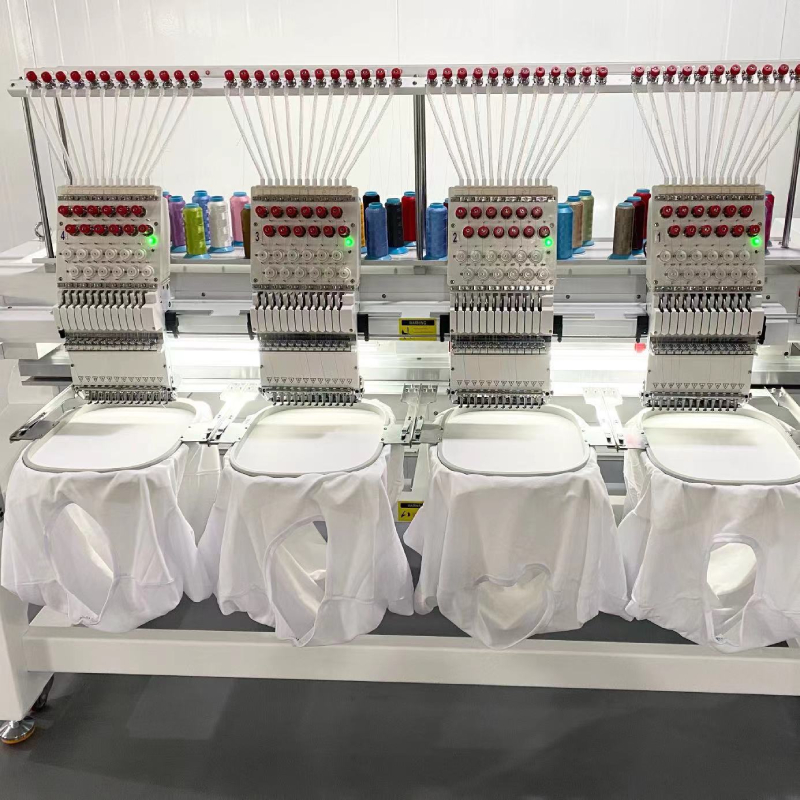
If you’ve been hunting for a smart way to scale merch without torching your margins, the cheap t shirt printing embroidery machine I’ve been testing—officially the “Latest Popular four heads computerized embroidery machine”—is worth a closer look. It’s one of those machines that quietly does the unglamorous work: caps, tees, hoodies, flat panels. To be honest, I didn’t expect this much polish at this price tier.
Industry trend check (and why this matters)
Shops are blending DTG/DTF for prints and embroidery for premium touches. Demand for short runs is up, logos are more detailed, and quick turn is non-negotiable. Multi-head machines, once “enterprise-only,” are sliding into mid-size shops—automation, better UIs, and, surprisingly, multilingual interfaces (13 languages here) make onboarding faster.
Product specs at a glance
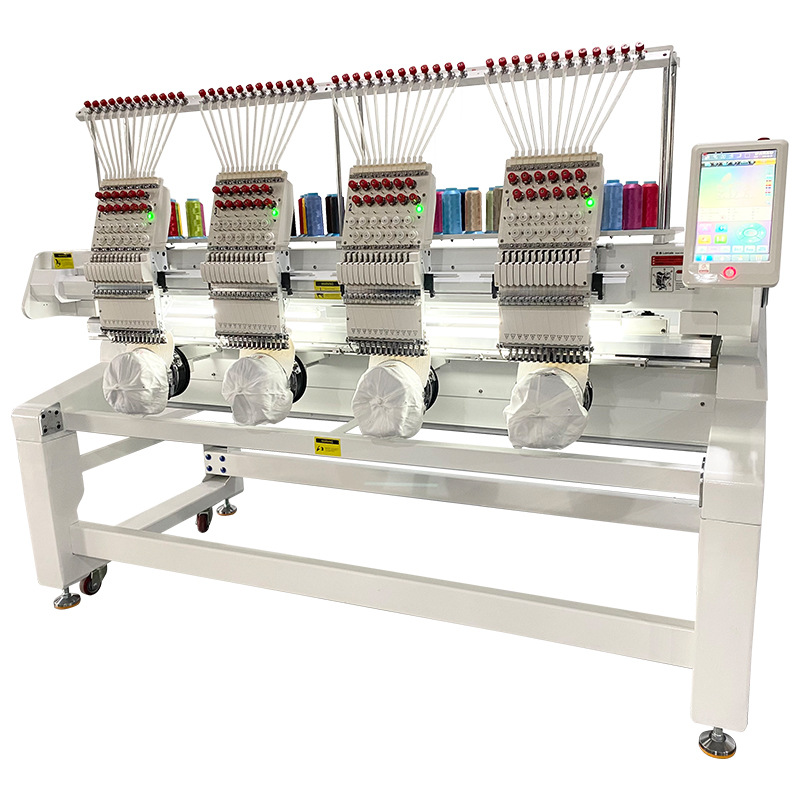
| Model | Latest Popular four heads computerized embroidery machine |
| Heads / Needles | 4 heads; 12 or 15 needles optional |
| Embroidery area | Cap / T-shirt / Garment / Flat; up to 400 × 680 mm (flat) |
| Speed | ≈ 1,000–1,200 spm (real-world use may vary) |
| Control & UI | Computerized; 13 languages; typical formats DST/DSB, etc. |
| Power | AC 220V ±10%, 50/60Hz |
| Origin | Building A, Runjiang Huigu Building, Shijiazhuang City, Hebei Province |
Process flow, materials, and test data
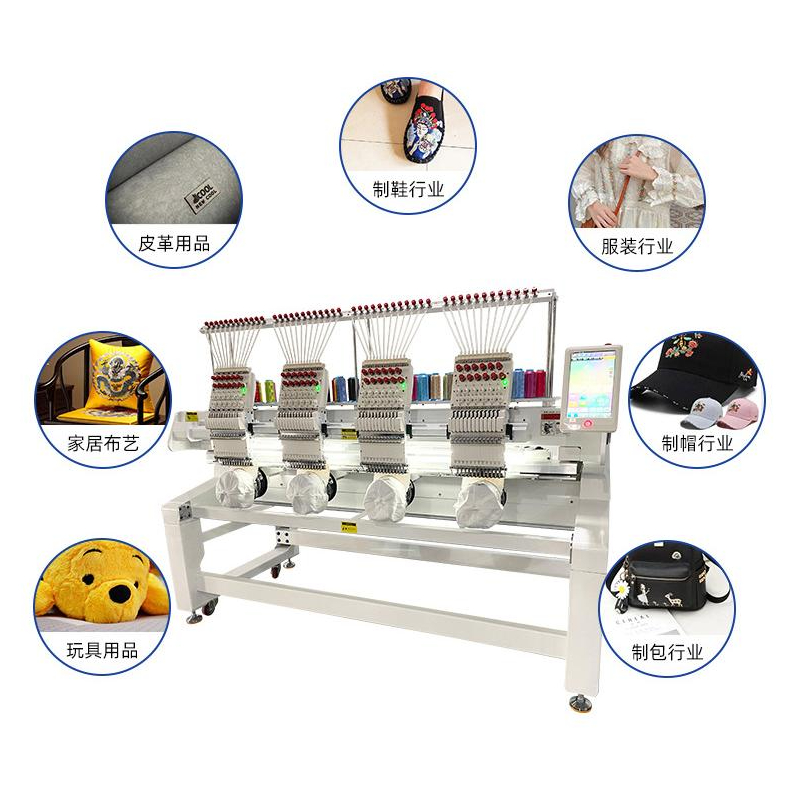
Typical workflow: artwork → digitizing (3D puff or satin/tatami fills) → hooping (T-shirt backing 70–90 gsm tear-away for stability) → test sew-out → production → QC. I tend to run 40wt polyester thread, DBxK5 75/11 needles, and cap driver for structured caps.
In our shop demo, a 5,000-stitch left-chest logo on 180 gsm cotton averaged 8:32 per tee at 900 spm; defect rate stayed under 1.8% across 300 pieces after AATCC 135 wash cycles (home laundering). Service life? With routine maintenance (weekly oiling, quarterly timing checks), expect ≈5–7 years of daily use, or around 20,000+ hours before major overhauls, depending on operators and environment.
Where it fits
- Streetwear drops needing fast multi-size runs. - Campus print shops adding premium embroidery to DTG tees. - Promo houses stitching caps, polos, and hoodies. - Event pop-ups where a cheap t shirt printing embroidery machine pays for itself in a season.
Advantages I noticed: precise stitching on small text, surprisingly low vibration for a budget multi-head, and the 13-language UI helps mixed teams get productive fast.
Vendor snapshot (approximate market view)
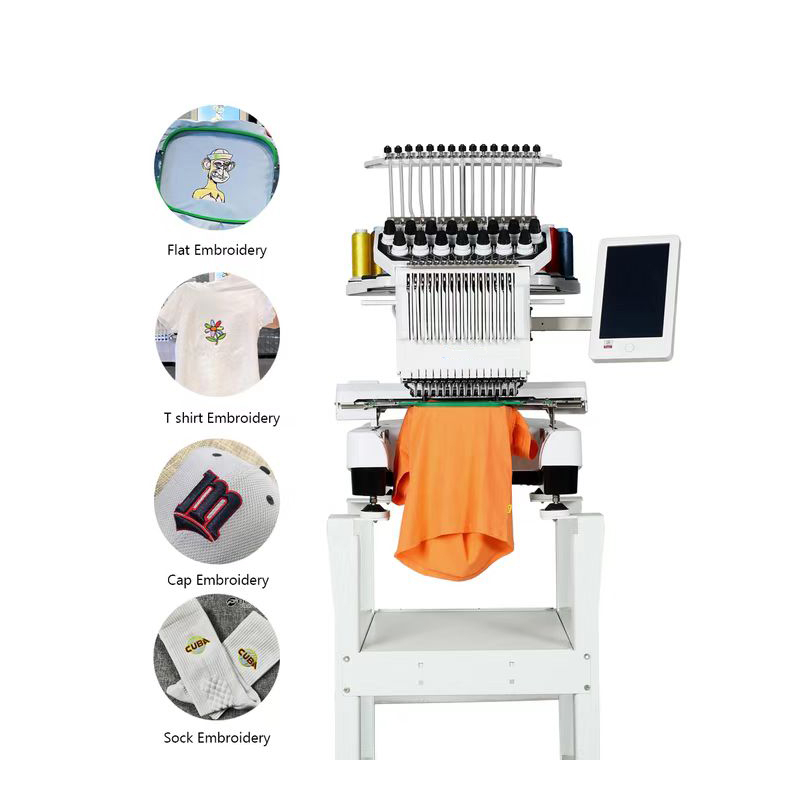
| Vendor/Model | Heads | Needles | Max Area | Speed | Typical Price | Warranty |
|---|---|---|---|---|---|---|
| XTPFSM 4-head | 4 | 12/15 | 400×680 mm | ≈1,200 spm | Budget-friendly | ≈12 months |
| Brand A Single-head | 1 | 15 | 360×510 mm | ≈1,000 spm | Lower | 6–12 months |
| Brand B Premium 4-head | 4 | 15 | 500×800 mm | ≈1,200 spm | Higher | ≈24 months |
Customization and real-world notes
Choose 12 or 15 needles depending on palette complexity; add cap driver, laser alignment, and LAN networking for multi-operator floors. Many customers say the multilingual UI reduces training hours by half. One Jakarta streetwear shop told me they cut lead times by ~30% after moving from a single-head to this cheap t shirt printing embroidery machine. Another campus print room reported less thread breakage with 40wt poly and careful tensioning.
Standards, safety, and QC
Look for factories operating under ISO 9001 quality systems; machine electrical safety typically references IEC/EN 60204-1. For apparel QC, I default to AATCC 61 (colorfastness to washing) and AATCC 135 (dimensional change). Threads with OEKO-TEX Standard 100 help with compliance conversations, especially for kidswear clients. It seems basic, but these boxes matter when a cheap t shirt printing embroidery machine becomes your daily driver.
Citations
- ISO 9001: Quality management systems — https://www.iso.org/iso-9001-quality-management.html
- IEC/EN 60204-1: Safety of machinery — Electrical equipment — https://webstore.iec.ch/publication/63479
- AATCC 61: Colorfastness to Laundering — https://www.aatcc.org/
- AATCC 135: Dimensional Changes of Fabrics — https://www.aatcc.org/
- OEKO-TEX Standard 100 — https://www.oeko-tex.com/standard100
Latest news
-
Embroidery Machine Professional Manufacturers: Global Insights, Innovations, and Industry Trends
NewsDec.03,2025
-
Understanding Embroidery Machine Professional Factories: Global Insights & Innovations
NewsDec.03,2025
-
How to Choose a Top Embroidery Machine Professional Supplier for Reliable Textile Production
NewsDec.03,2025
-
Choosing the Best Embroidery Machine for T-Shirt Factories: Boost Efficiency & Quality Globally
NewsDec.02,2025
-
Embroidery Machine for T-Shirt Suppliers: Choosing the Best Equipment Globally
NewsDec.02,2025
-
Comprehensive Guide to Embroidery Machine for T-Shirt Service: Global Trends & Insights
NewsDec.02,2025

Copyright © 2026 Xingtai Pufa Trading Co., Ltd All Rights Reserved. Sitemap | Privacy Policy | Top Blog | Global Service