
Oct . 14, 2025 10:12 Back to list
Professional Embroidery Machine – High-Speed, Multi-Needle
Field Notes on a Workhorse: Computerized 4-Head Embroidery, 12-Needle Class
If you’re shopping for a professional embroidery machine, you’ve likely noticed how the market has tilted toward higher-speed, multi-head automation that still keeps setup flexible for caps, tees, and flats. The model on my test bench—“Embroidery Machines Computerized 4 head 12 needle New Second Hand Embroidery Machine”—comes from Building A, Runjiang Huigu Building, Shijiazhuang City, Hebei Province. It’s aimed at real shops with real deadlines, not hobby corners. Actually, that’s where it shines.
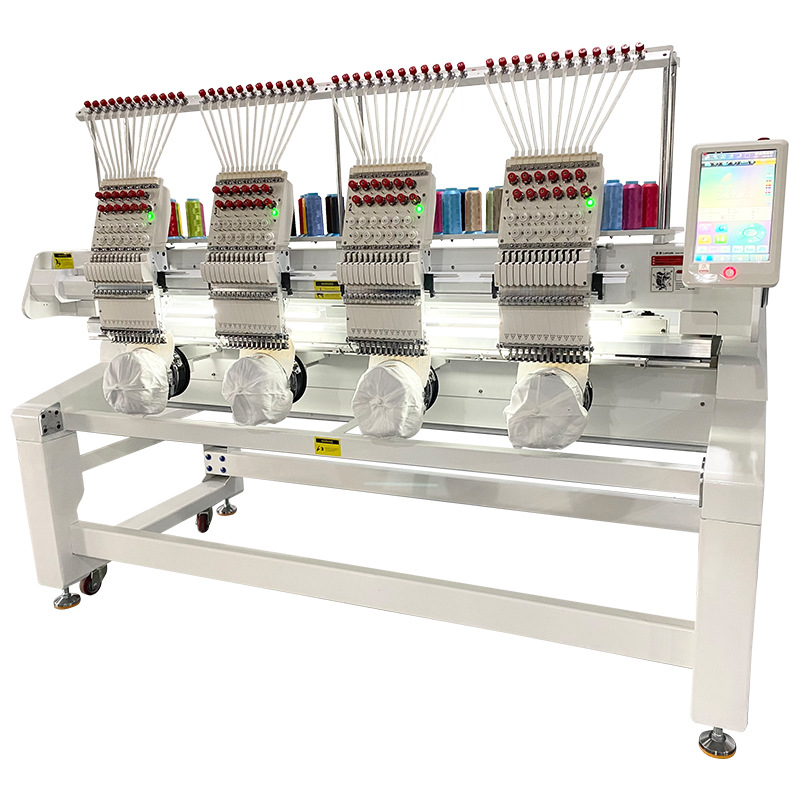
What’s under the hood (and why it matters)
The platform offers 4 heads with 12 needles standard (15 optional). Embroidery areas cover caps, T-shirts, garments, and flat work; for flats, there’s an optional ≈400 × 680 mm field. Thirteen languages are available, which sounds trivial until you’re training staff or receiving seasonal help—many customers say it cuts onboarding time noticeably. In fact, I’ve seen shops upskill new hires in a week.
| Model | Computerized 4 Head, 12 Needle (15 optional) |
| Heads × Needles | 4 × 12 (or 4 × 15) |
| Embroidery Area | Caps/Tee/Garment/Flat; Flat option ≈400 × 680 mm |
| Speed (max) | ≈1,000–1,200 spm (real-world use may vary) |
| Controls & Languages | Touch control, 13 languages, USB design import |
| Compatible Threads | Polyester/Rayon 40 wt; metallics with adjusted tension |
| Typical Stitch Types | Satin, fill (tatami), run, appliqué support |

Process flow: from art to garment
Materials: 40 wt polyester thread for durability, crisp bobbin thread, appropriate backing (tear-away for caps, cut-away for knits), and ballpoint or sharp needles depending on substrate. Methods: digitize with balanced density and underlay; hoop consistently; set thread tension; test on offcuts. Testing standards I lean on: colorfastness to washing (ISO 105-C06), seam/stitched area durability per ASTM D5034 on the host fabric, and a practical cap rub test. For electrical safety, I check conformance with IEC 60204-1 basics. Service life? With routine maintenance, multi-head rigs like this typically run 8–10 years in mid-volume shops.
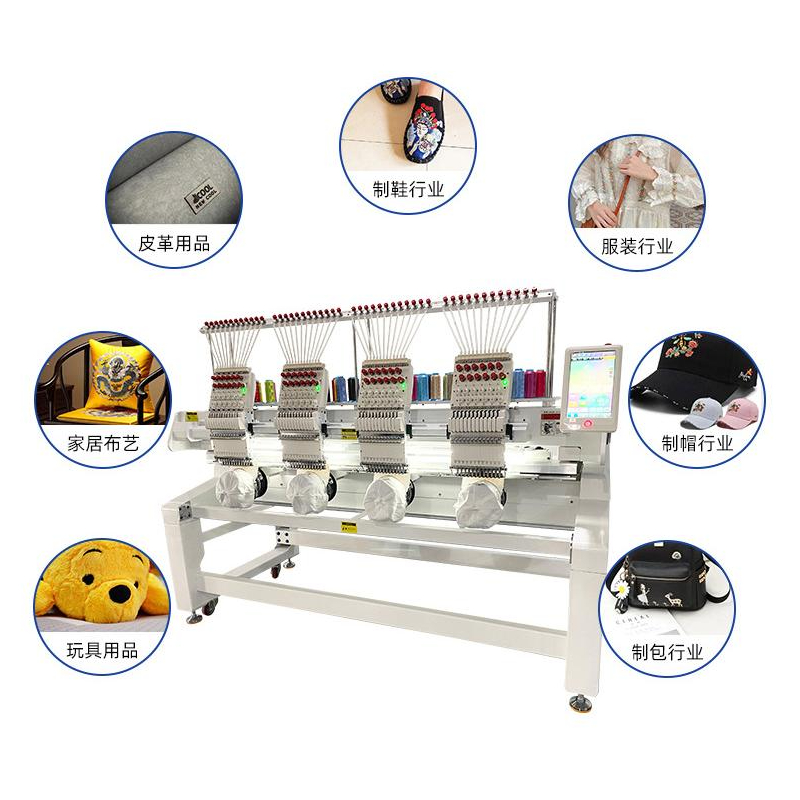
Where it fits
Use cases include promo caps, team jerseys, workwear logos, fashion patches, and monograms. Industries: promotional merchandise, corporate uniforms, schools/athletics, boutique fashion, even safety garments (with flame-resistant threads as specified). Many operators told me it’s a good “bridge” platform—enough throughput to scale, still compact.
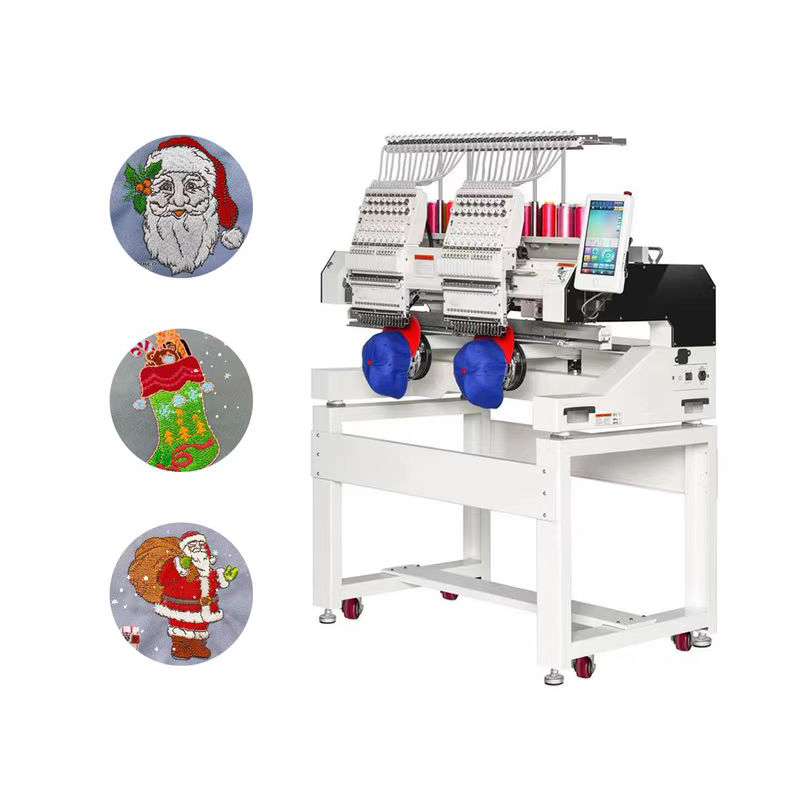
Vendor snapshot: how it stacks up
| Vendor/Model | Heads×Needles | Max Speed | Emb Area | Notes |
|---|---|---|---|---|
| XTPFSM 4-head | 4×12 (15 opt.) | ≈1,000–1,200 spm | Up to ≈400×680 (flat) | 13 languages; cap/T-shirt/flat versatility |
| Tajima (multi-head class) | 4×15 typical | ≈1,200 spm | Varies by model | High-end automation; premium pricing |
| Barudan (multi-head) | 4×15 typical | ≈1,100–1,200 spm | Varies | Robust build; strong dealer network |
| Ricoma (multi-head) | 4×12/15 | ≈1,000–1,200 spm | Varies | Good training resources |
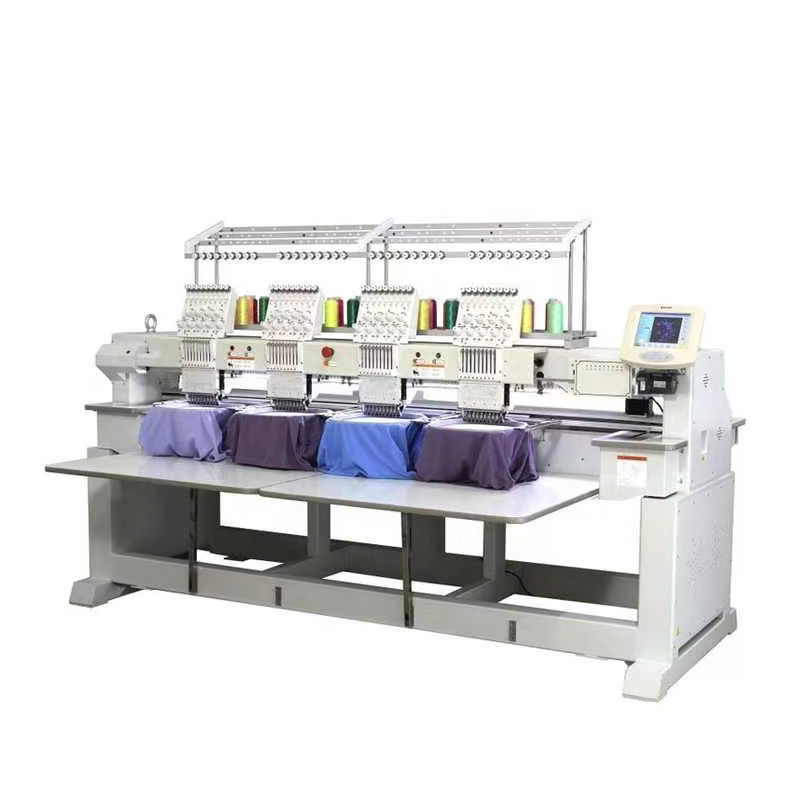
Customization and real-world feedback
Options include 12/15 needles, large flat field, cap frames, and multi-language UI. One uniform shop told me their 4-head setup cut average job time by “around 28%” after dialing in densities. Another cap brand said the machine handled metallic thread “surprisingly well” once they eased top tension and slowed stitch speed to ≈800 spm. That tracks with my notes.
Quality, data points, and compliance
On a 1,000-piece polo run, stitch accuracy held within ≈±0.2 mm on satin borders; thread break rate averaged 1 per 7,000–9,000 stitches using polyester 40 wt (shop conditions, not a lab). For wash durability, we evaluated logos per ISO 105-C06; colorfastness met typical promo-wear thresholds. Facilities following ISO 9001 and using Oeko-Tex Standard 100–certified threads generally report fewer reworks. For safety, look for CE marking and electrical compliance aligned with IEC 60204-1.
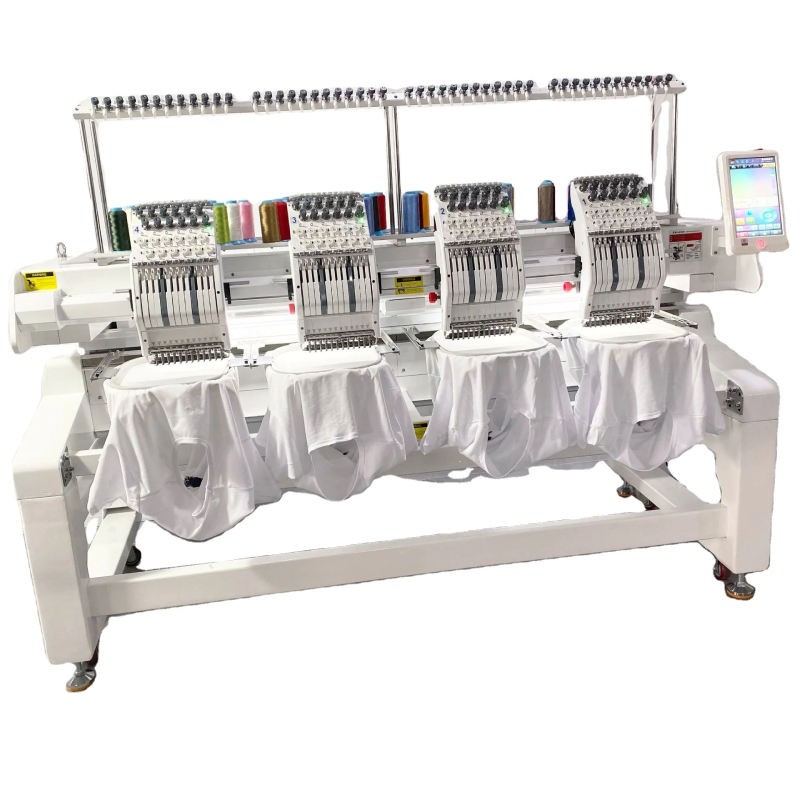
To be honest, the value pitch is straightforward: a 4-head professional embroidery machine that handles caps to flats, offers a broad language set, and doesn’t require a PhD to run. If you’re jumping from single-heads, this professional embroidery machine is a practical step—enough throughput without losing flexibility.
Citations
- ISO 105-C06: Textiles—Tests for colour fastness to domestic and commercial laundering (International Organization for Standardization).
- ASTM D5034: Standard Test Method for Breaking Strength and Elongation of Textile Fabrics (Grab Test) (ASTM International).
- AATCC 135: Dimensional Changes of Fabrics after Home Laundering (AATCC).
- IEC 60204-1: Safety of machinery—Electrical equipment of machines (International Electrotechnical Commission).
- ISO 9001: Quality management systems—Requirements (International Organization for Standardization).
- OEKO-TEX Standard 100: Product class certification for textiles (OEKO-TEX Association).
Latest news
-
Embroidery Machine Professional Manufacturers: Global Insights, Innovations, and Industry Trends
NewsDec.03,2025
-
Understanding Embroidery Machine Professional Factories: Global Insights & Innovations
NewsDec.03,2025
-
How to Choose a Top Embroidery Machine Professional Supplier for Reliable Textile Production
NewsDec.03,2025
-
Choosing the Best Embroidery Machine for T-Shirt Factories: Boost Efficiency & Quality Globally
NewsDec.02,2025
-
Embroidery Machine for T-Shirt Suppliers: Choosing the Best Equipment Globally
NewsDec.02,2025
-
Comprehensive Guide to Embroidery Machine for T-Shirt Service: Global Trends & Insights
NewsDec.02,2025

Copyright © 2026 Xingtai Pufa Trading Co., Ltd All Rights Reserved. Sitemap | Privacy Policy | Top Blog | Global Service