
Oct . 24, 2025 12:55 Back to list
Cheap T Shirt Printing Embroidery Machine - Fast & Reliable
Field Notes on an Affordable Workhorse for Merch Makers
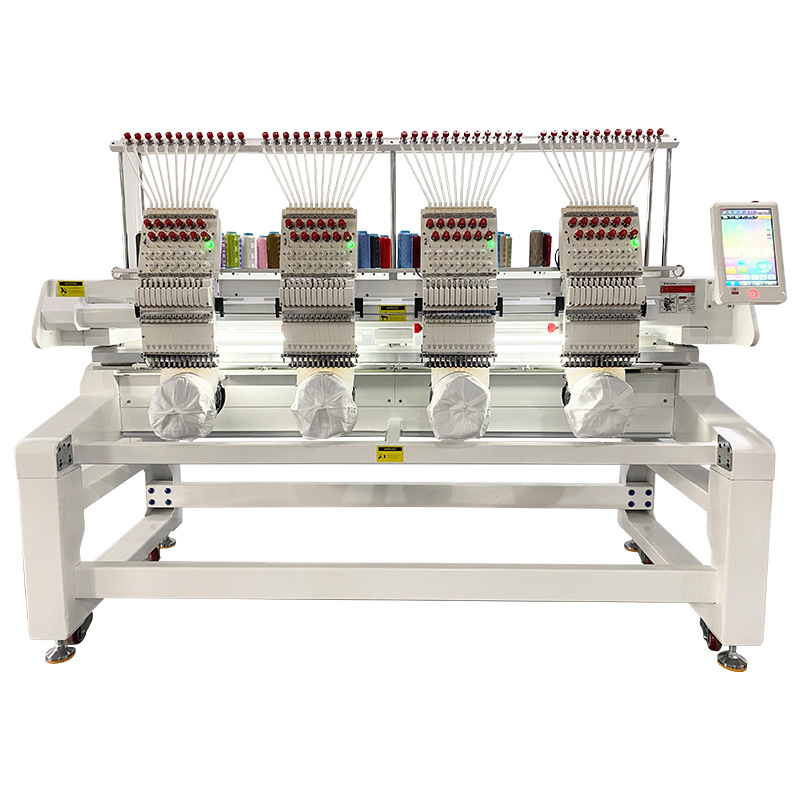
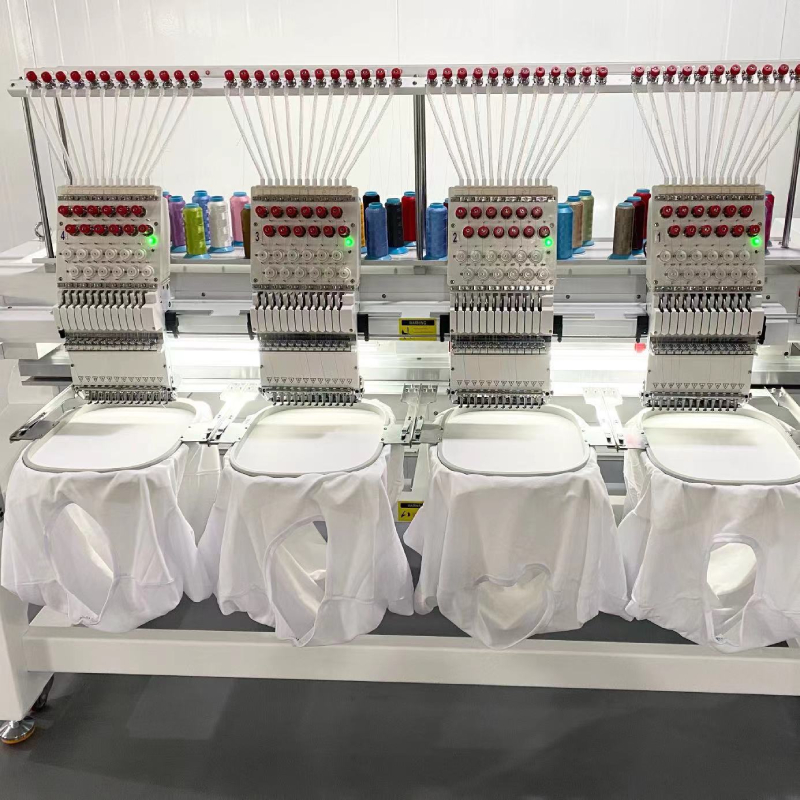
If you’ve been shopping for a Cheap T Shirt Printing Embroidery Machine, you’ve probably seen wild claims and glossy videos. Here’s the grounded version. I spent a week talking with shop owners and combing through spec sheets for the “Latest Popular four heads computerized embroidery machine with their precise stitching and fast production speed.” It’s built in Building A, Runjiang Huigu Building, Shijiazhuang City, Hebei Province, and—surprisingly—has the right mix of capacity and pragmatism for caps, tees, and flat panels. To be honest, the value proposition is what caught my eye first.
What’s inside the machine (in plain English)
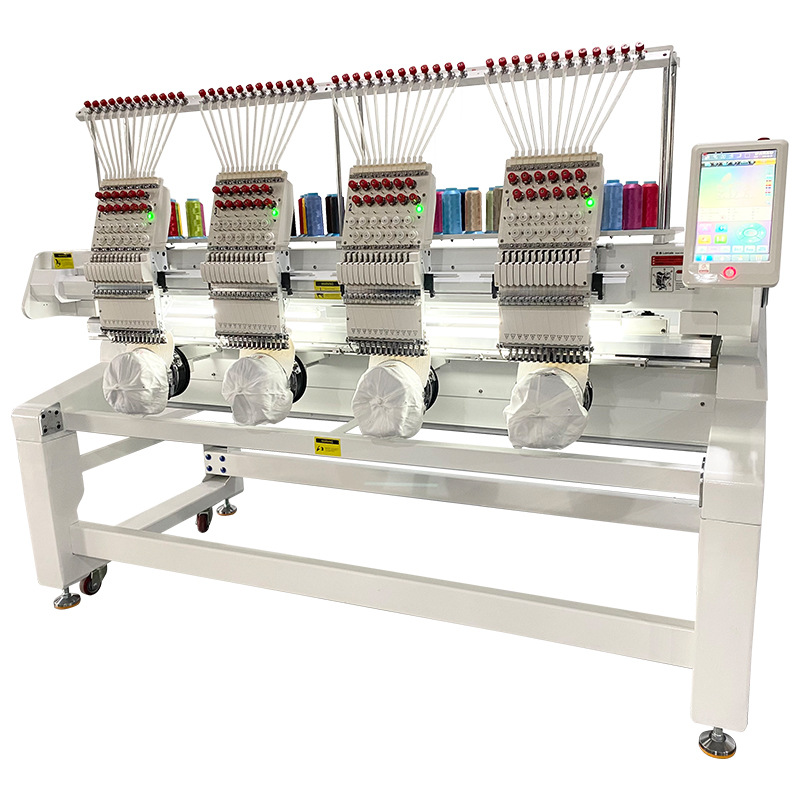
Four heads. Optional 12 or 15 needles per head. An embroidery area suited for caps, T‑shirts, garments, and flat embroidery; plus an optional ≈400 × 680 mm flat area for larger pieces. Multilingual UI (13 languages), which, as one Bali-based operator told me, “saved us hours in onboarding.” The control is straightforward: load design, set tension, hoop carefully, test stitch, then run production.
| Spec | Details (≈ real-world) |
|---|---|
| Heads / Needles | 4 heads; 12 or 15 needles optional |
| Embroidery Area | Cap/Tee/Garment standard; flat up to ≈400 × 680 mm |
| Stitch Speed | ≈ 850–1,200 spm (depends on fabric/design) |
| File Formats | DST, DSB (common formats) |
| Languages | 13 languages for global operators |
| Power & Safety | CE-style compliance; IEC 60204-1 aligned (vendor docs) |
Process flow, materials, and testing (how shops really run)
Materials: 40wt polyester thread (colorfast for washes), rayon thread for sheen, bobbins pre-wound, stabilizers (tear‑away for caps; cut‑away for stretch tees), needles #75/11 or #80/12.
Methods: digitize (underlay + density; pull compensation), hoop snug (no drum-tight distortion), thread path check, tension test, 10–20 stitch-out for registration, then production batches.
Testing standards: wash fastness to ISO 105‑C06; thread strength per ISO 2062; dimensional stability per AATCC 135. Shops report ≈1–2% reject rate after tuning—reasonable for entry to mid-tier machines.
Service life: around 8–10 years with quarterly maintenance (oiling daily, lint removal per shift, belt check each season).
Where it shines (and where it doesn’t)
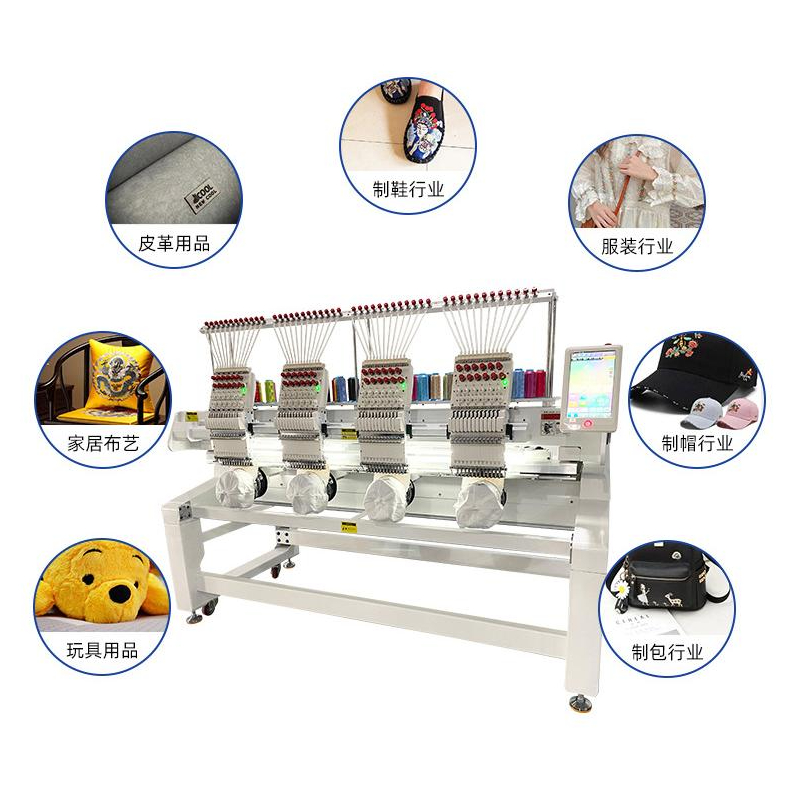
- Best for: campus shops, streetwear drops, team uniforms, promo agencies, Etsy-to-retail upgrades.
- Complex metallic thread or 3D foam? It can, but plan slower speeds and more test stitches.
- Many customers say the 13-language UI reduces training time; I guess that’s easy to overlook until you hire seasonals.
Vendor comparison (price-to-output matters)
| Vendor | Heads/Needles | Area | Speed | Certs | Warranty |
|---|---|---|---|---|---|
| This model (Cheap T Shirt Printing Embroidery Machine) | 4 / 12–15 | Up to ≈400×680 mm flat | ≈850–1,200 spm | CE style, ISO 9001 at supplier | ≈12–24 months (varies) |
| Generic Brand A | 2 / 12 | ≈360×500 mm | ≈700–900 spm | Basic EMC | 6–12 months |
| Brand B (premium) | 4 / 15 | ≈450×700 mm | ≈1,200 spm | CE/EMC/UL | 24–36 months |
Customization, support, and real-world wins
Options include cap drivers, tubular hoops, flat tables, 12/15-needle configs, and the larger 400×680 bed. The multilingual UI (13 languages) is a quiet superpower for mixed teams.
Case study 1: a UK streetwear label ran 3,000 caps in two weeks, reporting ≈1.3% redo after tension tuning. Case study 2: a campus print shop hit 500 tees/day peak, with ISO 105‑C06 wash tests passing at 40°C.
Feedback? “Fast enough without scaring the fabric,” one operator said. That about sums it up.
Compliance note: look for CE marking and EMC reports (e.g., EN 55032/55014). Electrical safety aligned to IEC 60204‑1 is a good sign. Thread/fabric safety: OEKO‑TEX certified threads help when selling babywear.
Bottom line: as a Cheap T Shirt Printing Embroidery Machine, this 4‑head unit balances price, multilingual usability, and a respectable flat area. It isn’t magic—just reliable throughput when you feed it good digitizing and sensible stabilizers.
References
Latest news
-
Embroidery Machine Professional Manufacturers: Global Insights, Innovations, and Industry Trends
NewsDec.03,2025
-
Understanding Embroidery Machine Professional Factories: Global Insights & Innovations
NewsDec.03,2025
-
How to Choose a Top Embroidery Machine Professional Supplier for Reliable Textile Production
NewsDec.03,2025
-
Choosing the Best Embroidery Machine for T-Shirt Factories: Boost Efficiency & Quality Globally
NewsDec.02,2025
-
Embroidery Machine for T-Shirt Suppliers: Choosing the Best Equipment Globally
NewsDec.02,2025
-
Comprehensive Guide to Embroidery Machine for T-Shirt Service: Global Trends & Insights
NewsDec.02,2025

Copyright © 2026 Xingtai Pufa Trading Co., Ltd All Rights Reserved. Sitemap | Privacy Policy | Top Blog | Global Service