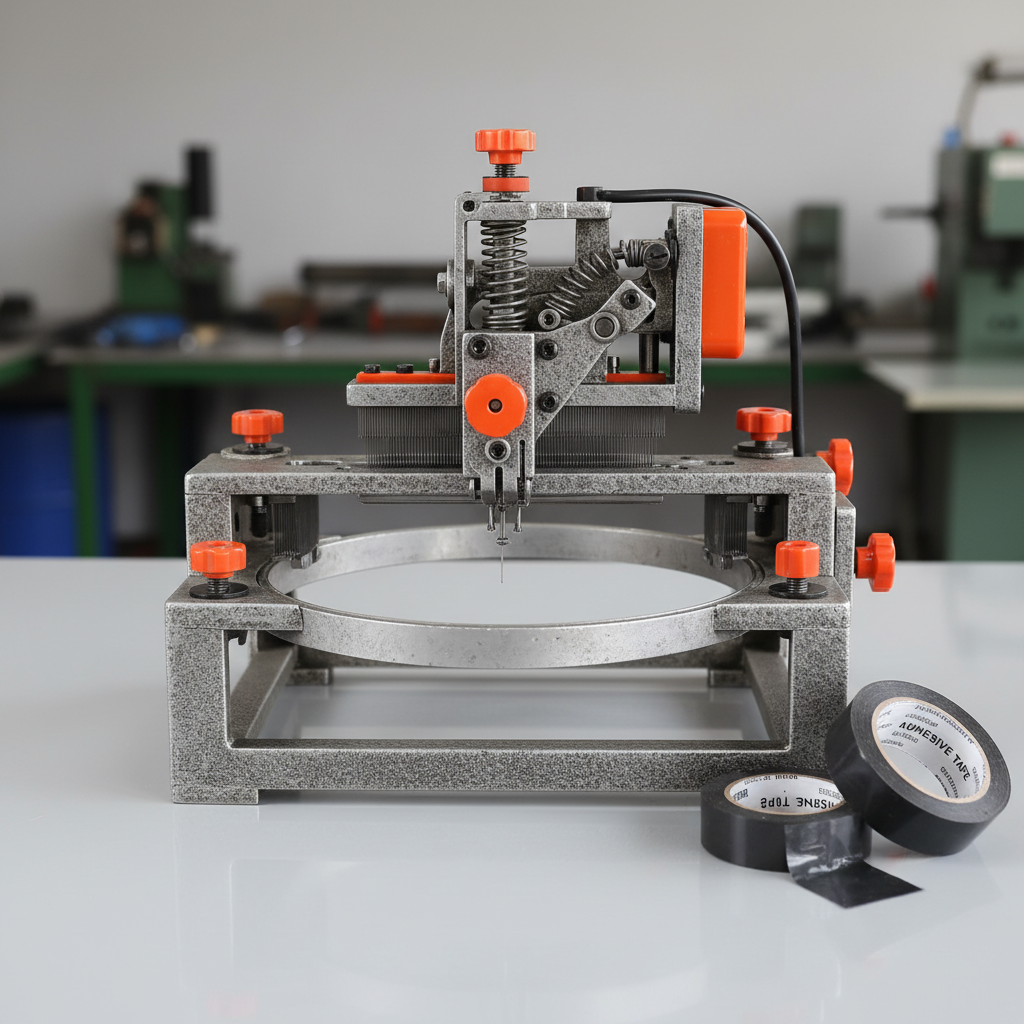
Honestly, the whole industry's gone wild for lightweighting lately. Everything has to be thinner, lighter, stronger. It’s… exhausting. You go to a site, and everyone’s talking about carbon fiber this and magnesium alloy that. Seems like nobody remembers that stuff has to be workable, not just look good on a spec sheet.
Have you noticed how everyone designs these things with these ridiculously complex mounting points? It looks amazing in CAD, but then you get a guy on site with a wrench, and it’s a nightmare. I encountered this at a factory in Ningbo last time, they’d designed a bracket that needed, no exaggeration, six different bolt sizes. Six! Why?! Just simplify things. Less to carry, less to lose, less to strip the threads on.
And don't even get me started on the adhesives. They promise the world, but half the time they just peel off in the rain.
The Rising Demand for Advanced Embroidery Machine
To be honest, the embroidery machine market's been on a tear the last few years. It's not just the clothing industry anymore; you're seeing demand from automotive for interior detailing, from bespoke furniture makers, even from artists doing textile installations. The demand for high-precision, multi-needle machines is way up.
Strangely, a lot of the new players coming into the market seem to think it's all about software. They build a fancy interface, but then skimp on the mechanical parts. You end up with something that looks slick but can't handle a full day of continuous operation. That’s a shortcut to disaster, believe me.
Design Pitfalls in Embroidery Machine Construction
I’ve seen so many designs with unnecessarily complex thread paths. You’ve got loops and curves that just invite tangles. A simple, direct path is always best, even if it doesn't look as elegant on a drawing. And the tension mechanisms... don't even get me started. Too many adjustments, too many tiny screws. It's a recipe for frustration.
Another thing: cooling. These machines generate a lot of heat, especially the high-speed models. I saw one design where the cooling fan was positioned so poorly it was just blowing hot air back onto the control board. It lasted about an hour.
Anyway, I think a lot of designers forget that these machines aren't going into a showroom; they're going into workshops, into small factories, and they need to be robust enough to withstand a bit of abuse.
Material Selection for Robust Embroidery Machine
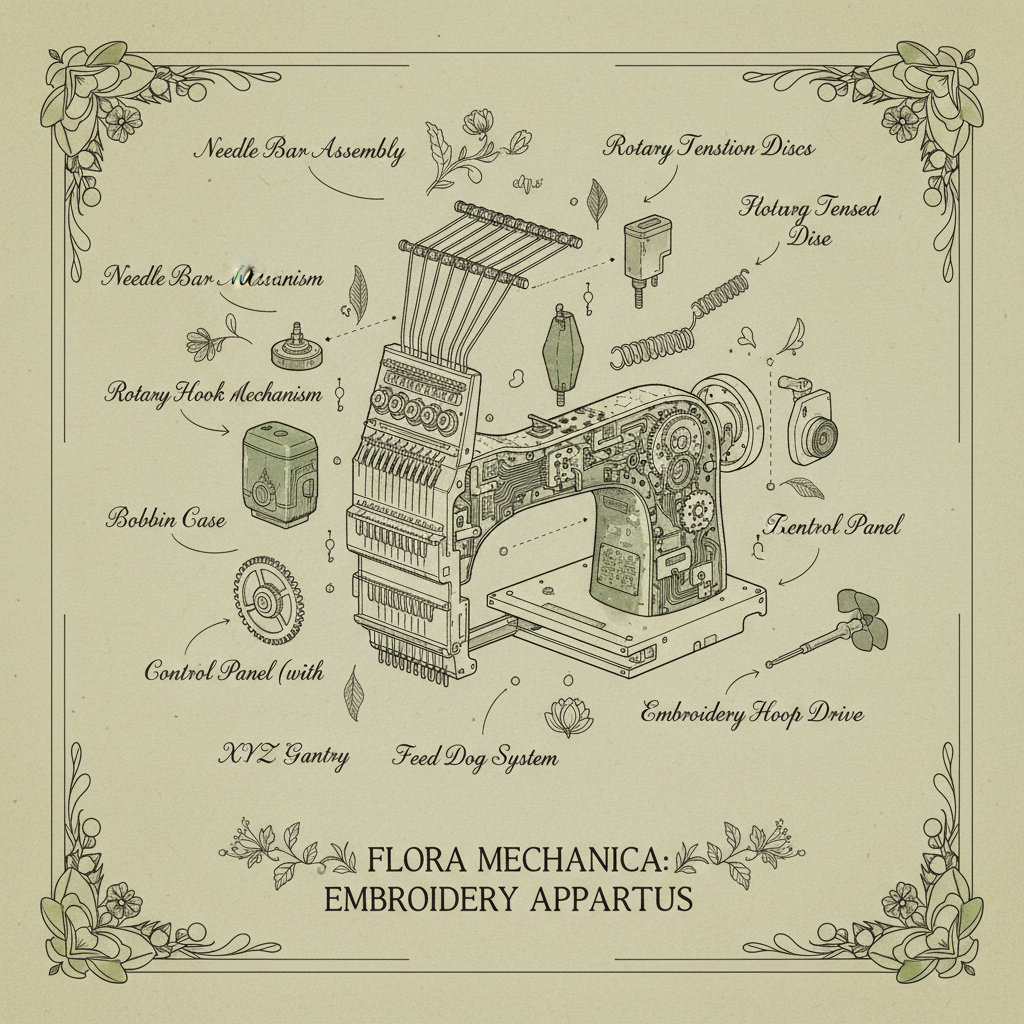
Now, materials. You want a frame that’s stiff, right? Cast iron is still king, you just can't beat the dampening properties. It feels… solid. You can smell the oil on it, and it just feels right. But it’s heavy. So, for the moving parts – the needle bars, the hoops – you’re looking at high-grade aluminum alloys. 7075, generally. It’s lightweight and strong, but it’s a pain to weld, let me tell you.
The bearings are critical. Cheap bearings will ruin a machine in weeks. We’ve started using ceramic hybrid bearings in some of our higher-end models. They’re expensive, yes, but they handle the heat and the high speeds much better. Plus, they have a different feel when you spin them. You can tell the quality instantly. The thread guides… those are usually hardened steel. You want something that won't wear down, even with abrasive threads.
The plastics, well, that’s a whole other story. You need something that’s oil-resistant, heat-resistant, and doesn’t become brittle over time. Delrin is a good choice, but even that can degrade with prolonged exposure to certain chemicals.
Rigorous Testing of Embroidery Machine Systems
Forget the lab tests. Seriously. Those tell you almost nothing. We test these machines the way they're actually going to be used: 12-hour runs, multiple thread changes, different fabric types, running at maximum speed. We even deliberately introduce some dust and grime to see how the lubrication holds up.
We also have a 'vibration test' where we literally shake the machine to simulate being transported on a bumpy road. It’s brutal, but it separates the wheat from the chaff. And we’ve got a team of seamstresses who just abuse the machines, trying to find ways to break them. They’re surprisingly good at it.
Embroidery Machine Performance Metrics
Real-World Usage Patterns of Embroidery Machine
You know, it's always surprising how people actually use these machines. We design them for mass production, but a lot of our customers are small businesses doing custom work. They're running short runs, switching designs constantly, and they need something that's easy to set up and adjust.
They don't want to spend hours tweaking the settings; they want to get the job done quickly and efficiently. And they’re surprisingly resourceful. They figure out ways to adapt the machines to their specific needs that we never even considered.
Advantages and Limitations of Modern Embroidery Machine
The biggest advantage, of course, is speed and precision. Modern machines can embroider incredibly intricate designs at a phenomenal rate. But that comes at a cost: complexity. More moving parts mean more things that can go wrong. And the software can be a nightmare.
Another limitation is the size. These machines are getting bigger and bigger, which makes them unsuitable for small workshops. And the power consumption is significant. It adds up over time. We’re looking into more energy-efficient motors, but it’s a challenge.
Don't even get me started on the noise. Some of these machines sound like jet engines.
Customization Options in Embroidery Machine Manufacturing
We try to offer as much customization as possible. Most popular is the hoop size – people always want a larger hoop. We also offer different needle configurations, different thread tension settings, and even custom color options. Last month, a small boss in Shenzhen who makes smart home devices insisted on changing the interface to , and the result was… a whole lot of headaches. Turns out, his operators were used to Mini-USB and kept breaking the connectors. Lesson learned.
We also do custom frame designs for specific applications. We had a customer who needed a machine that could embroider hats, so we designed a special frame that held the hat securely in place. It was a pain to engineer, but it solved their problem.
We’re also experimenting with modular designs, where customers can swap out different components to customize the machine to their needs. It's still in the early stages, but I think it has a lot of potential.
Summary of Embroidery Machine Design Considerations
| Component |
Material Choice |
Key Consideration |
Typical Failure Mode |
| Frame |
Cast Iron/Steel Alloy |
Stiffness, Vibration Dampening |
Cracking under stress |
| Needle Bar |
Aluminum Alloy |
Lightweight, Strength, Precision |
Bending, Wear |
| Bearings |
Steel/Ceramic Hybrid |
Low Friction, High Load Capacity |
Seizure, Corrosion |
| Thread Guides |
Hardened Steel |
Wear Resistance, Smooth Thread Flow |
Abrasion, Jamming |
| Control Board |
FR4 PCB |
Reliable Signal Processing |
Component Failure, Short Circuit |
| Housing |
ABS Plastic/Steel |
Protection, Noise Reduction |
Cracking, Deformation |
FAQS
Thread breakage is usually down to a few things: incorrect thread tension, a dull needle, or using the wrong type of thread for the fabric. Also, check the thread path for any snags or obstructions. And don’t forget to make sure the bobbin is wound correctly. It seems simple, but it's the most common issue I see.
Depends on how much you use it, honestly. But generally, every 8 hours of operation is a good rule of thumb. Use a good quality embroidery machine oil, and be sure to hit all the lubrication points. Don't over-oil it, though; you don’t want to attract dust and grime. I’ve seen machines gummed up with old oil—not a pretty sight.
That’s a big question. For delicate fabrics like silk, you want a lightweight, tear-away stabilizer. For knits, a cut-away stabilizer is best. And for thicker fabrics, you might need a heavier-weight cut-away. It’s all about finding the right balance between support and ease of removal. Test a small sample first!
A clicking noise usually indicates a mechanical issue. Check the needle, bobbin case, and hook assembly for any damage or obstructions. It could also be a loose screw or a worn bearing. If you can't figure it out, it’s best to take it to a qualified technician.
First, disconnect the power! Then, use a soft brush to remove any lint or debris. A vacuum cleaner with a brush attachment can also be helpful. Wipe down the exterior with a damp cloth. And don't forget to clean the bobbin case and hook assembly regularly. Regular cleaning prevents a lot of problems.
Cover it! Seriously, dust is the enemy. A good quality dust cover will protect it from dirt, moisture, and accidental damage. Store it in a dry, climate-controlled environment if possible. And if you're moving it, make sure it’s properly packed and secured.
Conclusion
So, what does it all boil down to? Embroidery machine technology has come a long way, but the core principles remain the same: robust design, quality materials, and careful maintenance. It’s easy to get caught up in the latest features and specifications, but don’t forget the fundamentals.
Ultimately, whether this thing works or not, the worker will know the moment he tightens the screw. And that's the truth. If it feels solid, if it runs smoothly, and if it produces good work, then it’s a good machine. Visit our website at www.xtpfsm.com to learn more about our embroidery machine solutions.