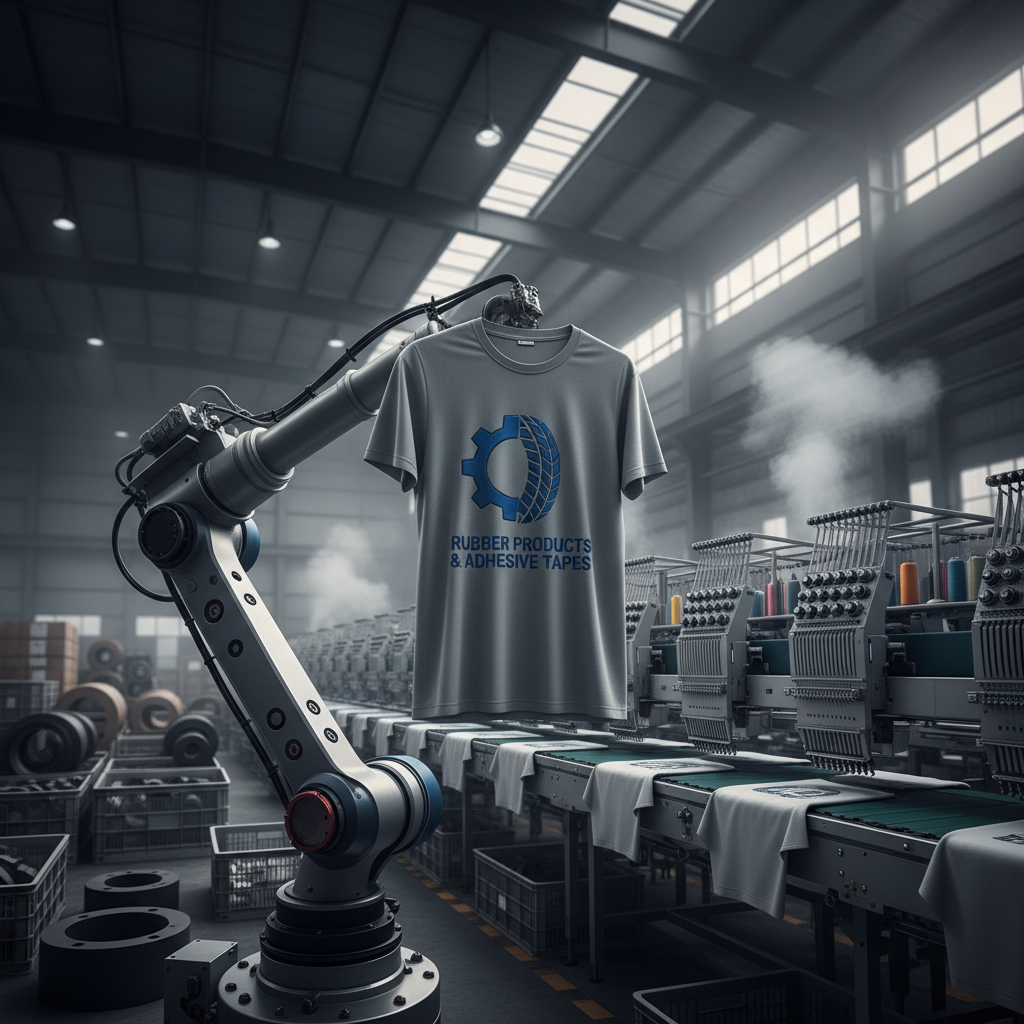
The global textile industry has witnessed a massive shift toward automation, where the precision of a modern embroidery machine has become the cornerstone of high-end garment customization. From corporate branding on polo shirts to intricate artistic designs on luxury fashion pieces, the ability to maintain consistent quality at scale is what separates market leaders from small-scale workshops.
As consumer demand for personalized apparel grows, the technical requirements for stitching accuracy and speed have intensified. Businesses are no longer looking for simple sewing tools but integrated systems that can handle various fabrics, from heavy denim to delicate silks, without compromising the structural integrity of the material.
Investing in a professional-grade embroidery machine allows entrepreneurs to scale their production capacity rapidly while reducing manual labor costs. By leveraging computer-controlled precision and multi-head efficiency, brands can ensure that every stitch is perfectly aligned with their digital design.
Understanding Modern Embroidery Machine Technology
Modern embroidery technology has evolved from simple mechanical looms to sophisticated computer-driven systems. Today's machines, such as the PF-MINI0602, integrate high-definition true color screens and servo motors to provide a seamless transition from a digital DST file to a physical garment. This digital transformation ensures that complex patterns are executed with mathematical precision, eliminating the human error associated with manual stitching.
The integration of automatic color changes and thread trimming has revolutionized the workflow for designers. By automating the most tedious parts of the process, users can focus on the creative aspect of design while the machine handles the technical execution, ensuring that every piece of clothing maintains a professional, retail-ready finish.
Core Components for Industrial Precision
The heart of any high-performance system is its motor and control unit. The use of Servo Motors in contemporary equipment ensures smooth acceleration and deceleration, which is critical when handling intricate patterns that require varying speeds to maintain stitch density. This is paired with a high-definition true color control panel, often featuring Dahao or RUI NENG systems, allowing operators to preview embroidery tracks in real-time.
Durability is achieved through the selection of high-grade hooks and reinforced frames. For those specializing in headwear, a 270-degree wide cap frame unit is essential, as it allows the machine to navigate the curved surface of a cap without causing fabric bunching or needle breaks. This specialized hardware allows for a versatile range of use, from flat garments to structured accessories.
Furthermore, the inclusion of a built-in bobbin winder and automatic thread break detection ensures that downtime is minimized. These components work in tandem to create a fail-safe environment where the machine can notify the operator the moment a thread snaps, preventing the creation of defective products and reducing material waste.
Scalability and Production Efficiency
Scaling a business requires a strategic approach to equipment. A single-head machine is ideal for prototypes and custom one-offs, but as order volumes increase, transitioning to a multi-head embroidery machine becomes a financial necessity. A double-head setup, for instance, effectively doubles the output per hour without requiring double the floor space or two separate operators.
Efficiency is not just about speed, but about the ability to handle diverse tasks. By utilizing machines that support both flat and cap embroidery modes, a studio can switch from producing corporate T-shirts to branded golf caps with a simple setting change. This versatility allows a business to capture multiple market segments—from sports teams to corporate uniforms—using a single investment.
The long-term value of such scalability is found in the reduction of "rush" production stress. With the ability to sew 12 to 15 colors on finished garments like sweaters and jackets, producers can meet tight deadlines without sacrificing quality. High-speed capabilities, reaching up to 1200 RPM for flat embroidery, ensure that the cost per unit drops as volume increases.
Performance Benchmarks and Speed Analysis
When evaluating the performance of an embroidery machine, the primary metrics are Stitches Per Minute (SPM) and the precision of the stitch track. Flat embroidery typically operates at a higher velocity, often reaching 1200 SPM, while cap embroidery is slightly slower—around 850-1000 RPM—to accommodate the curvature of the frame and ensure the needle penetrates the fabric accurately.
These speed differentials are critical for calculating production timelines. For example, a complex logo with 2 million stitches will take significantly less time on a multi-head system than a single-head unit. The balance between speed and stability is maintained by the servo motor, which prevents the machine from shaking during high-speed operations.
Operational Efficiency by Embroidery Machine Setup
Global Applications in Apparel and Accessories
From the bustling garment districts of Southeast Asia to boutique studios in Europe, the application of the embroidery machine spans various industries. In the corporate world, these machines are indispensable for creating uniforms, aprons, and bags. The ability to handle "finished garments"—items already sewn into their final shape—means that businesses can offer high-value customization services on luxury jackets and golf shirts.
Beyond commercial fashion, these machines are used in specialized fields such as athletic wear and baby accessories. The large embroidery area (up to 400500mm) allows for bold, expansive designs that can cover a significant portion of a garment, making it possible to create everything from intricate floral patterns on dresses to bold team logos on sports caps.
Overcoming Common Operational Challenges
One of the most frequent hurdles for beginners is the learning curve associated with pattern formats and machine setup. However, modern interfaces have simplified this process, allowing users to import DST formats via USB and preview the embroidery track before the first stitch is even made. Most professional operators can now master the basic functions of a machine in less than an hour.
Another common challenge is the risk of "hitting the frame" when switching between cap and flat modes. To solve this, advanced machines now feature dedicated switches for cap/flat modes, which automatically adjust the machine's movements to eliminate frame collisions. This protects both the needle and the garment, reducing the rate of spoiled materials.
Finally, technical support and installation can be daunting for international buyers. The solution lies in integrated support systems, including English teaching manuals, step-by-step disassembly and assembly videos, and lifetime online support via WhatsApp or Skype. This ensures that regardless of the user's location, they have the engineering expertise needed to maintain their equipment.
Technical Specifications Comparison
Choosing the right equipment requires a deep dive into the technical parameters. Key considerations include the number of needles—typically ranging from 9 to 15—which determines how many colors can be sewn without manual intervention. The working area is equally critical; a 400500mm area provides the flexibility needed for larger designs on jackets or bags.
Voltage compatibility (110V to 220V) ensures that the machine can be deployed globally, while the integration of the mainboard into the control panel protects the sensitive electronics from dust and external forces. This ruggedization is essential for industrial environments where fabric lint and dust are prevalent.
The following table provides a detailed breakdown of the specifications for a professional-grade double-head system, contrasting its capabilities across different application modes.
Core Technical Specifications for PF-MINI Series
|
Parameter Dimension
|
Flat Embroidery Mode
|
Cap Embroidery Mode
|
Industrial Standard
|
| Operating Speed |
1200 RPM |
850-1000 RPM |
High Efficiency |
| Working Area |
400500mm |
270° Wide Frame |
Versatile |
| Color Capacity |
Up to 15 Colors |
Up to 15 Colors |
Auto Change |
| Pattern Format |
DST Format |
DST Format |
USB Import |
| Motor Type |
Servo Motor |
Servo Motor |
Precision Drive |
| Language Support |
Multi-lingual |
Multi-lingual |
Global Ready |
FAQS
We provide a comprehensive English teaching manual and a series of detailed instructional videos covering every step of the process, including disassembly, assembly, and daily operation. Additionally, our professional engineers are available to provide guidance, ensuring that most users can learn to operate the machine in less than one hour.
Our machines are equipped with a memory function that retains current data and work progress even during an emergency stop or a sudden power failure. This prevents the loss of complex patterns and allows you to resume the embroidery process exactly where it left off, saving both time and materials.
Yes, the machine is specifically designed for versatility. It features a 270-degree wide cap frame unit and a dedicated switch to toggle between cap and flat embroidery modes. This allows you to sew on finished caps, baby caps, and other curved headwear without the risk of hitting the frame.
All transactions are processed through the Alibaba platform to protect the buyer's interests. Your payment is held in an Alibaba bank account and is only released to us after you have received the items and confirmed that all detailed information and specifications are correct.
We provide lifetime online support via WhatsApp, Skype, Wechat, and Email. For more complex issues, we offer video calls with our engineers. In rare cases where online support is insufficient, our engineers can travel overseas to help customers resolve technical problems on-site.
Absolutely. We offer a variety of customization options including the brand name on the machine, the external color of the equipment, and the design of unique patterns. Simply include your customization requirements in your inquiry, and our team will accommodate them.
Conclusion
The integration of an advanced embroidery machine into a production line is more than just a hardware upgrade; it is a strategic move toward industrial efficiency and creative freedom. By combining high-speed servo motors, intuitive digital controls, and multi-head scalability, businesses can transition from small-scale sampling to full-scale industrial production without compromising on the intricate details that define luxury branding.
Looking forward, the trend toward hyper-personalization suggests that the demand for versatile, user-friendly embroidery equipment will only increase. Whether you are a startup studio or an established garment factory, focusing on precision, durability, and technical support will be the key to maintaining a competitive edge in the global textile market. Visit our website for more information: www.xtpfsm.com