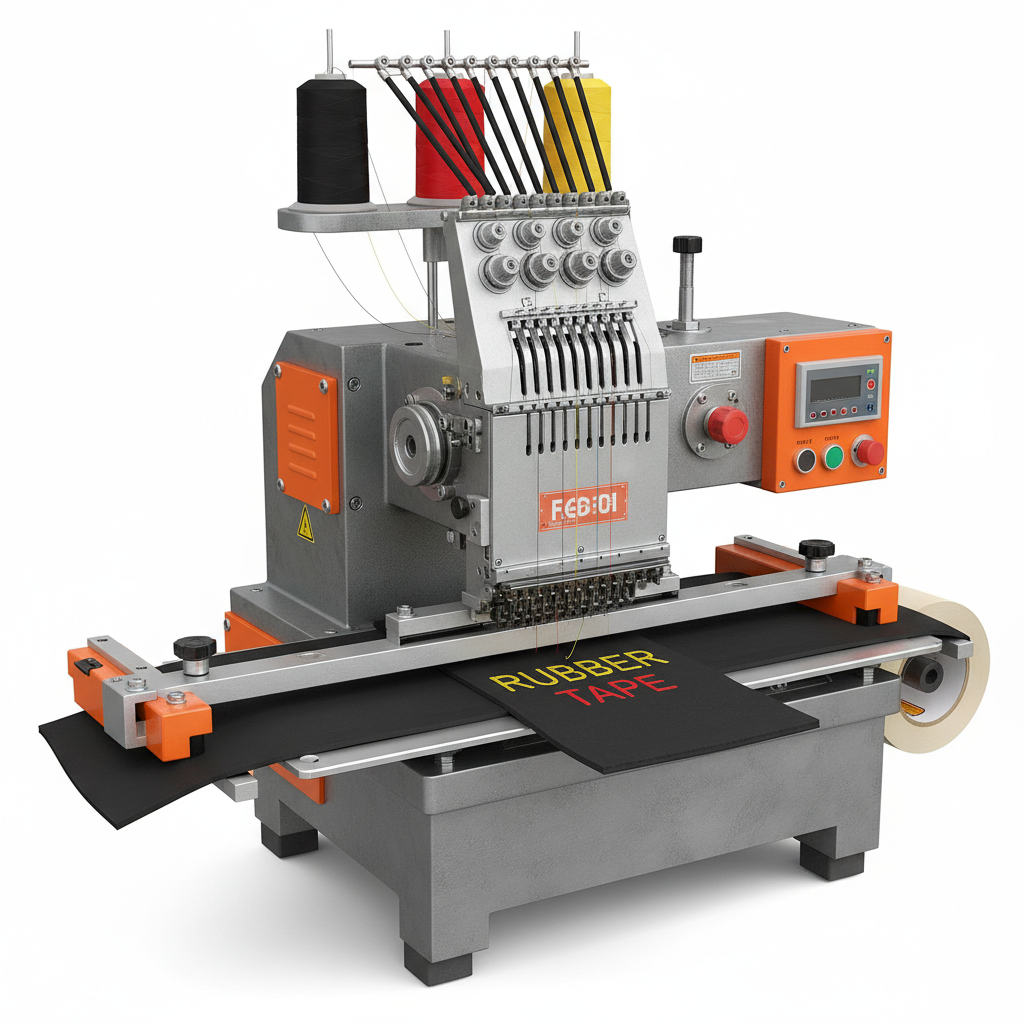
The art of professional headwear customization has evolved significantly with the introduction of high-precision machinery. Achieving the best 3d hat embroidery requires a delicate balance between powerful hardware and intuitive software to create designs that literally pop off the fabric, providing a premium tactile experience for the wearer.
In the global apparel market, 3D effects—often achieved through puff foam or specialized stitching—have become the industry standard for sports teams, corporate branding, and high-end fashion lines. The ability to produce consistent, high-relief patterns efficiently is what separates professional studios from amateur operations.
Whether you are scaling a small business or managing a large factory, investing in the best 3d hat embroidery equipment ensures that your logos maintain structural integrity and visual impact. By utilizing advanced servo motors and high-definition touch screens, modern machines make complex 3D designs accessible to creators of all skill levels.
Technical Foundations of 3D Cap Machines
To achieve a professional 3D effect, a machine must possess a specialized cap embroidery head. Our systems utilize a double cam and double lever mechanism with motorized jump, which provides the necessary precision to handle the thicker materials associated with 3D puff embroidery without causing thread breaks or misalignment.
Furthermore, the integration of a 260-degree wide cap frame unit ensures that the machine can access the curved surfaces of a hat with ease. This structural design is critical for maintaining the tension required to keep 3D foam in place, ensuring every stitch contributes to a crisp, raised finish.
Hardware Specifications for High-Relief Results
Precision starts with the motor. By employing high-torque Servo Motors, the PF-0604 and similar models ensure that the needle penetration is consistent even when passing through dense 3D foam layers. This stability prevents the "shifting" often seen in lower-end machines, which can ruin a complex 3D design.
The needle configuration—available in 9, 12, or 15 needle options—allows for a rich palette of colors, enabling intricate shading and depth in 3D work. Coupled with a high-speed capacity of up to 1200 RPM, producers can maintain a high throughput without sacrificing the quality of the raised elements.
Automatic thread trimming and automatic color changes further streamline the process. For 3D work, where thread density is significantly higher than flat embroidery, these automated features reduce manual intervention and minimize the risk of human error during the production cycle.
Operational Ease and User Accessibility
One of the biggest hurdles in achieving the best 3d hat embroidery is the learning curve. However, modern interfaces have solved this by introducing 12-inch high-definition touch screens that provide real-time stitching previews. This allows operators to visualize the embroidery track before the first stitch is even cast.
The software is designed for inclusivity, supporting over 13 languages including English, Spanish, French, and Arabic. This ensures that the best 3d hat embroidery can be produced by teams globally without the barrier of language, making the complex settings of the Dahao/RUI NENG computers easy to navigate.
For beginners, the goal is a "one-hour" learning curve. With professional engineer guidance and a user-friendly interface, designers can quickly move from importing a DST format file via USB to seeing their 3D vision come to life on a physical cap.
Comparing Embroidery Output Efficiency
Efficiency in 3D production is measured by the balance of speed and accuracy. While high RPMs are beneficial, the stability of the frame and the precision of the servo motor determine the final quality. A machine that can handle both flat and cap embroidery options provides the versatility needed for diverse product lines.
When analyzing different setups, the number of heads (single, two, four, or six) directly impacts the hourly output. For those focusing on the best 3d hat embroidery, the four-head configuration offers a sweet spot between space-saving and commercial-grade volume.
Efficiency Ratings for 3D Embroidery Methods
Versatility Across Different Headwear Types
While 3D puff is a specialty, a truly professional machine must handle a variety of applications. Our machines are designed to transition seamlessly between cap embroidery, flat embroidery, and finished garment embroidery (such as T-shirts and logos). This means a single investment can cover an entire apparel line.
The inclusion of various hoop sizes—from 95mm up to 290x290mm—allows for flexibility in design scale. Whether you are producing a small, subtle 3D icon on the side of a snapback or a large, bold 3D logo on the front panel, the adjustable framing system ensures the fabric remains taut.
Global Support and Implementation
Acquiring the best 3d hat embroidery equipment is only the first step; long-term success depends on technical support. We provide lifetime online support via WhatsApp, Skype, and Email, ensuring that any operational hiccup is resolved through video calls or remote guidance.
For international buyers, shipping and customs can be daunting. We utilize reliable forwarder agents to ship items via sea, air, or express directly to the customer's doorstep, with free shipping options to convenient sea ports for bulk orders.
Moreover, the machines are built for global voltage standards (110V/60Hz or 220V/50Hz), making them self-adaptable and ready for use in any region. This commitment to accessibility ensures that designers in any country can achieve world-class results.
Performance Analysis of Multi-Head Systems
When scaling from a single-head to a multi-head system, the primary advantage is the multiplication of output without the multiplication of labor. A four-head machine allows an operator to manage four caps simultaneously, effectively quadrupling the capacity for 3D projects.
The consistency across heads is maintained by the centralized control system, which ensures that the stitch count and tension are identical on every piece. This is paramount for corporate orders where brand consistency is non-negotiable.
By integrating Wi-Fi and network capabilities, these machines can be updated and managed remotely, aligning with the digital transformation of the textile industry. The following table summarizes the performance metrics for various configurations.
Core Performance Comparison of 3D Embroidery Configurations
| Machine Model |
3D Precision |
Daily Output |
User Ease |
| Single-Head Mini |
High |
Low-Medium |
Excellent |
| Two-Head Professional |
High |
Medium |
Very Good |
| Four-Head Commercial |
Ultra-High |
High |
Good |
| Six-Head Industrial |
Ultra-High |
Ultra-High |
Professional |
| Custom Wide-Area |
Medium-High |
Medium |
Good |
| Budget Entry-Level |
Medium |
Low |
Moderate |
FAQS
We provide a comprehensive English teaching manual and a series of detailed videos. These resources cover every essential step, including the disassembly, assembly, and operation of the machine, ensuring you can get started quickly and correctly.
Yes, customization is available. We can customize the brand name, the color of the machine, and even design unique patterns to fit your company's identity, making your workshop look professional and cohesive.
We offer lifetime online support through WhatsApp, Skype, Wechat, and Email. Our engineers are available for video calls to troubleshoot any issues, and we can even provide overseas on-site assistance if the situation requires it.
Absolutely. All our transactions go through the Alibaba platform, which protects the buyer's interest. Funds are held in an Alibaba bank account and only released to us after you receive the items and confirm the details.
The computerized system reads multiple design formats, most notably the DST format, which is the industry standard. Designs can be easily imported via the integrated USB port.
We offer 9, 12, and 15 needle options. If your 3D designs use a limited color palette, 9 needles are sufficient. For complex, multi-colored corporate logos, the 12 or 15 needle options are recommended to minimize manual thread changes.
Conclusion
Achieving the best 3d hat embroidery is a combination of choosing the right hardware—such as servo-driven, multi-head machines—and leveraging user-friendly digital interfaces. From the precision of the double-cam cap heads to the flexibility of multi-language support and worldwide voltage adaptation, the modern embroidery ecosystem is designed to empower both the solo designer and the industrial manufacturer.
As the apparel industry continues to move toward high-customization and "on-demand" production, the ability to produce high-quality 3D effects efficiently will be a key competitive advantage. We suggest starting with a clear understanding of your volume needs and investing in a system that offers lifetime support to ensure your growth is uninterrupted. Visit our website: www.xtpfsm.com