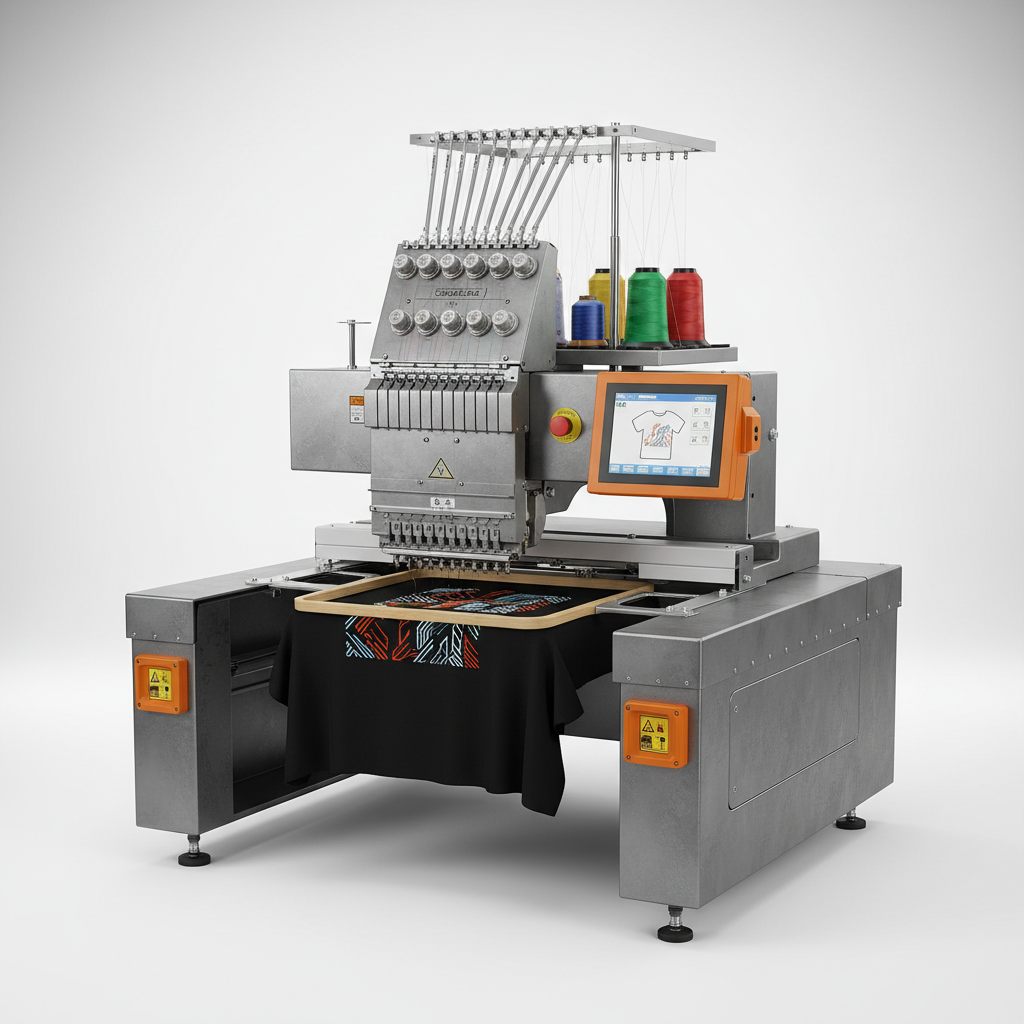
The global textile industry is witnessing a significant shift as small-scale entrepreneurs and creative studios seek professional-grade equipment without the prohibitive costs of high-end industrial setups. The emergence of affordable, high-performance machinery has democratized the art of embroidery, allowing a wider range of artists to transition from manual work to automated precision. For many, finding reliable and cheap industrial embroidery machines is the first critical step toward establishing a sustainable commercial presence in the competitive garment decoration market.
Modern manufacturing advancements have ensured that "affordable" no longer means "low quality." Today's entry-level industrial machines integrate servo motors, high-definition touch screens, and automatic trimming functions that were once reserved for the most expensive models. This evolution allows start-up shops to maintain high production standards while minimizing their initial capital expenditure, effectively lowering the barrier to entry for the fashion and apparel customization industry.
Whether you are a hobbyist looking to monetize your skills or a small business owner expanding your product line, investing in cheap industrial embroidery machines provides the perfect balance of scalability and cost-efficiency. By leveraging multi-needle capabilities and intuitive software, users can produce intricate designs on caps, garments, and flat fabrics with professional speed and consistency.
Defining Cheap Industrial Embroidery Machines
In the context of the specialized equipment manufacturing industry, cheap industrial embroidery machines refer to commercial-grade devices—such as the PF-MINI0601—that offer essential industrial features at an accessible price point. Unlike home embroidery machines, these units are designed for higher duty cycles, featuring robust frames and multi-needle configurations (9, 12, or 15 needles) that allow for automatic color changes without manual intervention.
These machines serve as a bridge between artisanal hobbyist work and full-scale factory production. By focusing on core necessities like servo motor precision, high-definition Dahao/RUI NENG computing systems, and versatility across caps and garments, they provide a professional output that satisfies commercial clients while remaining within the budget of a start-up embroidery shop.
Core Components for Maximum Cost Efficiency
The cost-efficiency of these machines is rooted in the strategic selection of components that maximize performance without adding unnecessary luxury overhead. Central to this is the use of the Servo Motor, which provides consistent torque and precise control over the spindle, ensuring that stitches are uniform regardless of the fabric density. This is paired with a high-definition true color computer system that simplifies pattern management via USB in DST format.
Another critical element is the integration of automatic functions, specifically automatic color change and automatic trimming. These features drastically reduce the manual labor required per garment, allowing a single operator to manage multiple projects efficiently. For a business owner, this translates to lower labor costs and a faster turnaround time, which is essential for maintaining profitability in a low-margin environment.
Furthermore, the versatility of the frame and hoop system—supporting cap embroidery, flat embroidery, and clothing options—means that one machine can handle diverse product lines. Instead of purchasing three different specialized machines, a user can utilize one flexible platform, significantly reducing the total cost of ownership while expanding their service offerings to include everything from branded hats to custom t-shirts.
Key Performance Factors and Durability
When evaluating cheap industrial embroidery machines, durability is often the primary concern. Professional-grade units like the PF-MINI0601 utilize high-quality "Good hooks" and a sturdy stand to minimize vibration during high-speed operation. With speeds reaching 1000 RPM for caps and garments, mechanical stability is paramount to prevent thread breakage and ensure the integrity of the embroidery track.
The operational interface also plays a huge role in long-term reliability. A touch screen combined with multi-language support (including English, Spanish, France, Germany, and others) ensures that operators can navigate the menu, set origins, and adjust acceleration/deceleration without errors. This reduces the risk of mechanical crashes, which are the most common cause of downtime in budget-friendly industrial setups.
Ultimately, the value of these cheap industrial embroidery machines lies in their ability to provide a working area of 400500mm, which is sufficient for most commercial applications. By combining this generous workspace with an intuitive "preview" function that displays the running process of stitches in real time, users can catch errors before they ruin expensive fabrics, effectively saving money through waste reduction.
Global Applications and Business Use Cases
Around the world, these machines are empowering a new wave of "micro-entrepreneurs." In urban centers, they are frequently used by start-up embroidery shops to provide localized customization for corporate branding and sports teams. The ability to quickly learn the operation in less than one hour makes these machines ideal for businesses that need to scale their workforce rapidly without extensive technical training.
In emerging markets, the demand for cost-effective commercial machinery is driven by the growth of the "part-time business" model. Many individuals use these machines to increase their household income by operating from home, taking advantage of the 110-220V voltage compatibility that allows the machine to run on standard domestic power grids while delivering industrial-grade results.
Market Adoption and Efficiency of Budget Industrial Solutions
Long-Term Value and ROI Analysis
The return on investment (ROI) for affordable industrial machines is significantly faster than for high-end counterparts. Because the initial purchase price is lower, the "break-even" point—where the machine has paid for itself through completed orders—is reached much sooner. For a beginner, the learning curve is minimal, meaning they can start generating revenue almost immediately after installation.
Beyond the initial cost, the long-term value is sustained through low maintenance requirements and the availability of standard accessories. Since these machines use common formats like DST and standard hooks, parts are easy to source and replace. This ensures that the machine remains a productive asset for years, rather than becoming a costly liability due to proprietary parts or complex repair needs.
Future Trends in Automated Embroidery
The future of affordable industrial embroidery is trending toward deeper digital integration. We are seeing a shift toward "smart" machines that can integrate more seamlessly with cloud-based design software, allowing users to send patterns directly from a tablet to the machine via Wi-Fi, reducing the reliance on physical USB drives.
Sustainability is also becoming a core focus. Future iterations of these machines are likely to incorporate more energy-efficient servo motors and noise-reduction technology, making them even more suitable for home-based studios or shared co-working spaces where acoustic pollution is a concern.
Furthermore, the move toward "modular" heads—where a user can start with a single head and potentially expand their capacity as their business grows—will redefine how entrepreneurs scale. This path allows for organic growth, where the machine evolves alongside the business's revenue stream.
Overcoming Common Operational Challenges
One of the most common challenges for new users is the initial setup and threading process. To solve this, professional suppliers now provide comprehensive English teaching manuals and step-by-step video tutorials covering disassembly, assembly, and daily operation. This educational support transforms a potentially intimidating piece of machinery into a user-friendly tool.
Shipping and customs can also be a barrier for international buyers. The solution lies in partnering with reliable forwarder agents who can manage sea, air, or express shipping directly to the customer's doorstep. Many manufacturers now offer free shipping to convenient sea ports, significantly reducing the landed cost of the equipment.
Finally, technical anxiety is mitigated through lifetime online support. By utilizing platforms like WhatsApp, Skype, and WeChat, engineers can provide real-time troubleshooting via video calls. This ensures that any operational hiccup is resolved quickly, preventing long-term production delays.
Comparison of Industrial Embroidery Machine Specifications and User Suitability
| User Profile |
Recommended Needles |
Primary Use Case |
Efficiency Score |
| Complete Beginner |
9 Needles |
Hobby to Profit |
8/10 |
| Part-time Seller |
12 Needles |
Custom Apparel |
9/10 |
| Start-up Shop |
15 Needles |
Commercial Batching |
10/10 |
| Design Studio |
12 Needles |
Prototyping |
9/10 |
| Cap Specialist |
9-15 Needles |
Headwear Branding |
10/10 |
| Textile Artist |
9 Needles |
Artistic Pieces |
7/10 |
FAQS
It is surprisingly simple. Most users can learn the basics in less than one hour. We provide a full suite of English teaching manuals and step-by-step videos covering disassembly, assembly, and operation to ensure you are up and running quickly without needing an on-site technician.
Yes, the machines are designed for versatility. They come with specific options for cap embroidery, flat embroidery, and general clothing embroidery. The adjustable settings and robust servo motor allow for consistent stitching across varying fabric thicknesses and types.
The machines utilize the industry-standard DST format. Patterns can be easily imported via a USB drive into the high-definition Dahao/RUI NENG computer system, allowing you to preview the embroidery track and stitch process in real time before starting production.
We partner with reliable forwarder agents who can ship items via sea, air, or express directly to your door. Additionally, we offer free shipping to your convenient sea port or to your own agent in China, simplifying the logistics process significantly.
We provide lifetime online support through WhatsApp, Skype, WeChat, and Email. For complex issues, we offer video calls with our engineers, and if absolutely necessary, our technical team can travel overseas to help customers on-site.
Absolutely. All transactions are processed through the Alibaba platform, which protects the buyer's interest. Funds are held by Alibaba and only released to us after you have received the items and confirmed the detailed shipment information.
Conclusion
Choosing the right equipment is the most pivotal decision for any aspiring embroidery business. As we have explored, cheap industrial embroidery machines no longer require a compromise in quality; instead, they offer a strategic entry point that combines essential automation, servo-driven precision, and multi-needle versatility. By focusing on core commercial needs—such as automatic trimming, DST format compatibility, and a generous working area—these machines allow entrepreneurs to scale from a hobby to a profitable enterprise with minimal risk.
Looking forward, the democratization of industrial technology will continue to empower small studios and independent designers worldwide. We suggest that beginners start with a single-head multi-needle machine to master the craft before expanding to multi-head setups. By investing in a reliable, cost-effective system today, you are not just buying a machine, but building a foundation for creative and financial independence in the global textile market. Visit our website: www.xtpfsm.com