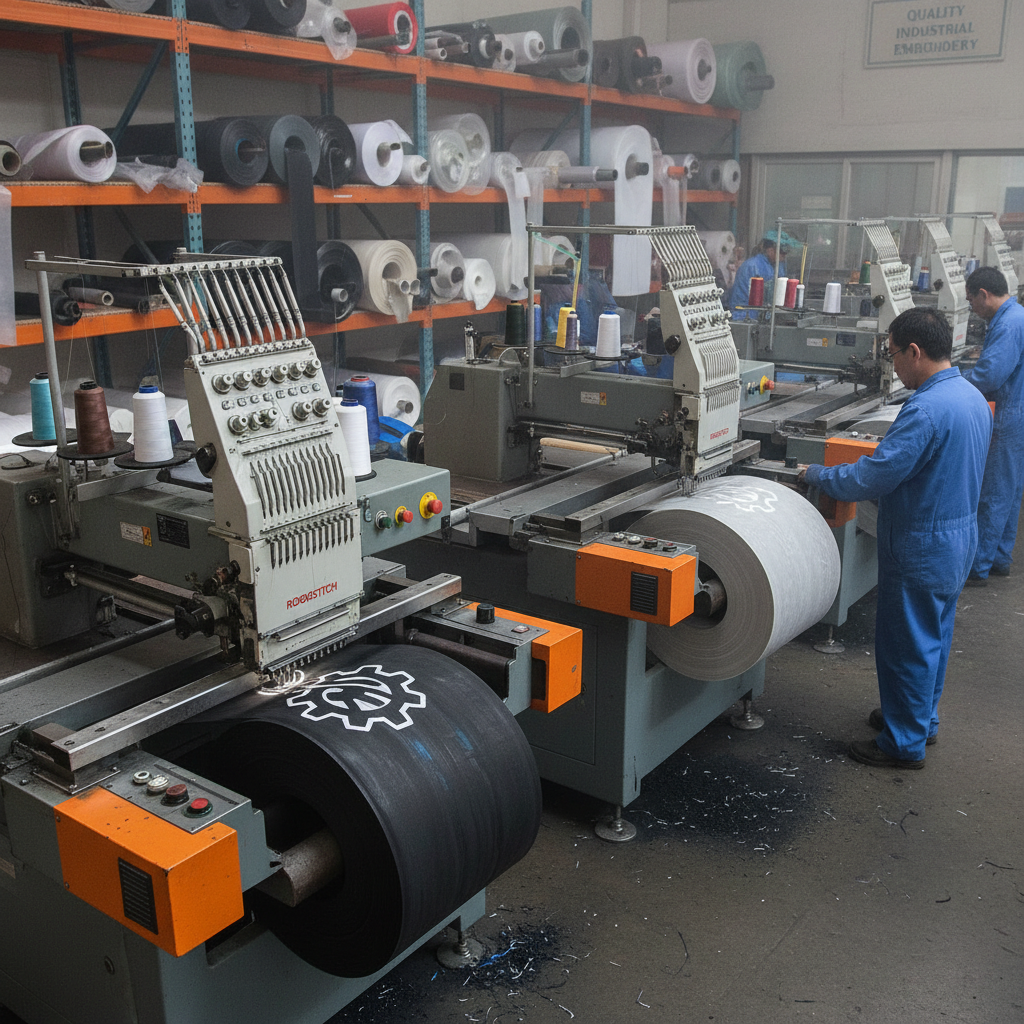
The world of textile customization has been revolutionized by the accessibility of high-quality equipment and the rise of cheap machine embroidery digitizing solutions. For many entrepreneurs and hobbyists, the ability to convert a digital artwork into a stitch-ready pattern is the bridge between a creative concept and a profitable physical product.
In today's competitive garment market, efficiency and cost-effectiveness are paramount. Integrating affordable digitizing processes allows small studios to compete with larger factories by reducing the overhead costs associated with pattern creation while maintaining professional standards of precision and detail.
Whether you are utilizing a professional single-head machine or scaling up to a multi-head operation, understanding the nuances of cheap machine embroidery digitizing ensures that your machine operates at peak performance without wasting thread or damaging delicate fabrics.
The Industrial Impact of Cheap Machine Embroidery Digitizing
The globalization of the textile industry has created a massive demand for rapid prototyping. By leveraging cheap machine embroidery digitizing, small-scale manufacturers can now iterate designs in hours rather than weeks, allowing for a more agile response to fashion trends.
This shift has democratized the industry, enabling beginners and start-up shops to enter the market with low financial risk. When combined with high-speed machines like the DAHAO computer embroidery system, these affordable digitizing services empower users to transform a hobby into a sustainable business model.
Understanding the Core Components of Digitizing
At its simplest level, digitizing is the process of converting a piece of artwork into a digital file that an embroidery machine can understand. This involves defining the stitch type, the direction of the thread, and the sequence of colors. For those seeking cheap machine embroidery digitizing, the goal is to find a balance where the cost is low but the "pathing" of the stitches remains efficient to prevent thread breaks.
A critical component of this process is the format compatibility. Most commercial machines, including our single-head 12-needle models, utilize the DST format. A well-digitized file ensures that the 400x500mm to 400x800mm embroidery area is used optimally, regardless of whether the project is a flat garment, a cap, or a specialized piece of clothing.
Furthermore, the density of the stitches plays a vital role in the final look. Too few stitches lead to a sparse design, while too many can cause the fabric to pucker. Professional yet affordable digitizing focuses on creating a "push and pull" compensation that accounts for the natural movement of the fabric during the high-speed stitching process.
Cost Efficiency and Scalability in Embroidery
For a start-up embroidery shop, managing operational costs is the difference between growth and failure. Implementing cheap machine embroidery digitizing allows a business to offer a wider variety of custom patterns to clients without needing a massive upfront investment in expensive software or high-priced designers.
Scalability is achieved when a user moves from a single-needle setup to a multi-needle commercial machine. By utilizing cheap machine embroidery digitizing services, the user can maximize the efficiency of 12-color machines, reducing the need for manual thread changes and increasing the hourly output of finished garments.
The long-term economic benefit lies in the ability to store and reuse patterns. With the capacity to store up to 200 million needles and handle patterns up to 5 million stitches, the initial investment in a quality but affordable digital file pays dividends every time that design is reproduced for a new customer.
Performance Metrics for Digital Patterns
Evaluating the quality of a digital file involves looking at the stitch count and the efficiency of the travel paths. High-quality cheap machine embroidery digitizing minimizes "jump stitches," which are the unnecessary threads that move from one part of the design to another, thereby reducing the time spent on manual trimming.
When using high-speed machinery, the stability of the pattern is key. A poorly digitized file can cause the machine to shake or the needle to break, especially when working with complex patterns that exceed 500 pieces in a sequence. Proper digitizing ensures the machine maintains its 0.75KW power efficiency without undue stress on the motor.
Efficiency Comparison of Digitizing Methods
Global Applications of Affordable Digitizing
In emerging markets across Southeast Asia and Africa, cheap machine embroidery digitizing is fueling a grassroots movement of textile entrepreneurship. By utilizing cost-effective digital patterns and easy-to-operate single-head machines, local artisans are able to preserve traditional motifs while scaling their production for export.
Furthermore, in Western markets, "Print-on-Demand" and "Embroidery-on-Demand" services rely heavily on affordable digitizing to keep prices low for the end consumer. This allows a customer to upload a logo and have it embroidered on a cap or garment within 24 hours, a process made possible by the seamless integration of digital files and automated machinery.
Long-Term Value of High-Quality Low-Cost Patterns
The real value of cheap machine embroidery digitizing is not just in the low initial cost, but in the reliability it brings to the production line. A stable digital pattern reduces fabric waste and thread consumption, which directly impacts the sustainability and profit margins of an embroidery business over time.
Moreover, for beginners, starting with affordable services allows them to learn the "logic" of embroidery without risking expensive errors. As they move from a single-needle hobby machine to a 12-needle commercial powerhouse, the transition is smoothed by their familiarity with how digital designs translate into physical stitches.
Trust is built when a client receives a garment where the embroidery is crisp and the tension is perfect. By choosing digitizing services that prioritize structural integrity over just "low price," businesses can build a reputation for quality that attracts high-value corporate contracts and luxury branding projects.
Future Trends in Automated Embroidery Digitizing
The industry is moving toward AI-driven automation, where cheap machine embroidery digitizing will be handled by algorithms capable of analyzing fabric density and suggesting the optimal stitch count automatically. This will further lower the barrier to entry for those without formal design training.
Sustainability is also becoming a core focus. Future digitizing software will likely include "eco-modes" that optimize the pathing to use the absolute minimum amount of thread required, reducing the environmental footprint of the textile industry while maintaining the aesthetic quality of the work.
As machines become more integrated with cloud computing, we can expect "Instant Digitizing" where a design is created on a smartphone and sent directly to a multi-head machine via Wi-Fi, bypassing the need for USB transfers and making the workflow faster than ever before.
Analysis of Digitizing Solutions for Commercial Use
| Solution Type |
Setup Cost |
Turnaround Time |
Production Quality |
| Entry-Level Digitizing |
Very Low |
Fast (12-24h) |
Moderate |
| Freelance Services |
Low |
Variable |
High |
| AI Automation |
Medium |
Instant |
Consistent |
| Premium Studio |
High |
Slow (3-5 days) |
Exceptional |
| In-House Software |
High Initial |
On-Demand |
User-Dependent |
| Hybrid Outsourcing |
Medium |
Moderate |
Reliable |
FAQS
The primary difference usually lies in the "pathing" and "stitch optimization." While budget services provide the basic shape, professional digitizing spends more time reducing jump stitches and adjusting density for specific fabrics. However, for most start-up businesses and simple logos, affordable digitizing is more than sufficient to achieve commercial-grade results on machines like our single-head models.
Yes, as long as the file is in a compatible format such as DST. Since multi-head machines repeat the same pattern across several heads, a well-optimized affordable file is actually preferable because it ensures consistency across all heads and reduces the likelihood of thread breaks across the entire production run.
The best way is to run a "test stitch" on a scrap piece of the actual fabric you intend to use. Check for puckering, gaps in the design, or excessive thread nesting. If the machine runs smoothly at high speed and the design matches the digital preview, your digitizing is optimized.
Absolutely. While there is a learning curve, many beginners start with basic software and slowly master the art of stitch placement. Our machines are designed to be beginner-friendly, and combining a simple learning process with a multi-needle machine is a great way to move from a hobby to a profit-making business.
While budget services vary, our commercial machines can handle up to 5 million stitches per pattern. The limit is usually not the digitizing service, but the physical size of the embroidery area (e.g., 400x800mm). As long as the design fits within the frame, the stitch count is mainly a factor of production time.
Yes, the digitizing process defines how many color changes are needed. A 12-needle machine allows you to digitize a design with up to 12 colors without needing to stop and manually change threads. This makes the digitizing process more flexible, as you can create more complex, multi-colored designs than you could on a single-needle machine.
Conclusion
In summary, the integration of cheap machine embroidery digitizing with high-performance hardware creates a powerful ecosystem for textile innovation. By lowering the financial and technical barriers to entry, it enables entrepreneurs to scale from a single-needle hobby to a commercial multi-head operation with confidence and efficiency.
As we look toward a future of AI-driven design and sustainable production, the ability to quickly and affordably translate art into fabric will remain a cornerstone of the garment industry. We encourage all aspiring designers and shop owners to explore the synergy between affordable digital patterns and professional embroidery machinery to unlock their full creative and commercial potential. Visit our website: www.xtpfsm.com