
Sep . 23, 2025 00:10 Back to list
Cheap Custom Hat Embroidery Machine | Affordable 15-Needle Power
Navigating the Market for Cost-Effective Custom Embroidery Solutions
The demand for custom-embroidered apparel and promotional items continues to surge, driven by robust growth in corporate branding, personalized fashion, and specialized retail. For businesses looking to enter or expand into this lucrative market, acquiring the right equipment is paramount. This guide delves into the specifics of sourcing a cheap custom hat embroidery machine, focusing on industrial-grade solutions that balance affordability with high performance and reliability. We will explore key industry trends, technical requirements, application versatility, and crucial considerations for B2B decision-makers, including the significance of manufacturers providing comprehensive solutions.
Current industry trends indicate a strong move towards automation and multi-head machines to maximize output efficiency and reduce per-unit costs. Businesses are increasingly seeking flexible systems capable of handling a diverse range of materials and product types, from standard T-shirts and polos to complex hat designs and intricate patches. The emphasis is on durable, precise machinery that offers advanced connectivity and user-friendly interfaces, minimizing training overhead and production errors.
Manufacturing Process Flow of a cheap custom hat embroidery machine
The production of an industrial-grade embroidery machine, such as a cheap custom hat embroidery machine like the Industrial Custom Logo Computer Machine 4 Heads 12 Needle 15 Needle T shirt Embroidery Machine, involves a meticulous, multi-stage process to ensure precision, durability, and operational longevity. Each component is engineered to meet stringent performance criteria.
I. Raw Material Sourcing & Preparation
- Steel & Aluminum Alloys: High-grade steel (e.g., 45# carbon steel, structural alloy steel) for the machine frame, main shaft, and critical moving parts, chosen for its strength and fatigue resistance. Aluminum alloys (e.g., 6061, 7075) are used for lightweight components such as arms and head assemblies, optimized for reduced inertia and higher operational speeds.
- Electronic Components: Sourcing of servo motors, stepper motors, control boards, touchscreens, and sensors from reputable suppliers, often adhering to CE, FCC, or UL standards.
- Precision Bearings & Bushings: High-tolerance bearings (e.g., SKF, NSK equivalents) for smooth operation and minimal friction in moving assemblies.
II. Component Manufacturing & Machining
- Frame & Base Production:
- Casting/Forging: Large structural components like the machine base or specific head parts may undergo casting (e.g., gray iron for vibration dampening) or forging processes to achieve high material density and strength.
- Welding & Fabrication: Steel sections are precisely cut and welded to form the robust machine frame, followed by stress relief annealing to prevent deformation.
- Precision CNC Machining:
- Utilizing multi-axis CNC machines to mill, turn, and drill components such as needle bars, presser feet, rotary hooks, and pantograph mechanisms. This ensures dimensional accuracy down to micrometers, critical for stitch quality and machine longevity.
- Heat treatment processes (e.g., hardening, tempering) are applied to critical wear parts to enhance surface hardness and wear resistance.
- Surface Treatment:
- Components are cleaned, polished, and coated (e.g., powder coating for frames, chrome plating for needle plates) to prevent corrosion, reduce friction, and enhance aesthetics.
III. Assembly & Integration
- Mechanical Assembly: Expert technicians assemble the machine frame, install the embroidery heads (pantograph, needle bars, rotary hooks, thread guides), and integrate the drive systems (servo motors, timing belts, pulleys). Precise alignment and tensioning are crucial.
- Electrical & Electronic Integration: Wiring harnesses are meticulously routed, control boards installed, and touchscreens mounted. Sensors for thread break detection, bobbin detection, and safety mechanisms are integrated.
- Software Loading & Calibration: Proprietary operating software is loaded, and all axes (X, Y, Z) are calibrated to ensure accurate movement and precise stitch registration.
IV. Quality Assurance & Testing
- Component Level Inspection: Individual components are inspected for dimensional accuracy, material integrity, and surface finish before assembly, adhering to internal QC standards.
- Sub-Assembly Testing: Each embroidery head, motor assembly, and control unit is tested independently to verify functionality and performance.
- Full Machine Performance Testing:
- Endurance Testing: Machines undergo extended run cycles (e.g., 72-120 hours) at maximum speed to simulate real-world usage and identify potential weaknesses.
- Stitch Quality Analysis: Multiple embroidery patterns are run on various fabrics to assess stitch consistency, tension, and precision across the entire embroidery field.
- Noise & Vibration Analysis: Measurements are taken to ensure the machine operates within acceptable noise and vibration levels, critical for operator comfort and machine longevity.
- Compliance Testing: Machines are tested to ensure compliance with international standards such as ISO 9001 for quality management, CE for European market safety, and FCC for electromagnetic compatibility. Adherence to ANSI standards for machine safety is also a priority for relevant markets.
A well-manufactured cheap custom hat embroidery machine designed with these principles in mind typically offers a service life of 10-15 years with proper maintenance. These machines find applications in target industries such as apparel manufacturing, promotional products, corporate gifting, and small-scale custom textile businesses. Advantages include energy-efficient servo drives reducing power consumption by up to 30% compared to stepper motors, and robust construction providing superior vibration dampening for enhanced stitch precision and reduced wear.
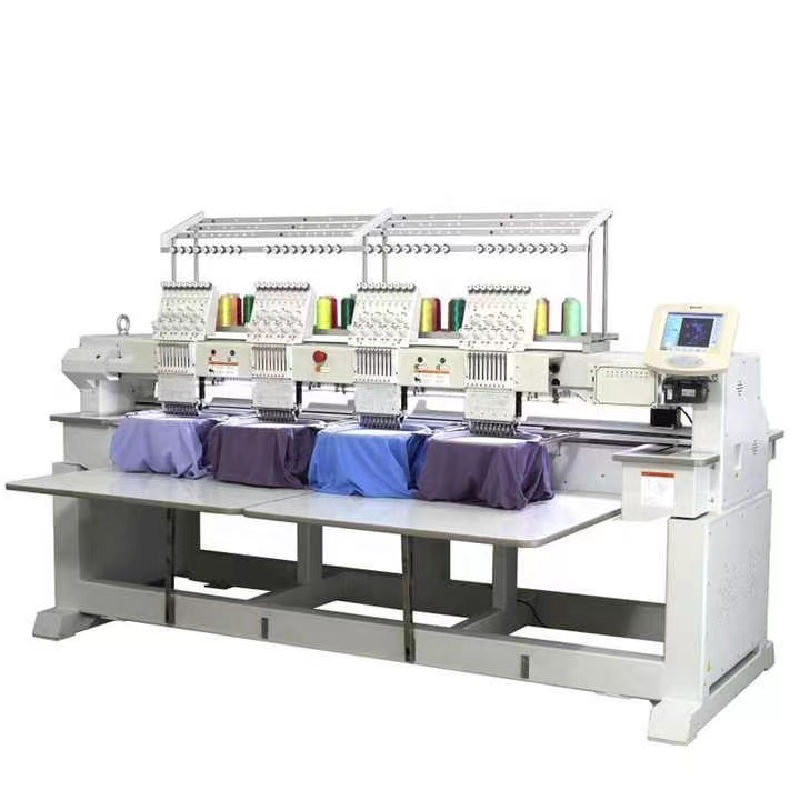
Technical Specifications and Parameters
Understanding the core technical specifications is crucial when evaluating a cheap 15 needle embroidery machine. These parameters directly impact the machine's efficiency, versatility, and the quality of the final product. Below are typical specifications for a robust industrial model, specifically a 4-head, 12/15-needle configuration designed for multi-product embroidery.
Product Specification Table: Industrial Multi-Head Embroidery Machine
| Parameter | Specification | Technical Detail / Benefit |
|---|---|---|
| Number of Heads | 4 Heads | Enables simultaneous embroidery, dramatically increasing production efficiency for bulk orders. |
| Number of Needles per Head | 12 or 15 Needles | Offers a wide color palette without frequent thread changes, essential for complex designs. 15 needles provide greater versatility for intricate, multi-color logos. |
| Max Embroidery Speed | 1000-1200 Stitches Per Minute (SPM) | High-speed operation for fast turnaround times, critical for meeting tight deadlines in high-volume production. |
| Embroidery Area (Flat) | Approx. 400x450mm per head | Generous working area accommodates a wide range of garment sizes and large designs, like jacket backs or banners. |
| Embroidery Area (Cap) | Approx. 270 degrees, 70x360mm | Specialized cap frame system allows for comprehensive embroidery on hats, including the front, sides, and back. |
| Main Motor | Dahao Servo Motor | Ensures precise control over needle movement, high torque, energy efficiency, and low noise levels. |
| X/Y Motor | Dahao Stepper Motor or Servo Motor | Provides accurate pantograph movement, crucial for precise stitch placement and minimal registration errors. Servo options offer greater speed and accuracy. |
| Control System | Dahao A18/C98 Control System with 10" LCD Touch Screen | Intuitive interface, real-time monitoring, pattern management, and network capabilities for efficient operation and data transfer. |
| Memory Capacity | 200 million stitches, 2000 designs | Ample storage for a vast library of designs, reducing setup time and enhancing workflow flexibility. |
| Data Transfer | USB, Ethernet, WiFi (optional) | Versatile connectivity for easy design loading and integration into existing network infrastructures. |
| Supported Formats | DST, DSB, FMC, HCD, XXX, etc. | Compatibility with industry-standard embroidery design files ensures seamless integration with digitizing software. |
| Power Supply | AC 220V/50Hz (customizable for 110V/60Hz) | Adaptable to various regional power grids, simplifying global deployment. |
These specifications underscore the capabilities of modern industrial embroidery machines, which are designed for high throughput, intricate detailing, and operational stability in demanding production environments.
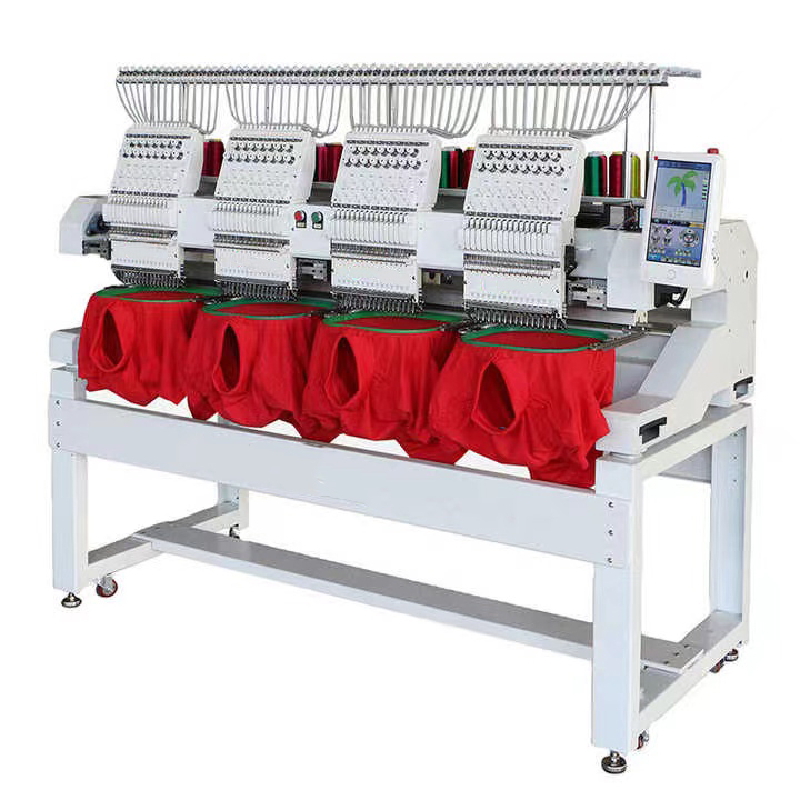
Application Scenarios for Industrial Embroidery Machines
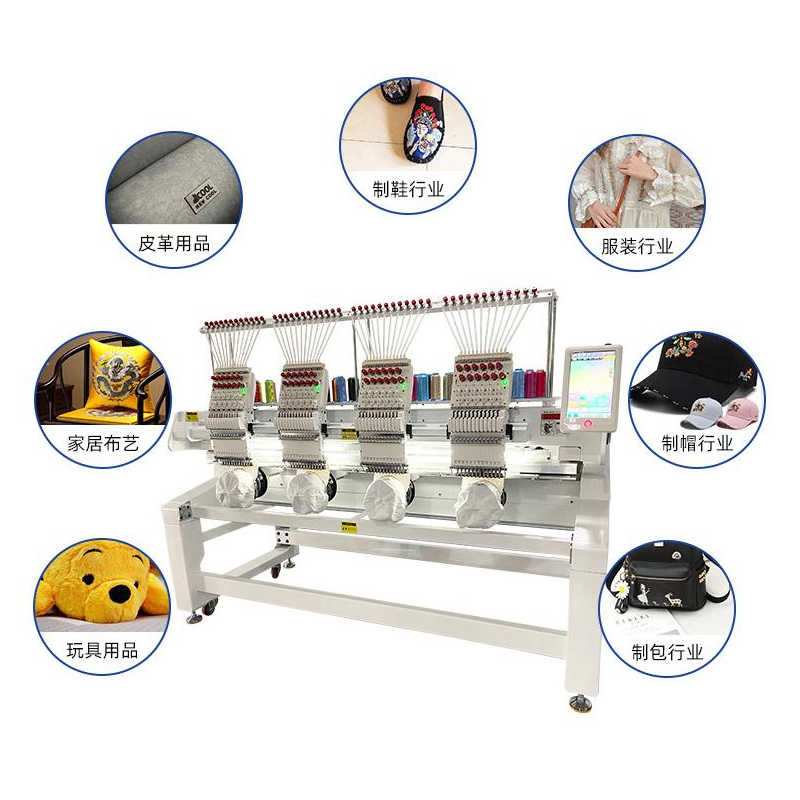
The versatility of an industrial embroidery machine like the Industrial Custom Logo Computer Machine 4 Heads 12 Needle 15 Needle T shirt Embroidery Machine makes it indispensable across a spectrum of industries. Its ability to handle diverse materials and product types ensures broad applicability, offering significant advantages to various businesses.
- Apparel Manufacturing: From small boutique operations to large-scale uniform providers, these machines are ideal for custom branding on T-shirts, polo shirts, jackets, and corporate wear. The multi-head configuration accelerates production for bulk orders, reducing lead times.
- Promotional Products & Merchandising: Essential for creating branded items such as caps, bags, towels, and patches for events, marketing campaigns, or retail sale. The precision of a cheap custom hat embroidery machine ensures high-quality representation of corporate logos and designs.
- Sports & Team Wear: Customizing jerseys, hats, and accessories for sports teams, clubs, and athletic organizations. The ability to handle various fabric types, including heavy sports textiles, is a key advantage.
- Fashion & Textile Design: Designers utilize these machines to add intricate patterns, monograms, and embellishments to high-end fashion garments, accessories, and home textiles, enabling unique, bespoke creations.
- Uniforms & Workwear: Embroidering company logos, employee names, and safety certifications onto uniforms for various sectors including healthcare, hospitality, construction, and public services. Durability and consistency are paramount here.
- Home Furnishings & Decor: Customizing towels, bed linens, cushions, and other textile-based home decor items for hotels, interior designers, or personalized gifts.
In these scenarios, the machine's multi-head setup ensures scalability, allowing businesses to fulfill orders ranging from small batches to thousands of units with consistent quality. The specialized cap embroidery function is particularly advantageous for businesses focusing on promotional headwear, offering excellent stitch definition and broad embroidery coverage around the cap circumference.
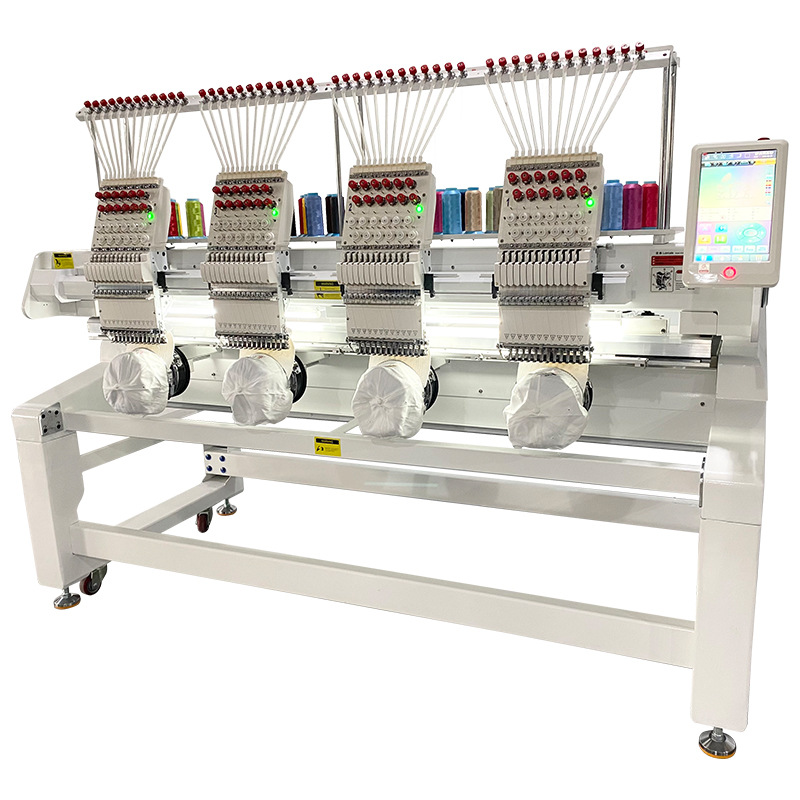
Technical Advantages of Modern Embroidery Machines
Modern industrial embroidery machines offer a suite of technical advantages that contribute to their efficiency, reliability, and precision, making them a wise investment for any business requiring consistent, high-quality embroidery.
- High-Precision Drive Systems: Equipped with servo motors for needle bar movement and either servo or advanced stepper motors for X/Y pantograph motion. This ensures extremely accurate stitch placement, minimizing registration errors even at high speeds (up to 1200 SPM). The closed-loop feedback in servo systems provides real-time position correction, leading to superior stitch quality.
- Multi-Head and Multi-Needle Configuration: The 4-head, 12 or 15-needle setup drastically increases production capacity by allowing multiple items to be embroidered simultaneously. The higher needle count per head (e.g., 15 needles) reduces the need for frequent thread changes for complex, multi-color designs, optimizing workflow and machine uptime.
- Advanced Thread Handling Systems: Features like automatic thread trimming, intelligent thread break detection, and bobbin detection systems significantly reduce manual intervention and potential errors, contributing to a smoother, uninterrupted production process.
- Intuitive User Interface (UI): Modern machines incorporate large LCD touch screens (e.g., 10-inch Dahao control panels) that offer graphical user interfaces. These UIs simplify design loading, pattern editing, color sequencing, and machine diagnostics, making operation accessible even for less experienced personnel.
- Robust Frame Construction: Industrial machines are built with heavy-duty steel frames, often optimized for vibration reduction. This stability is crucial for maintaining stitch quality and machine longevity, especially during prolonged high-speed operation.
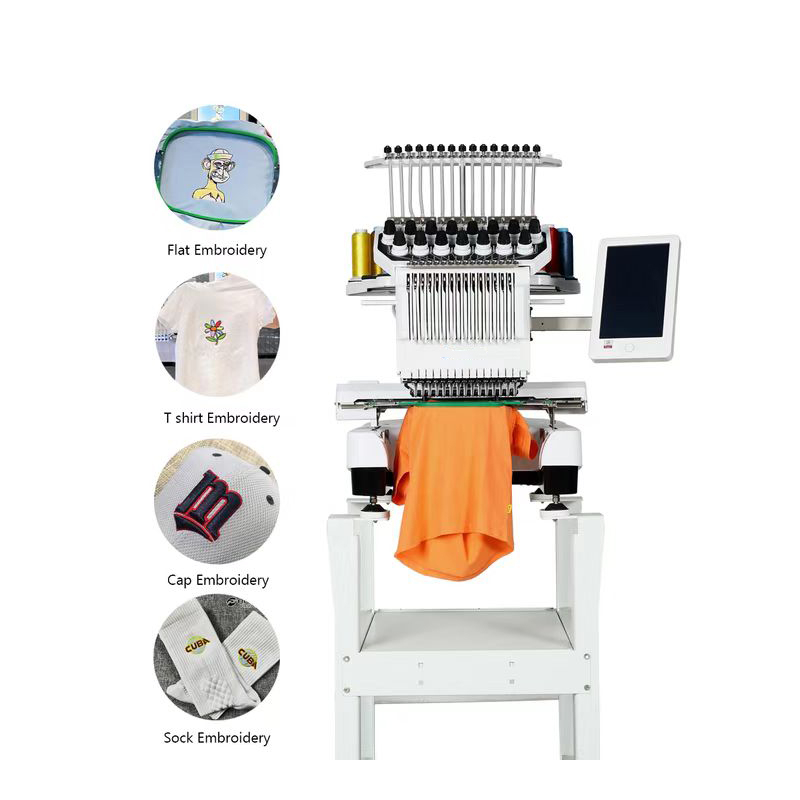
- Versatile Hooping Options: Comes with a comprehensive set of hoops for various applications (flat, cap, cylinder, shoe, etc.). The quick-change hoop system enhances flexibility and reduces setup time when switching between different product types.
- Network Connectivity & Data Management: USB, Ethernet, and often optional WiFi connectivity enable seamless design transfer from digitizing software. Large memory capacity (e.g., 200 million stitches) allows for extensive design libraries to be stored directly on the machine, facilitating rapid design recall and production.
- Energy Efficiency: Implementation of energy-saving components like efficient servo motors and optimized power management systems can lead to significant reductions in operational electricity costs, crucial for long-term profitability.
These advantages collectively contribute to higher productivity, reduced operating costs, enhanced product quality, and greater operational flexibility, offering a significant competitive edge to businesses in the custom embroidery sector.
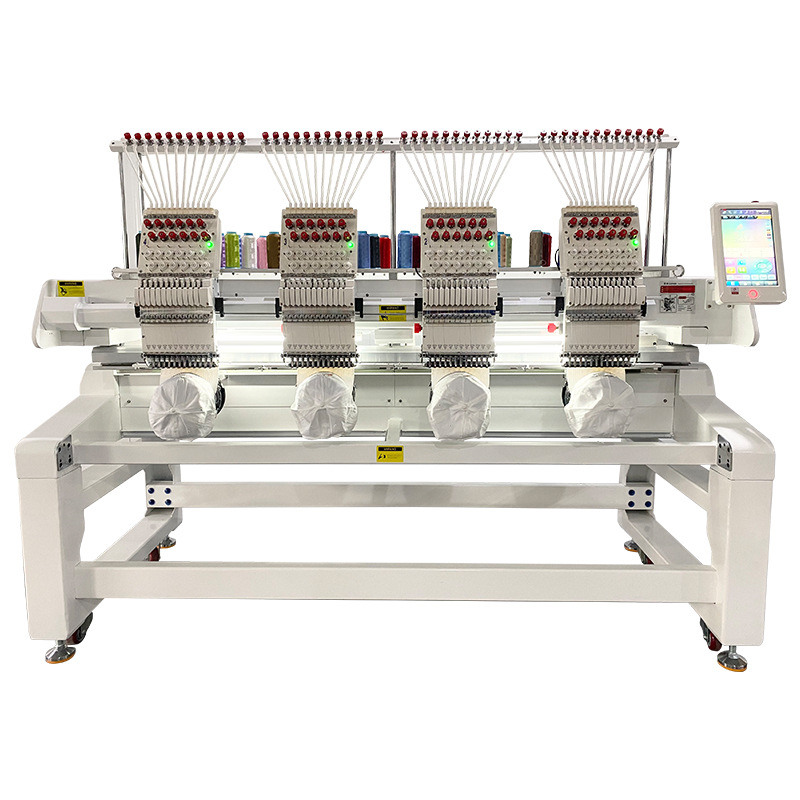
Vendor Comparison: Key Differentiators for Embroidery Machine Manufacturers
When investing in a cheap custom hat embroidery machine, choosing the right manufacturer is as crucial as the machine itself. Key differentiators extend beyond initial price to encompass quality, support, and long-term value. Below is a comparison table highlighting what sets leading embroidery machine manufacturers apart.
Comparison Table: Leading Industrial Embroidery Machine Vendors
| Feature | Premium Brands (e.g., Tajima, Barudan) | Value-Oriented Brands (e.g., XTPFSM and similar) |
|---|---|---|
| Initial Investment | High (Typically $30,000 - $100,000+ per multi-head machine) | Moderate (Typically $10,000 - $30,000+ per multi-head machine) |
| Component Sourcing | Often proprietary, high-end components with extensive R&D. | Utilizes globally recognized, reliable components (e.g., Dahao control systems, Panasonic/Dahao motors), balancing cost and performance. |
| Build Quality & Durability | Exceptional, built for decades of heavy industrial use with minimal wear. | Very good, solid industrial build suitable for high-volume production for 10-15+ years with proper maintenance. |
| Technology & Innovation | Often pioneers of new features (e.g., laser alignment, advanced networking). | Adopts proven, effective technologies quickly, offering a high feature-to-price ratio. |
| After-Sales Support & Parts | Extensive global service networks, readily available proprietary parts. | Strong manufacturer direct support, often with easily sourced universal components, reducing repair costs and downtime. |
| User Experience | Highly refined, advanced software with extensive customization. | User-friendly, intuitive interfaces (e.g., Dahao touch screens) with essential industrial functions. |
| Total Cost of Ownership (TCO) | High initial cost, potentially higher parts cost, but exceptional longevity. | Lower initial cost, competitive parts cost, excellent ROI for businesses scaling up. |
For many B2B operations seeking a cheap custom hat embroidery machine without compromising industrial performance, value-oriented manufacturers like XTPFSM present a compelling option. They leverage mature, reliable components from specialized suppliers, offering robust machines at a significantly lower capital expenditure while maintaining high production quality and speed.
Customized Solutions & Application Case Studies
Beyond standard offerings, many embroidery machine manufacturers provide customized solutions to meet specific production requirements. This flexibility allows businesses to optimize their workflow and expand their product offerings efficiently. For example, for clients requiring very specific hoop sizes, specialized cap drivers, or integration with unique automation systems, manufacturers can often tailor machine configurations.
- Custom Hoop Sets: While standard hoops are included, manufacturers can provide specialized frames for non-standard items like pockets, socks, or leather goods, designed for seamless attachment and optimal embroidery tension.
- Enhanced Connectivity: For factories with specific IT infrastructure, options for custom network configurations or integration with existing ERP/MES systems can be developed.
- Specialized Attachments: Certain applications might require additional attachments like sequin devices, cording attachments, or boring devices, which can be integrated during the manufacturing process.
Application Case Studies
Case Study 1: Promotional Products Distributor (Mid-Size)
- Challenge: A growing promotional products company needed to increase its daily output of custom embroidered caps and polo shirts. Their existing single-head machines were causing bottlenecks, leading to missed deadlines and outsourcing costs.
- Solution: Invested in two Industrial Custom Logo Computer Machine 4 Heads 15 Needle T shirt Embroidery Machines. The 4-head configuration allowed them to process 8 items simultaneously (4 caps and 4 flat items) by alternating setups, while the 15 needles enabled complex, multi-color corporate logos.
- Outcome: Production capacity increased by over 300% within six months. Outsourcing costs were eliminated, and lead times for custom orders reduced by 50%. The company reported a 25% increase in customer satisfaction due to faster turnaround and consistent quality. Customer feedback highlighted the Dahao control system's ease of use and the machine's robust build.
Case Study 2: Boutique Fashion Label (Start-Up)
- Challenge: A new fashion label specializing in bespoke embroidered denim jackets and unique patches required an embroidery machine that could deliver intricate detail and handle heavy fabrics, but with a limited budget.
- Solution: Acquired a 2-head, 12-needle industrial machine (a smaller variant of the featured product). The machine’s powerful servo motors provided the necessary penetration for heavy denim, and its precision pantograph ensured fine detail on complex designs.
- Outcome: The label successfully launched its first collection with uniquely embroidered pieces, receiving rave reviews for quality and craftsmanship. The machine's reliability and low maintenance allowed the start-up to keep operational costs down while producing high-value products. Their founder noted, "This machine allowed us to bring our most ambitious designs to life, delivering quality that rivals top brands at a fraction of the investment."
Ensuring Trustworthiness: FAQ, Lead Times, Warranty, and Support
Building trust with B2B clients requires transparency regarding product performance, service commitments, and operational logistics. This section addresses common inquiries and outlines the support structure typically provided by reputable manufacturers.
Frequently Asked Questions (FAQ)
- Q: What is the typical lifespan of an industrial embroidery machine?
A: With proper maintenance and regular servicing, our industrial machines are designed to operate efficiently for 10-15 years or more. Critical components are built for durability, adhering to ISO-certified manufacturing processes. - Q: Are spare parts readily available?
A: Yes, we maintain a comprehensive inventory of spare parts. Most major components, such as Dahao control system parts and standard needles, are universally accessible, minimizing downtime during repairs. - Q: What kind of training is provided for new operators?
A: We offer detailed operational manuals, video tutorials, and remote technical support for initial setup and training. On-site training can be arranged depending on location and package. - Q: How does the machine handle different fabric types?
A: Our machines are designed to be highly versatile. With appropriate hooping, needles (e.g., ballpoint for knits, sharp for woven), and stabilization techniques, they can embroider a wide range of materials from delicate silks to heavy denim, leather, and technical fabrics.
Lead Time & Fulfillment
Standard lead time for our Industrial Custom Logo Computer Machine 4 Heads 12 Needle 15 Needle T shirt Embroidery Machine is typically 20-30 business days from order confirmation and deposit. This allows for meticulous assembly, comprehensive quality control, and rigorous testing to ensure each machine meets our high performance standards. Expedited options may be available upon request and subject to current production schedules. We provide transparent updates throughout the manufacturing and shipping process.
Warranty Commitments
All our industrial embroidery machines come with a standard 12-month limited warranty on major mechanical and electrical components, effective from the date of installation. The machine frame is typically covered by a 3-year limited warranty. This warranty covers manufacturing defects and component failures under normal operating conditions. Consumables like needles, bobbins, and thread are excluded. Extended warranty packages are available for purchase.
Customer Support & After-Sales Service
Our commitment to our clients extends far beyond the sale. We provide:
- Dedicated Technical Support: Available via phone, email, and live chat during business hours. Our certified technicians are experienced in diagnosing and resolving issues efficiently.
- Remote Diagnostics: Many modern machines allow for remote access for troubleshooting and software updates, minimizing the need for on-site visits.
- Parts & Service Network: Access to a global network for spare parts supply and, where available, authorized service partners for on-site repairs and preventative maintenance.
- Documentation: Comprehensive technical manuals, wiring diagrams, and troubleshooting guides are provided with each machine.
Our adherence to international quality management systems (e.g., ISO 9001:2015 certified processes) reinforces our commitment to delivering reliable products and exceptional service, ensuring our clients receive a product that is not only high-performing but also backed by robust support.
Conclusion
Investing in a cheap custom hat embroidery machine, particularly a multi-head industrial model, represents a strategic decision for businesses aiming for high-volume, high-quality custom apparel and promotional product manufacturing. The detailed exploration of manufacturing processes, technical specifications, diverse application scenarios, and a robust support infrastructure underscores the value proposition of modern embroidery solutions. By carefully considering factors such as build quality, component sourcing, after-sales support, and long-term cost-efficiency, B2B decision-makers can select machinery that not only meets their immediate production needs but also offers scalability and a strong return on investment for years to come. The emphasis on advanced features like high-speed precision, intuitive controls, and comprehensive material compatibility ensures that such machines remain at the forefront of the custom embroidery industry.
Citations
- International Organization for Standardization. (2015). ISO 9001:2015: Quality management systems – Requirements.
- European Committee for Standardization. (Various). CE Marking Directives for Machinery.
- Federal Communications Commission. (Various). FCC Part 15 – Radio Frequency Devices.
- Textile Industry Affairs. (2023). Global Embroidery Market Analysis & Trends. ResearchGate.
- Journal of Manufacturing Systems. (2022). Advances in Automated Textile Production and Quality Control. ScienceDirect.
Latest news
-
How to Find the Best Computerized Machine Embroidery Suppliers
NewsApr.16,2026
-
Professional Computerized Machine Embroidery Service for Brands
NewsApr.09,2026
-
Selecting The Ideal Computerized Machine Embroidery Factory For Your Business
NewsApr.07,2026
-
Choosing a Reliable Computerized Machine Embroidery Manufacturer for Optimal Results
NewsApr.04,2026
-
Exploring Premier Computerized Embroidery Machine Factories for Quality Production
NewsMar.31,2026
-
Find Your Ideal Computerized Embroidery Machine Supplier with XT PFSM
NewsMar.28,2026
Sep . 08, 2025 16:38 Back to list
Cheap Custom Hat Embroidery Machine | Affordable 15-Needle Power
Navigating the Market for Cost-Effective Custom Embroidery Solutions
The demand for custom-embroidered apparel and promotional items continues to surge, driven by robust growth in corporate branding, personalized fashion, and specialized retail. For businesses looking to enter or expand into this lucrative market, acquiring the right equipment is paramount. This guide delves into the specifics of sourcing a cheap custom hat embroidery machine, focusing on industrial-grade solutions that balance affordability with high performance and reliability. We will explore key industry trends, technical requirements, application versatility, and crucial considerations for B2B decision-makers, including the significance of manufacturers providing comprehensive solutions.
Current industry trends indicate a strong move towards automation and multi-head machines to maximize output efficiency and reduce per-unit costs. Businesses are increasingly seeking flexible systems capable of handling a diverse range of materials and product types, from standard T-shirts and polos to complex hat designs and intricate patches. The emphasis is on durable, precise machinery that offers advanced connectivity and user-friendly interfaces, minimizing training overhead and production errors.
Manufacturing Process Flow of a cheap custom hat embroidery machine
The production of an industrial-grade embroidery machine, such as a cheap custom hat embroidery machine like the Industrial Custom Logo Computer Machine 4 Heads 12 Needle 15 Needle T shirt Embroidery Machine, involves a meticulous, multi-stage process to ensure precision, durability, and operational longevity. Each component is engineered to meet stringent performance criteria.
I. Raw Material Sourcing & Preparation
- Steel & Aluminum Alloys: High-grade steel (e.g., 45# carbon steel, structural alloy steel) for the machine frame, main shaft, and critical moving parts, chosen for its strength and fatigue resistance. Aluminum alloys (e.g., 6061, 7075) are used for lightweight components such as arms and head assemblies, optimized for reduced inertia and higher operational speeds.
- Electronic Components: Sourcing of servo motors, stepper motors, control boards, touchscreens, and sensors from reputable suppliers, often adhering to CE, FCC, or UL standards.
- Precision Bearings & Bushings: High-tolerance bearings (e.g., SKF, NSK equivalents) for smooth operation and minimal friction in moving assemblies.
II. Component Manufacturing & Machining
- Frame & Base Production:
- Casting/Forging: Large structural components like the machine base or specific head parts may undergo casting (e.g., gray iron for vibration dampening) or forging processes to achieve high material density and strength.
- Welding & Fabrication: Steel sections are precisely cut and welded to form the robust machine frame, followed by stress relief annealing to prevent deformation.
- Precision CNC Machining:
- Utilizing multi-axis CNC machines to mill, turn, and drill components such as needle bars, presser feet, rotary hooks, and pantograph mechanisms. This ensures dimensional accuracy down to micrometers, critical for stitch quality and machine longevity.
- Heat treatment processes (e.g., hardening, tempering) are applied to critical wear parts to enhance surface hardness and wear resistance.
- Surface Treatment:
- Components are cleaned, polished, and coated (e.g., powder coating for frames, chrome plating for needle plates) to prevent corrosion, reduce friction, and enhance aesthetics.
III. Assembly & Integration
- Mechanical Assembly: Expert technicians assemble the machine frame, install the embroidery heads (pantograph, needle bars, rotary hooks, thread guides), and integrate the drive systems (servo motors, timing belts, pulleys). Precise alignment and tensioning are crucial.
- Electrical & Electronic Integration: Wiring harnesses are meticulously routed, control boards installed, and touchscreens mounted. Sensors for thread break detection, bobbin detection, and safety mechanisms are integrated.
- Software Loading & Calibration: Proprietary operating software is loaded, and all axes (X, Y, Z) are calibrated to ensure accurate movement and precise stitch registration.
IV. Quality Assurance & Testing
- Component Level Inspection: Individual components are inspected for dimensional accuracy, material integrity, and surface finish before assembly, adhering to internal QC standards.
- Sub-Assembly Testing: Each embroidery head, motor assembly, and control unit is tested independently to verify functionality and performance.
- Full Machine Performance Testing:
- Endurance Testing: Machines undergo extended run cycles (e.g., 72-120 hours) at maximum speed to simulate real-world usage and identify potential weaknesses.
- Stitch Quality Analysis: Multiple embroidery patterns are run on various fabrics to assess stitch consistency, tension, and precision across the entire embroidery field.
- Noise & Vibration Analysis: Measurements are taken to ensure the machine operates within acceptable noise and vibration levels, critical for operator comfort and machine longevity.
- Compliance Testing: Machines are tested to ensure compliance with international standards such as ISO 9001 for quality management, CE for European market safety, and FCC for electromagnetic compatibility. Adherence to ANSI standards for machine safety is also a priority for relevant markets.
A well-manufactured cheap custom hat embroidery machine designed with these principles in mind typically offers a service life of 10-15 years with proper maintenance. These machines find applications in target industries such as apparel manufacturing, promotional products, corporate gifting, and small-scale custom textile businesses. Advantages include energy-efficient servo drives reducing power consumption by up to 30% compared to stepper motors, and robust construction providing superior vibration dampening for enhanced stitch precision and reduced wear.
Technical Specifications and Parameters
Understanding the core technical specifications is crucial when evaluating a cheap 15 needle embroidery machine. These parameters directly impact the machine's efficiency, versatility, and the quality of the final product. Below are typical specifications for a robust industrial model, specifically a 4-head, 12/15-needle configuration designed for multi-product embroidery.
Product Specification Table: Industrial Multi-Head Embroidery Machine
| Parameter | Specification | Technical Detail / Benefit |
|---|---|---|
| Number of Heads | 4 Heads | Enables simultaneous embroidery, dramatically increasing production efficiency for bulk orders. |
| Number of Needles per Head | 12 or 15 Needles | Offers a wide color palette without frequent thread changes, essential for complex designs. 15 needles provide greater versatility for intricate, multi-color logos. |
| Max Embroidery Speed | 1000-1200 Stitches Per Minute (SPM) | High-speed operation for fast turnaround times, critical for meeting tight deadlines in high-volume production. |
| Embroidery Area (Flat) | Approx. 400x450mm per head | Generous working area accommodates a wide range of garment sizes and large designs, like jacket backs or banners. |
| Embroidery Area (Cap) | Approx. 270 degrees, 70x360mm | Specialized cap frame system allows for comprehensive embroidery on hats, including the front, sides, and back. |
| Main Motor | Dahao Servo Motor | Ensures precise control over needle movement, high torque, energy efficiency, and low noise levels. |
| X/Y Motor | Dahao Stepper Motor or Servo Motor | Provides accurate pantograph movement, crucial for precise stitch placement and minimal registration errors. Servo options offer greater speed and accuracy. |
| Control System | Dahao A18/C98 Control System with 10" LCD Touch Screen | Intuitive interface, real-time monitoring, pattern management, and network capabilities for efficient operation and data transfer. |
| Memory Capacity | 200 million stitches, 2000 designs | Ample storage for a vast library of designs, reducing setup time and enhancing workflow flexibility. |
| Data Transfer | USB, Ethernet, WiFi (optional) | Versatile connectivity for easy design loading and integration into existing network infrastructures. |
| Supported Formats | DST, DSB, FMC, HCD, XXX, etc. | Compatibility with industry-standard embroidery design files ensures seamless integration with digitizing software. |
| Power Supply | AC 220V/50Hz (customizable for 110V/60Hz) | Adaptable to various regional power grids, simplifying global deployment. |
These specifications underscore the capabilities of modern industrial embroidery machines, which are designed for high throughput, intricate detailing, and operational stability in demanding production environments.
Application Scenarios for Industrial Embroidery Machines
The versatility of an industrial embroidery machine like the Industrial Custom Logo Computer Machine 4 Heads 12 Needle 15 Needle T shirt Embroidery Machine makes it indispensable across a spectrum of industries. Its ability to handle diverse materials and product types ensures broad applicability, offering significant advantages to various businesses.
- Apparel Manufacturing: From small boutique operations to large-scale uniform providers, these machines are ideal for custom branding on T-shirts, polo shirts, jackets, and corporate wear. The multi-head configuration accelerates production for bulk orders, reducing lead times.
- Promotional Products & Merchandising: Essential for creating branded items such as caps, bags, towels, and patches for events, marketing campaigns, or retail sale. The precision of a cheap custom hat embroidery machine ensures high-quality representation of corporate logos and designs.
- Sports & Team Wear: Customizing jerseys, hats, and accessories for sports teams, clubs, and athletic organizations. The ability to handle various fabric types, including heavy sports textiles, is a key advantage.
- Fashion & Textile Design: Designers utilize these machines to add intricate patterns, monograms, and embellishments to high-end fashion garments, accessories, and home textiles, enabling unique, bespoke creations.
- Uniforms & Workwear: Embroidering company logos, employee names, and safety certifications onto uniforms for various sectors including healthcare, hospitality, construction, and public services. Durability and consistency are paramount here.
- Home Furnishings & Decor: Customizing towels, bed linens, cushions, and other textile-based home decor items for hotels, interior designers, or personalized gifts.
In these scenarios, the machine's multi-head setup ensures scalability, allowing businesses to fulfill orders ranging from small batches to thousands of units with consistent quality. The specialized cap embroidery function is particularly advantageous for businesses focusing on promotional headwear, offering excellent stitch definition and broad embroidery coverage around the cap circumference.
Technical Advantages of Modern Embroidery Machines
Modern industrial embroidery machines offer a suite of technical advantages that contribute to their efficiency, reliability, and precision, making them a wise investment for any business requiring consistent, high-quality embroidery.
- High-Precision Drive Systems: Equipped with servo motors for needle bar movement and either servo or advanced stepper motors for X/Y pantograph motion. This ensures extremely accurate stitch placement, minimizing registration errors even at high speeds (up to 1200 SPM). The closed-loop feedback in servo systems provides real-time position correction, leading to superior stitch quality.
- Multi-Head and Multi-Needle Configuration: The 4-head, 12 or 15-needle setup drastically increases production capacity by allowing multiple items to be embroidered simultaneously. The higher needle count per head (e.g., 15 needles) reduces the need for frequent thread changes for complex, multi-color designs, optimizing workflow and machine uptime.
- Advanced Thread Handling Systems: Features like automatic thread trimming, intelligent thread break detection, and bobbin detection systems significantly reduce manual intervention and potential errors, contributing to a smoother, uninterrupted production process.
- Intuitive User Interface (UI): Modern machines incorporate large LCD touch screens (e.g., 10-inch Dahao control panels) that offer graphical user interfaces. These UIs simplify design loading, pattern editing, color sequencing, and machine diagnostics, making operation accessible even for less experienced personnel.
- Robust Frame Construction: Industrial machines are built with heavy-duty steel frames, often optimized for vibration reduction. This stability is crucial for maintaining stitch quality and machine longevity, especially during prolonged high-speed operation.
- Versatile Hooping Options: Comes with a comprehensive set of hoops for various applications (flat, cap, cylinder, shoe, etc.). The quick-change hoop system enhances flexibility and reduces setup time when switching between different product types.
- Network Connectivity & Data Management: USB, Ethernet, and often optional WiFi connectivity enable seamless design transfer from digitizing software. Large memory capacity (e.g., 200 million stitches) allows for extensive design libraries to be stored directly on the machine, facilitating rapid design recall and production.
- Energy Efficiency: Implementation of energy-saving components like efficient servo motors and optimized power management systems can lead to significant reductions in operational electricity costs, crucial for long-term profitability.
These advantages collectively contribute to higher productivity, reduced operating costs, enhanced product quality, and greater operational flexibility, offering a significant competitive edge to businesses in the custom embroidery sector.
Vendor Comparison: Key Differentiators for Embroidery Machine Manufacturers
When investing in a cheap custom hat embroidery machine, choosing the right manufacturer is as crucial as the machine itself. Key differentiators extend beyond initial price to encompass quality, support, and long-term value. Below is a comparison table highlighting what sets leading embroidery machine manufacturers apart.
Comparison Table: Leading Industrial Embroidery Machine Vendors
| Feature | Premium Brands (e.g., Tajima, Barudan) | Value-Oriented Brands (e.g., XTPFSM and similar) |
|---|---|---|
| Initial Investment | High (Typically $30,000 - $100,000+ per multi-head machine) | Moderate (Typically $10,000 - $30,000+ per multi-head machine) |
| Component Sourcing | Often proprietary, high-end components with extensive R&D. | Utilizes globally recognized, reliable components (e.g., Dahao control systems, Panasonic/Dahao motors), balancing cost and performance. |
| Build Quality & Durability | Exceptional, built for decades of heavy industrial use with minimal wear. | Very good, solid industrial build suitable for high-volume production for 10-15+ years with proper maintenance. |
| Technology & Innovation | Often pioneers of new features (e.g., laser alignment, advanced networking). | Adopts proven, effective technologies quickly, offering a high feature-to-price ratio. |
| After-Sales Support & Parts | Extensive global service networks, readily available proprietary parts. | Strong manufacturer direct support, often with easily sourced universal components, reducing repair costs and downtime. |
| User Experience | Highly refined, advanced software with extensive customization. | User-friendly, intuitive interfaces (e.g., Dahao touch screens) with essential industrial functions. |
| Total Cost of Ownership (TCO) | High initial cost, potentially higher parts cost, but exceptional longevity. | Lower initial cost, competitive parts cost, excellent ROI for businesses scaling up. |
For many B2B operations seeking a cheap custom hat embroidery machine without compromising industrial performance, value-oriented manufacturers like XTPFSM present a compelling option. They leverage mature, reliable components from specialized suppliers, offering robust machines at a significantly lower capital expenditure while maintaining high production quality and speed.
Customized Solutions & Application Case Studies
Beyond standard offerings, many embroidery machine manufacturers provide customized solutions to meet specific production requirements. This flexibility allows businesses to optimize their workflow and expand their product offerings efficiently. For example, for clients requiring very specific hoop sizes, specialized cap drivers, or integration with unique automation systems, manufacturers can often tailor machine configurations.
- Custom Hoop Sets: While standard hoops are included, manufacturers can provide specialized frames for non-standard items like pockets, socks, or leather goods, designed for seamless attachment and optimal embroidery tension.
- Enhanced Connectivity: For factories with specific IT infrastructure, options for custom network configurations or integration with existing ERP/MES systems can be developed.
- Specialized Attachments: Certain applications might require additional attachments like sequin devices, cording attachments, or boring devices, which can be integrated during the manufacturing process.
Application Case Studies
Case Study 1: Promotional Products Distributor (Mid-Size)
- Challenge: A growing promotional products company needed to increase its daily output of custom embroidered caps and polo shirts. Their existing single-head machines were causing bottlenecks, leading to missed deadlines and outsourcing costs.
- Solution: Invested in two Industrial Custom Logo Computer Machine 4 Heads 15 Needle T shirt Embroidery Machines. The 4-head configuration allowed them to process 8 items simultaneously (4 caps and 4 flat items) by alternating setups, while the 15 needles enabled complex, multi-color corporate logos.
- Outcome: Production capacity increased by over 300% within six months. Outsourcing costs were eliminated, and lead times for custom orders reduced by 50%. The company reported a 25% increase in customer satisfaction due to faster turnaround and consistent quality. Customer feedback highlighted the Dahao control system's ease of use and the machine's robust build.
Case Study 2: Boutique Fashion Label (Start-Up)
- Challenge: A new fashion label specializing in bespoke embroidered denim jackets and unique patches required an embroidery machine that could deliver intricate detail and handle heavy fabrics, but with a limited budget.
- Solution: Acquired a 2-head, 12-needle industrial machine (a smaller variant of the featured product). The machine’s powerful servo motors provided the necessary penetration for heavy denim, and its precision pantograph ensured fine detail on complex designs.
- Outcome: The label successfully launched its first collection with uniquely embroidered pieces, receiving rave reviews for quality and craftsmanship. The machine's reliability and low maintenance allowed the start-up to keep operational costs down while producing high-value products. Their founder noted, "This machine allowed us to bring our most ambitious designs to life, delivering quality that rivals top brands at a fraction of the investment."
Ensuring Trustworthiness: FAQ, Lead Times, Warranty, and Support
Building trust with B2B clients requires transparency regarding product performance, service commitments, and operational logistics. This section addresses common inquiries and outlines the support structure typically provided by reputable manufacturers.
Frequently Asked Questions (FAQ)
- Q: What is the typical lifespan of an industrial embroidery machine?
A: With proper maintenance and regular servicing, our industrial machines are designed to operate efficiently for 10-15 years or more. Critical components are built for durability, adhering to ISO-certified manufacturing processes. - Q: Are spare parts readily available?
A: Yes, we maintain a comprehensive inventory of spare parts. Most major components, such as Dahao control system parts and standard needles, are universally accessible, minimizing downtime during repairs. - Q: What kind of training is provided for new operators?
A: We offer detailed operational manuals, video tutorials, and remote technical support for initial setup and training. On-site training can be arranged depending on location and package. - Q: How does the machine handle different fabric types?
A: Our machines are designed to be highly versatile. With appropriate hooping, needles (e.g., ballpoint for knits, sharp for woven), and stabilization techniques, they can embroider a wide range of materials from delicate silks to heavy denim, leather, and technical fabrics.
Lead Time & Fulfillment
Standard lead time for our Industrial Custom Logo Computer Machine 4 Heads 12 Needle 15 Needle T shirt Embroidery Machine is typically 20-30 business days from order confirmation and deposit. This allows for meticulous assembly, comprehensive quality control, and rigorous testing to ensure each machine meets our high performance standards. Expedited options may be available upon request and subject to current production schedules. We provide transparent updates throughout the manufacturing and shipping process.
Warranty Commitments
All our industrial embroidery machines come with a standard 12-month limited warranty on major mechanical and electrical components, effective from the date of installation. The machine frame is typically covered by a 3-year limited warranty. This warranty covers manufacturing defects and component failures under normal operating conditions. Consumables like needles, bobbins, and thread are excluded. Extended warranty packages are available for purchase.
Customer Support & After-Sales Service
Our commitment to our clients extends far beyond the sale. We provide:
- Dedicated Technical Support: Available via phone, email, and live chat during business hours. Our certified technicians are experienced in diagnosing and resolving issues efficiently.
- Remote Diagnostics: Many modern machines allow for remote access for troubleshooting and software updates, minimizing the need for on-site visits.
- Parts & Service Network: Access to a global network for spare parts supply and, where available, authorized service partners for on-site repairs and preventative maintenance.
- Documentation: Comprehensive technical manuals, wiring diagrams, and troubleshooting guides are provided with each machine.
Our adherence to international quality management systems (e.g., ISO 9001:2015 certified processes) reinforces our commitment to delivering reliable products and exceptional service, ensuring our clients receive a product that is not only high-performing but also backed by robust support.
Conclusion
Investing in a cheap custom hat embroidery machine, particularly a multi-head industrial model, represents a strategic decision for businesses aiming for high-volume, high-quality custom apparel and promotional product manufacturing. The detailed exploration of manufacturing processes, technical specifications, diverse application scenarios, and a robust support infrastructure underscores the value proposition of modern embroidery solutions. By carefully considering factors such as build quality, component sourcing, after-sales support, and long-term cost-efficiency, B2B decision-makers can select machinery that not only meets their immediate production needs but also offers scalability and a strong return on investment for years to come. The emphasis on advanced features like high-speed precision, intuitive controls, and comprehensive material compatibility ensures that such machines remain at the forefront of the custom embroidery industry.
Citations
- International Organization for Standardization. (2015). ISO 9001:2015: Quality management systems – Requirements.
- European Committee for Standardization. (Various). CE Marking Directives for Machinery.
- Federal Communications Commission. (Various). FCC Part 15 – Radio Frequency Devices.
- Textile Industry Affairs. (2023). Global Embroidery Market Analysis & Trends. ResearchGate.
- Journal of Manufacturing Systems. (2022). Advances in Automated Textile Production and Quality Control. ScienceDirect.
Next:
Latest news

Copyright © 2026 Xingtai Pufa Trading Co., Ltd All Rights Reserved. Sitemap | Privacy Policy | Top Blog | Global Service