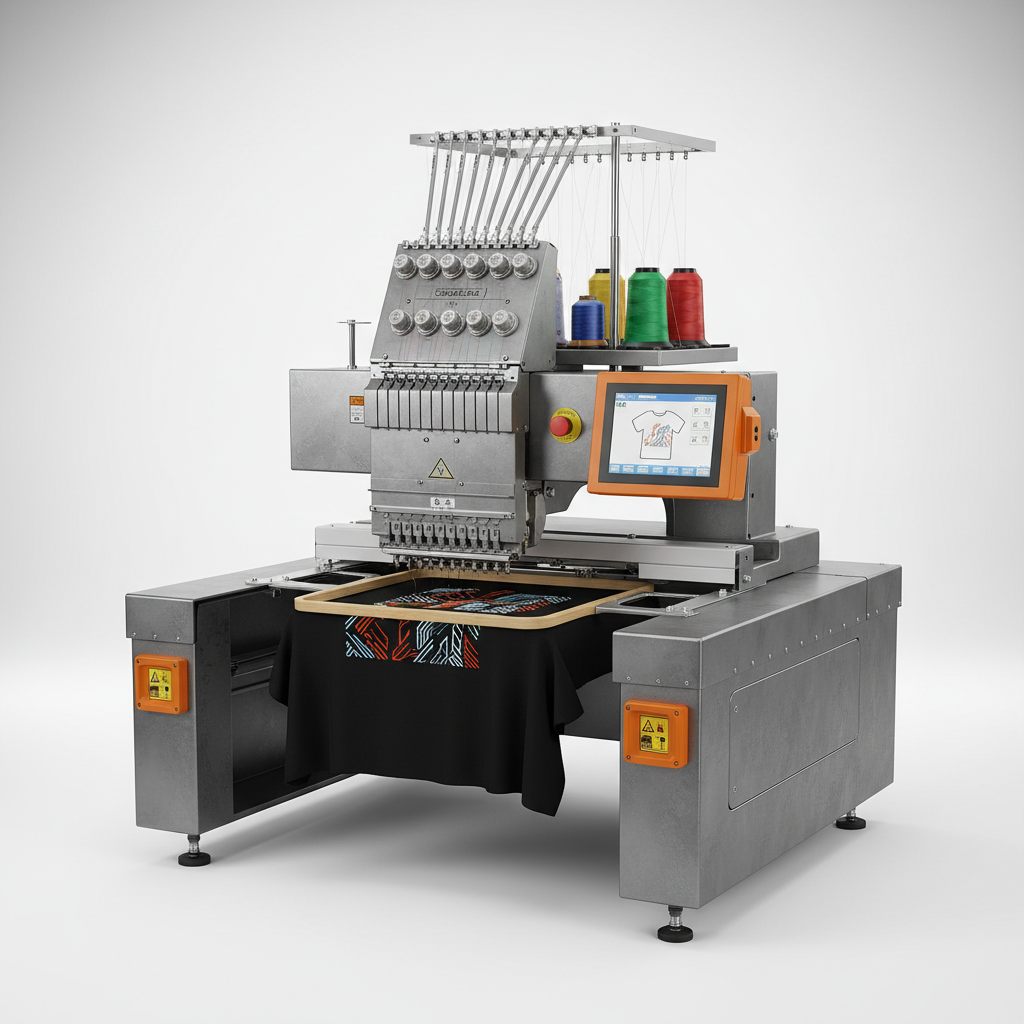
The global textile industry is undergoing a massive digital transformation, where the precision of machine execution meets the creativity of digital art. In this landscape, achieving the best embroidery machine digitizing results is no longer just an advantage but a necessity for businesses aiming to scale their production while maintaining artisanal quality. Whether for high-fashion houses or industrial garment factories, the bridge between a digital concept and a physical stitch is where value is created.
Modern production demands a seamless integration of software and hardware to reduce waste and increase throughput. The challenge for many manufacturers lies in translating complex artwork into a format that high-speed machinery can execute without thread breaks or fabric puckering. By optimizing the digitizing process, companies can ensure that their six-head or single-head machines operate at peak efficiency, turning raw fabric into high-value branded apparel with minimal intervention.
For those investing in advanced hardware, understanding the nuances of best embroidery machine digitizing is key to unlocking the full potential of their equipment. From managing stitch counts of up to 5 million per pattern to utilizing DST formats, the synergy between precise digitizing and high-speed mechanical execution defines the modern standard of textile excellence.
The Industrial Significance of Digitizing Precision
Precision in digitizing is the heartbeat of professional garment decoration. When working with high-capacity equipment like a six-head 12-needle machine, a single error in the digitizing file is multiplied six times across every garment, leading to significant material waste. Therefore, the focus on accuracy ensures that complex logos and intricate patterns are rendered perfectly, regardless of whether they are applied to a flat piece of fabric or a structured cap.
Furthermore, the ability to handle massive pattern storage—up to 200 million needles—requires a structured approach to file management. By prioritizing the best embroidery machine digitizing standards, factories can maintain a vast library of 500pcs of DST format patterns, allowing for rapid switching between different client orders without compromising the quality of the stitch or the integrity of the fabric.
Core Technical Components for High-Speed Execution
To achieve industrial-grade results, the hardware must support the digital instructions with absolute reliability. A high-speed embroidery machine, capable of reaching 1200RPM, relies on a robust control system to translate digitizing data into physical movement. The integration of an 8-inch touch screen allows operators to monitor real-time stitching and make immediate adjustments to ensure the digital design aligns perfectly with the fabric's tension.
Another critical component is the versatility of the framing system. Whether it is cap embroidery, flat embroidery, or garment embroidery (such as T-shirts), the machine's ability to adapt its hoop size ensures that the digitized pattern is not distorted. A 270° wide cap frame unit specifically allows for comprehensive coverage, ensuring that the best embroidery machine digitizing files are executed across the curved surfaces of headwear without gaps.
Finally, the internal memory and data recovery features provide a safety net for high-volume production. With memory supporting 20 million stitches and the ability to retain current working data during emergency stops or power outages, the risk of losing progress on a complex, multi-million stitch design is virtually eliminated. This ensures a continuous workflow and maximizes the ROI of the machinery.
Optimizing Workflow for Best Embroidery Machine Digitizing
Optimizing the workflow begins with the selection of the correct file format and stitch density. For professional-grade output, using the DST format is essential as it is the industry standard for compatibility across most computer-controlled machines. When focusing on the best embroidery machine digitizing, technicians must balance the number of stitches to avoid over-densifying the fabric, which can lead to needle breakage or fabric tearing.
The actual execution phase benefits greatly from features like the "pre-sew design trace." This allows the operator to verify the boundaries of the digitized pattern before the first needle drops. By implementing this step, the best embroidery machine digitizing process moves from a theoretical design to a guaranteed physical result, reducing the trial-and-error phase that often plagues lower-end equipment.
Consistency across multiple heads is where the six-head machine truly shines. Because all heads work simultaneously, the digitized instructions are mirrored perfectly. This synchronization is what makes the best embroidery machine digitizing so powerful in a factory setting—once a pattern is perfected for one head, the output is multiplied six-fold with identical precision, ensuring brand consistency across thousands of garments.
Scalability and Output Efficiency Analysis
Scalability in embroidery production is measured by the transition from single-head experimentation to multi-head mass production. A six-head machine drastically increases the output compared to a single-head unit, making it an ideal choice for large clothing factories and gift customization centers. The efficiency is further boosted by automatic thread cutting and color changes, which minimize manual downtime.
When analyzing the impact of high-quality digitizing on speed, the reduction in thread breaks is the most significant metric. A well-digitized file minimizes unnecessary jumps and optimizes the path of the needle, allowing the machine to maintain its maximum speed of 1200RPM without triggering the thread break detection sensors frequently.
Production Efficiency: Digitizing Quality vs. Output
Global Applications in Modern Garment Production
The application of high-speed, six-head embroidery machines spans various global industries. In gift customization centers, these machines allow for the rapid creation of unique, personalized items for friends or corporate employees. The ability to switch between cap and flat embroidery quickly makes it a versatile tool for boutiques that offer on-demand customization.
On a larger scale, industrial clothing factories utilize these machines to meet rigorous production quotas. By leveraging the best embroidery machine digitizing, these factories can produce thousands of unified uniforms or branded apparel with high efficiency. The multi-language support (English, French, Spanish, etc.) allows these machines to be deployed in diverse markets across Europe, Asia, and the Americas.
Long-Term Value of Automated Thread Management
One of the most significant long-term benefits of industrial embroidery machines is the reduction of operational overhead through automation. Automatic thread trimming and automatic bobbin winding remove the tedious manual tasks that typically slow down production. This allows operators to focus on quality control rather than repetitive mechanical maintenance.
The integration of thread break detection ensures that the machine stops immediately when a problem occurs, preventing the "nesting" of threads that can ruin a garment. When paired with the best embroidery machine digitizing, which minimizes the likelihood of such breaks, the machine's uptime is maximized, leading to a lower cost-per-stitch over the machine's lifespan.
Furthermore, the energy-efficient design, consuming only 100W to 150W, ensures that high-volume production does not lead to exorbitant electricity costs. This combination of high speed (1200RPM) and low power consumption provides a sustainable business model for embroidery centers looking to grow without exponentially increasing their utility expenses.
Future Trends in Digital Textile Automation
The future of textile decoration lies in the further fusion of AI and mechanical precision. We are seeing a shift toward more intuitive digitizing software that can automatically suggest stitch directions based on fabric type. This evolution will further refine the best embroidery machine digitizing process, making professional results accessible even to beginners.
Sustainability is also becoming a core focus. The move toward reducing thread waste through smarter digitizing paths is helping factories lower their environmental footprint. Digital transformation is enabling "just-in-time" production, where customized garments are produced in small batches, reducing the need for massive unsold inventories.
As automation continues to evolve, the role of the embroiderer will shift from a machine operator to a digital designer. The ability to manage complex files and utilize the mending function (back and skip stitches) via the controller will become the primary skill set, ensuring that high-speed machinery continues to produce high-art results.
Comparative Analysis of Industrial Embroidery Capabilities
| Capability Dimension |
Single-Head Unit |
Six-Head Industrial |
Impact of Digitizing |
| Production Volume |
Low (Sampling) |
High (Mass Production) |
Multiplies output efficiency |
| Stitch Accuracy |
Manual Focus |
Synchronized Precision |
Ensures uniform consistency |
| Material Versatility |
Limited Hoops |
Cap/Flat/Garment |
Adapts to various fabric shapes |
| Operation Speed |
Moderate |
Up to 1200 RPM |
Reduces cycle time per piece |
| Error Risk |
Low Impact |
High (Multiplied x6) |
Critically reduces waste |
| User Accessibility |
Beginner Friendly |
Professional/Industrial |
Simplifies complex setups |
FAQS
We provide a comprehensive English teaching manual and a series of detailed instructional videos. These resources cover every necessary step, including the disassembly, assembly, and daily operation of the machine, ensuring that both beginners and experienced users can get started quickly and safely.
You don't need to worry about the logistics. We work with reliable forwarder agents who can ship your machine via sea, air, or express directly to your doorstep. We will help you choose the most cost-effective and suitable shipping service based on your location and urgency.
Yes, we offer extensive customization options. You can customize the brand name displayed on the machine, choose a specific machine color to match your facility's aesthetic, and even request unique designed patterns to be pre-loaded or integrated into the system.
We provide lifetime online support via WhatsApp, Skype, WeChat, and Email. If you encounter any issues after delivery, our engineers are available for video calls. In rare and necessary cases, our engineers can even travel overseas to provide on-site assistance to our customers.
All our transactions are processed through the Alibaba platform to protect buyer interests. Your payment goes to Alibaba's bank account and is only released to us after you receive the items and confirm the detailed shipping and product information.
To provide an accurate quote, please include your required embroidery area, the number of needles you need, the number of heads (e.g., single, two, four, or six), the desired head interval, and any other specific functions you require for your production needs.
Conclusion
Achieving the best embroidery machine digitizing results is the foundation of industrial success in the modern textile market. By combining high-precision digital files with powerful hardware—such as the six-head, 12-needle high-speed machine—businesses can drastically increase their output while maintaining an uncompromising standard of quality. From the integration of automatic thread trimming to the versatility of cap and garment frames, the synergy between software and machinery reduces waste and maximizes profitability.
As the industry moves toward greater automation and sustainability, investing in equipment that supports high-speed execution and flexible digitizing formats is the most strategic move a garment manufacturer can make. We encourage you to explore the balance of speed, precision, and reliability to elevate your brand's physical presence. Visit our website for more information and professional solutions: www.xtpfsm.com