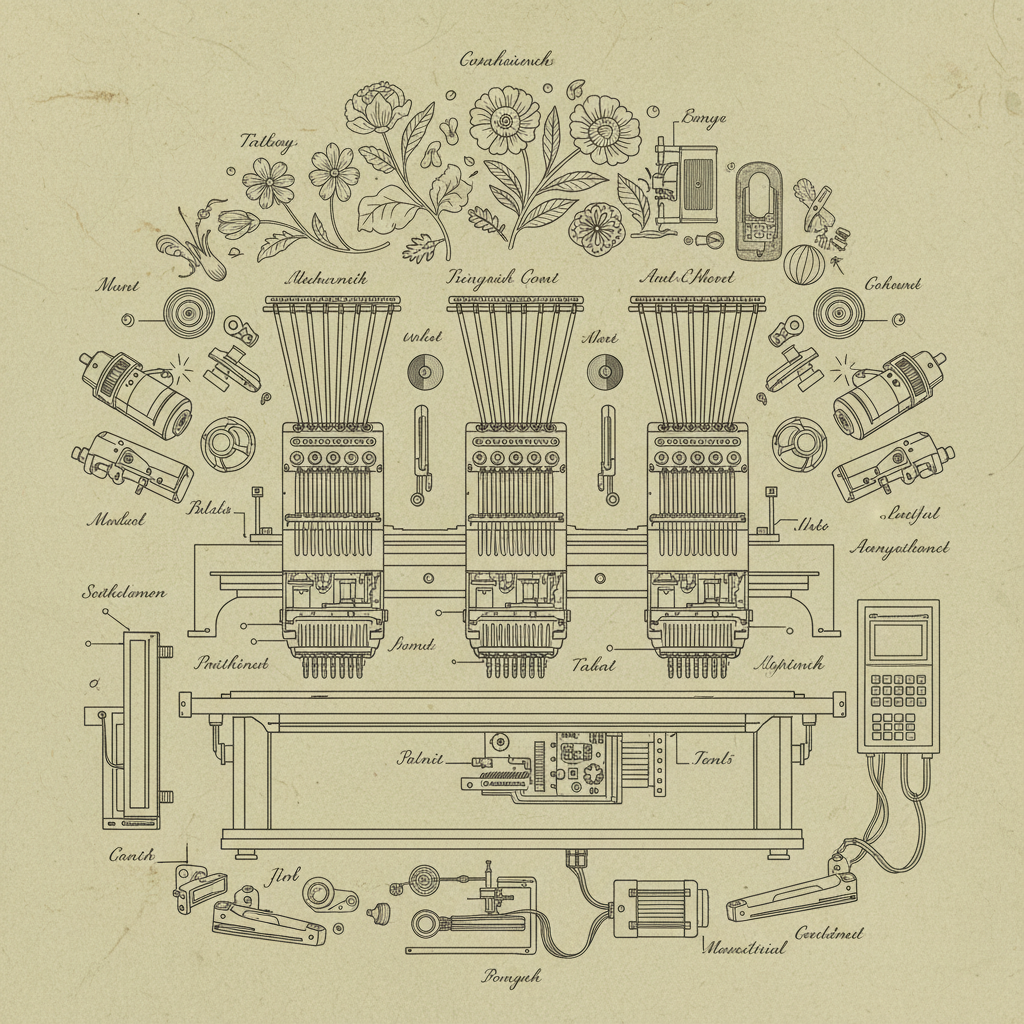
The evolution of textile decoration has reached a pivotal milestone with the integration of digital precision into garment manufacturing. In the modern industrial landscape, the ability to produce intricate designs with absolute consistency is no longer a luxury but a necessity for competitiveness. The emergence of advanced automation has transformed how brands approach branding and customization, allowing for a seamless transition from digital art to physical thread.
Global demand for personalized apparel and high-quality corporate branding has surged, pushing manufacturers to seek solutions that balance speed with meticulous detail. Traditional methods often struggle with scalability and human error, leading to wasted materials and inconsistent output. To address these challenges, the industry has pivoted toward smarter, more reliable systems that can handle complex patterns across various fabric types.
A high-performance computerized embroidery machine provides the perfect intersection of artistic freedom and industrial efficiency. By leveraging servo motor technology and high-definition control panels, these machines enable businesses to scale their production while maintaining the artisan quality that customers demand.
The Technical Architecture of Modern Embroidery Systems
At the core of a professional embroidery system is the synergy between high-torque servo motors and high-definition true-color control panels. These components ensure that every stitch is placed with micron-level accuracy, regardless of the design's complexity. The use of advanced Dahao or RUI NENG systems allows for real-time tracking of the embroidery path, reducing the risk of misalignment and material damage.
Furthermore, the integration of automatic trimming and color change functions eliminates the need for constant manual intervention. This automation allows the machine to transition between 9, 12, or 15 different needle colors seamlessly, ensuring that multi-colored logos and complex artworks are produced with zero downtime between shade shifts.
Versatility in Application: From Caps to Garments
One of the most significant advantages of a modern system is its ability to handle diverse material types and shapes. Whether it is a flat piece of fabric, a structured baseball cap, or a finished T-shirt, the machine's adaptable frame units ensure a secure hold. The 270-degree wide cap frame unit is specifically designed to tackle the curvature of headwear, preventing fabric bunching and ensuring a professional finish.
For garment producers, the ability to embroider directly onto finished clothing—such as sweaters, golf shirts, and jackets—opens up immense revenue streams. The system's flexibility allows for "mending functions," where operators can skip or back-stitch via the controller, ensuring that any minor thread breaks are corrected without ruining the entire garment.
From baby caps and aprons to heavy-duty bags, the machine accommodates a vast array of products. This versatility is supported by a generous working area, often reaching 400x500mm, which ensures that even large-scale designs can be executed without the need for cumbersome repositioning of the fabric.
Precision Control and Digital Pattern Integration
The transition from a digital concept to a physical product is handled via high-speed USB ports and standardized DST format files. By using a computerized embroidery machine, designers can upload intricate patterns and preview the embroidery track in real-time on the touch screen, ensuring the layout is perfect before the first stitch is made.
Control is further refined through a user-friendly interface that supports multiple languages, including English, French, Germany, and Arabic. This accessibility ensures that a computerized embroidery machine can be operated efficiently across different global markets, with intuitive buttons for inching, accelerating, and setting origins.
Safety and data integrity are paramount in industrial settings. These machines feature emergency stop buttons and memory systems that preserve current work data during power outages. This means that even in the event of an unexpected shutdown, the computerized embroidery machine can resume exactly where it left off, preventing material waste.
Efficiency Gains with Double Head Configurations
For growing studios, the jump to a double-head configuration is a strategic move to double production capacity without doubling the floor space or budget. By operating two heads simultaneously, a business can produce two identical items in the time it previously took for one, effectively removing the bottleneck of production speed and eliminating the need for overnight rushes.
The efficiency is further boosted by the high SPM (stitches per minute) ratings. With flat embroidery speeds reaching up to 1200 RPM and cap embroidery at 850 RPM, the output volume increases dramatically. This combination of dual-head operation and high-speed performance ensures that high-volume orders are met with ease and precision.
Performance Metrics for Computerized Embroidery Machine Configurations
User-Centric Design for Rapid Deployment
One of the biggest barriers to entering the industrial embroidery market is the perceived complexity of the machinery. To counter this, modern machines are designed for beginners, with a learning curve that allows new operators to become proficient in less than one hour. This is achieved through a simplified key layout on the control panel and intuitive menu systems that guide the user through the setup process.
Beyond the hardware, the deployment is supported by professional engineering guidance and comprehensive educational resources. With English teaching manuals and detailed disassembly/assembly videos, the transition from unboxing to full production is streamlined. This focus on accessibility has empowered over 6,000 enthusiasts and designers to launch their own studios with confidence.
Ensuring Durability and Maintenance Standards
Industrial longevity is built into the very chassis of these machines. By integrating the mainboard directly into the control panel, the sensitive electronics are protected from dust, fabric lint, and external physical forces. This design choice significantly reduces the frequency of electronic failures and extends the overall lifespan of the equipment in high-dust textile environments.
Maintenance is further simplified by the inclusion of a built-in bobbin winder and high-quality hooks, which reduce the friction and wear associated with high-speed stitching. The use of servo motors instead of traditional stepped motors provides not only better precision but also reduced heat generation, which prevents premature component degradation during long production runs.
Moreover, the availability of lifetime online support via WhatsApp, Skype, and Email ensures that any technical hurdle is resolved quickly. Whether it is a routine calibration or a complex troubleshooting issue, having access to a professional engineer via video call ensures that the machine maintains peak operational efficiency.
Comparative Analysis of Industrial Specifications
Selecting the right machine requires a deep dive into the specifications that impact daily operations. Factors such as the number of needles—available in 9, 12, or 15—determine the complexity of the designs that can be produced without manual thread changes. A higher needle count directly translates to more vibrant and detailed artwork.
The physical footprint and weight also play a role in stability. A machine weighing 320KGS provides the necessary inertia to dampen vibrations during high-speed operation, which is critical for maintaining stitch quality at 1200 RPM. The packing size of 1400x1120x910mm ensures that the machine is shipped securely to prevent any misalignment of the head distance.
Ultimately, the choice between a single-head mini machine and a multi-head industrial system depends on the balance between budget and throughput. While the mini machine is ideal for boutique studios, the multi-head versions are essential for those targeting the mass market for corporate apparel.
Core Specifications Comparison of Industrial Embroidery Models
|
Machine Model
|
Max Speed (RPM)
|
Needle Options
|
Primary Application
|
|
PF-MINI0602
|
1000
|
9/12/15
|
Boutique/Home Studio
|
|
Two Head Std
|
1200
|
12/15
|
Small Business Growth
|
|
Four Head Pro
|
1200
|
15
|
Medium Production
|
|
Six Head Ind.
|
1200
|
15
|
Industrial Mass Production
|
|
Custom Multi
|
1200
|
Custom
|
Enterprise Factory
|
|
Flat-Only Mod
|
1200
|
12
|
Specialized Flat-ware
|
FAQS
We provide a complete onboarding package that includes an English teaching manual and a series of instructional videos. These videos cover every critical step, including machine disassembly, assembly, and full operation. Additionally, our professional engineers are available to provide guided training to ensure you are productive in less than one hour.
You don't need prior export experience to work with us. We partner with reliable forwarding agents who can handle shipping via sea, air, or express directly to your doorstep. We will analyze your location and requirements to help you choose the most cost-effective and fastest shipping service available.
Yes, we offer extensive customization options. You can customize the brand name on the machine, choose a specific machine color to match your studio's aesthetic, and even request unique designed patterns. Simply provide your specifications during the inquiry process, and our team will implement them.
We offer lifetime online support through WhatsApp, Skype, Wechat, and Email. If a problem arises, we can conduct real-time video calls to diagnose the issue. In rare and necessary cases, our engineers are available to travel overseas to provide on-site assistance to ensure your production never stops.
Absolutely. Our machines are specifically designed for flat embroidery, cap embroidery, and finished garment embroidery. With the switchable Cap/Flat embroidery mode, you can eliminate frame hitting and easily sew onto T-shirts, sweaters, golf shirts, baby caps, and bags with professional precision.
To ensure total security, all transactions are processed through the Alibaba platform. Your payment goes directly to Alibaba's bank account and is held in escrow. The funds are only released to us after you have received the items and confirmed that all detailed information is correct, protecting the buyer's interests entirely.
Conclusion
The integration of a professional computerized embroidery machine into a textile business represents a transition from manual limitation to digital scalability. By combining servo-driven precision, versatile framing for caps and garments, and a user-centric interface, these machines allow entrepreneurs to deliver high-quality customization with industrial efficiency. The ability to double production through multi-head configurations while maintaining a low learning curve makes this technology an essential investment for any modern embroidery studio.
Looking forward, the trend toward on-demand personalization will only increase, making the flexibility of these systems even more valuable. Whether you are a boutique designer or a large-scale garment manufacturer, investing in automation today ensures you can meet the rapid turnaround times of the modern market without sacrificing artisan quality. We invite you to explore our full range of solutions and elevate your production capabilities. Visit our website: www.xtpfsm.com