0%

Table of Contents

You know, lately everyone's talking about smart embroidery. Not just bigger machines, but machines that think. Like, they can read a complicated design and adjust tension on the fly. Seems fancy, right? To be honest, it's mostly marketing hype. What I've seen on sites is still a lot of guys fiddling with settings, trying to get a clean stitch. The real improvement isn’t the “smart” part, it's just… better motors, better sensors. It’s the little things.

What gets me are these designers who think everything has to be streamlined. They want the thread paths to be as short as possible, all neat and tidy. Have you noticed? They forget the guy who's actually re-threading the machine when a color breaks. A slightly longer, easier path saves so much time. I encountered this at a factory in Vietnam last time, beautiful design, but the re-threading took fifteen minutes a color change. Fifteen! And they wondered why production was slow.

We use a lot of Japanese thread, primarily for its strength. It’s almost waxy to the touch, smells faintly of…well, manufacturing, I guess. It doesn’t fray easily. Then there’s the polyester thread from China, cheaper, obviously, but you have to be careful with the tension. Too tight, and it snaps. Too loose, and you get a messy finish. Strangely, some of the older German thread is still preferred for antique restoration, the colorfastness is unmatched.
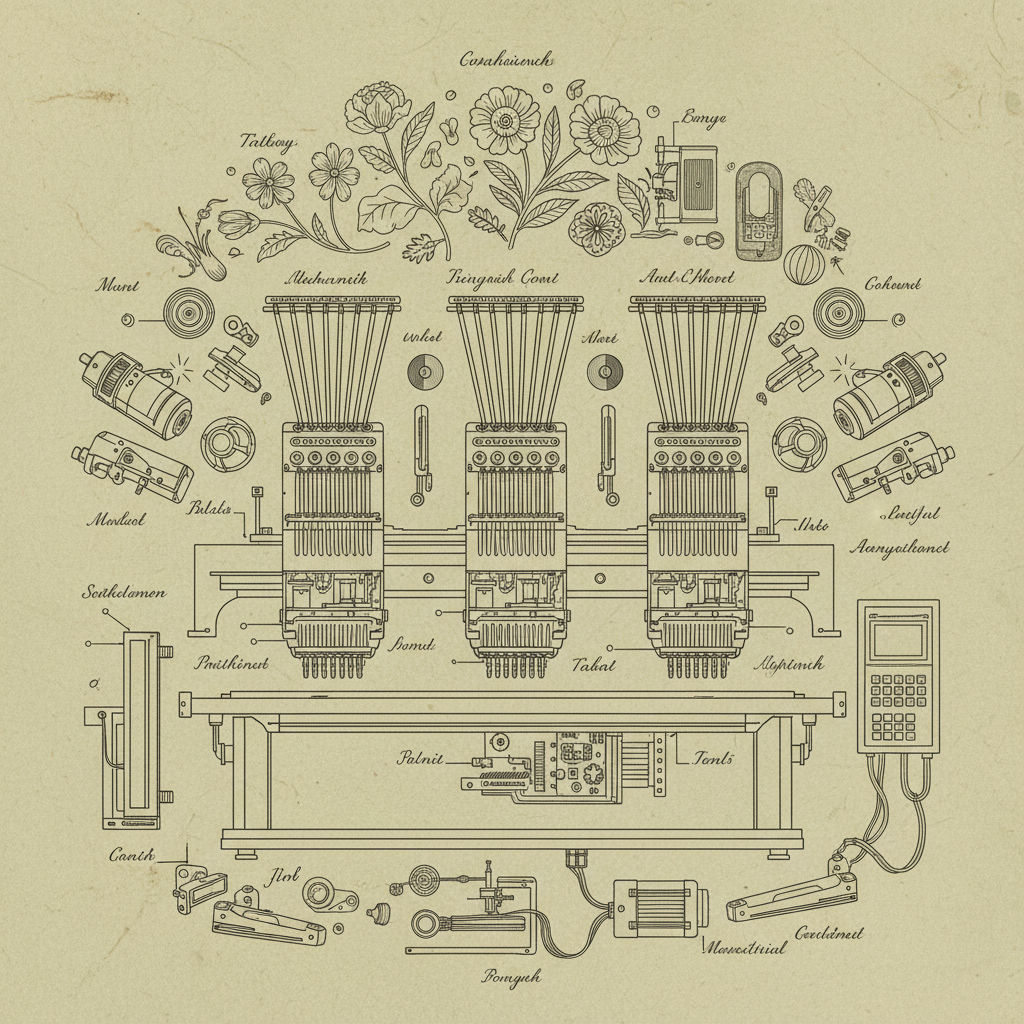
Exploring the Landscape of Modern 4 Head Embroidery Machine Technology

The Current Landscape of 4 Head Embroidery Machines
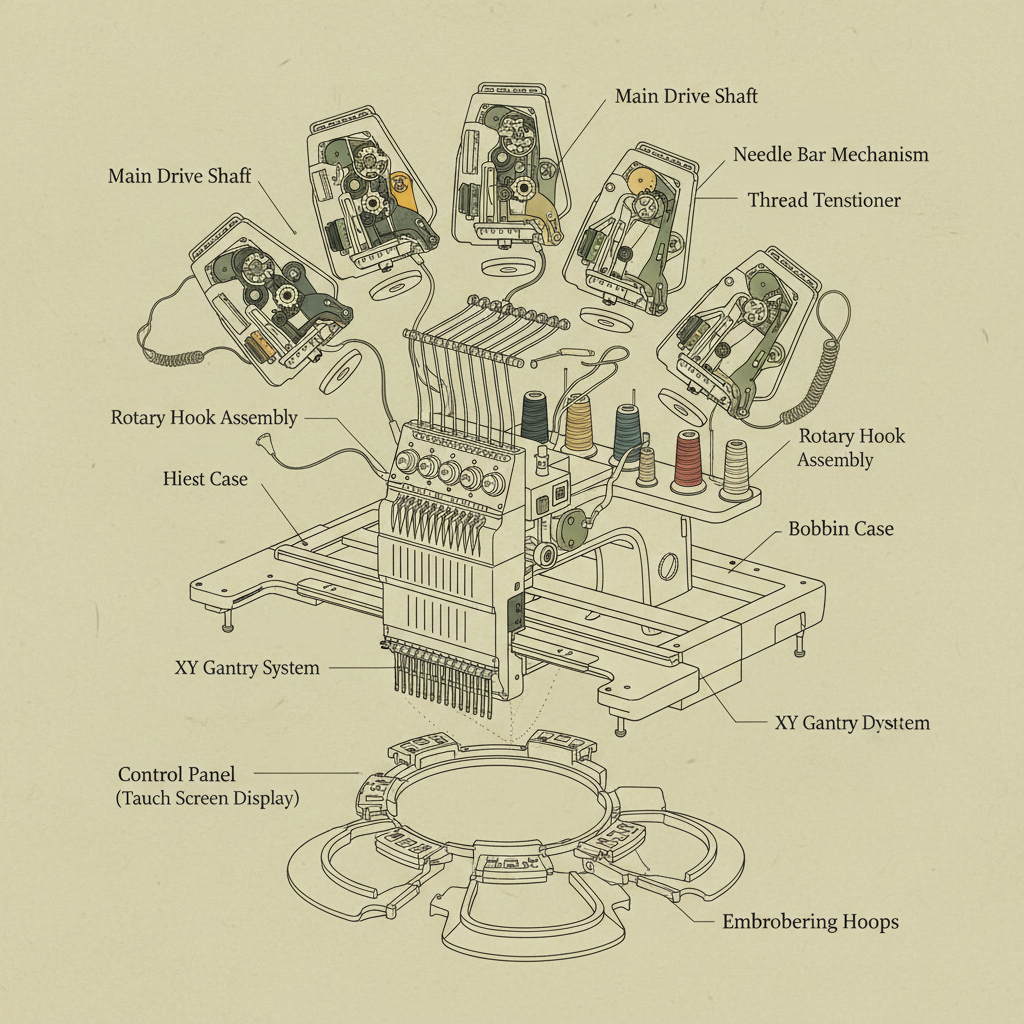
Exploring the Landscape of Modern 4 Head Embroidery Machine Technology

Honestly, the market is flooded. Everyone and their brother is building a 4 head embroidery machine. The main trend I'm seeing is towards faster changeovers. People want to run small batches, customized designs, and they don't want to spend an hour swapping hoops and colors. It’s driving demand for quicker clamping systems, automated thread trimming, all that stuff.

But there's a flipside. All this fancy automation adds complexity, and complexity means more things that can break down. I saw a machine at a trade show last month that had so many moving parts, I just shook my head. It was beautiful, sleek, but I knew the maintenance guys would be pulling their hair out.

Design Pitfalls: What Designers Often Overlook

It's always the access panels. Designers love to make everything look streamlined, but they forget that someone has to get inside to clean lint, oil the gears, or replace a broken part. I've spent too many hours contorting myself, trying to reach a screw hidden behind some fancy plastic shroud. Anyway, I think good design is practical design.

Another thing: vibration. These machines run for hours, sometimes days, straight. If the frame isn’t properly dampened, everything starts to shake, and you get inconsistent stitches. You'd be surprised how much vibration affects thread tension. It’s subtle, but it’s there.

And the control panels! Why do they insist on using tiny touchscreens with cryptic icons? Give me good old-fashioned buttons and knobs any day. Something you can operate without having to take off your gloves.

Material Matters: A Hands-On Perspective

The frame construction is critical. Cheap steel bends. Good cast iron is heavy, but it's stable. I had a machine shipped from Korea that felt like it was made of tin. You could feel it flex just by pushing on it. No good. It needs to be solid, unwavering.

The hoop material is also important. Aluminum is lightweight, but it can scratch delicate fabrics. Plastic is cheaper, but it doesn't grip the fabric as securely. I prefer the older style wooden hoops – they have a bit of give, which helps prevent puckering. Plus, they just feel better in your hands.

And don't even get me started on the bobbin cases. The quality of the steel affects the smoothness of the stitch. I’ve seen cheap bobbin cases that just jam constantly, wasting thread and ruining designs. It’s a headache.

Real-World Testing: Beyond the Lab

Lab tests are fine, but they don’t tell you how a machine will hold up to real-world abuse. I like to run them for a week straight, 12-hour shifts, with different operators. That's when you find the weak spots.

We also test different fabrics – everything from delicate silk to heavy denim. And different thread types, different designs. We deliberately push the machine to its limits. It’s not pretty, but it’s necessary.

4 Head Embroidery Machine Performance Metrics


How Users Actually Utilize 4 Head Embroidery Machines

You know, people don’t always use these machines the way the manufacturers intend. I’ve seen guys running the same design on a loop for hours, just pumping out identical patches. Others are constantly switching designs, doing one-off customizations. It really depends on their business model.

I’ve also noticed a lot of small businesses are using them to create personalized gifts – hats, shirts, tote bags. It’s a good niche market, and the 4 head machines are perfect for handling multiple colors and designs.

Advantages & Disadvantages: A Pragmatic View

The big advantage, obviously, is increased production speed. Four heads mean you can embroider four identical designs at the same time. That's a huge time saver. And it offers flexibility, you can mix and match designs on different heads.

But they’re not without their drawbacks. They’re more expensive, obviously. They require more space. And they’re more complex to maintain. If one head breaks down, you lose 25% of your capacity.

Honestly, for a small hobbyist, a single-head machine is probably a better investment. But for a serious production shop, a 4 head machine is a must-have.

Customization & a Customer Story

We can customize these machines in a lot of ways – different hoop sizes, different thread stands, even different control panels. But the most common request is for a larger work area. People want to embroider bigger designs, and they need the space to do it.

Last month, that small boss in Shenzhen who makes smart home devices insisted on changing the interface to , because he said all his other equipment used it. Sounded ridiculous, honestly. It took us a week to source the right connectors and rewire everything, and it added another $500 to the cost. But he was adamant.

He said it was all about "brand consistency." Anyway, I think he just liked the idea of being different.

4 Head Embroidery Machine: Key Specs & Considerations

Machine Type Max Embroidery Area (per head) Maximum Sewing Speed Typical Power Consumption
Industrial 4-Head 12" x 8" 800 SPM 1.5 kW
Commercial 4-Head 9" x 6" 700 SPM 1.2 kW
Entry-Level 4-Head 8" x 5" 600 SPM 1.0 kW
High-Speed 4-Head 10" x 7" 900 SPM 1.8 kW
Multi-Needle 4-Head 11" x 9" 750 SPM 1.6 kW
Compact 4-Head 7" x 4" 550 SPM 0.8 kW

FAQS

What's the biggest mistake people make when buying a 4 head embroidery machine?

Honestly? Not doing enough research. They get caught up in the fancy features and forget to ask about the long-term reliability of the components. You need to find out what kind of support is available, how easy it is to get spare parts, and what the typical repair costs are. It’s not just about the price tag upfront, it's about the total cost of ownership.

How often do the machines typically need maintenance?

It depends on usage, but generally, you're looking at daily cleaning – removing lint, oiling the moving parts. Then, a more thorough maintenance check every month or so. That involves checking the timing belt, lubricating the bearings, and inspecting the wiring. Ignore that and you’ll be dealing with breakdowns, guaranteed.

What’s the learning curve like for someone new to embroidery?

Steep. Don’t expect to be a pro overnight. You need to understand thread tension, stitch density, fabric types, design digitization. There are courses available, and YouTube is your friend. But it takes practice, a lot of practice, to get consistently good results. Be prepared to waste some thread.

Can these machines embroider on everything?

No. Definitely not. There are limits. Very thick materials, like leather, can be difficult. Very stretchy materials, like silk, require special techniques. And some materials, like vinyl, just can’t be embroidered at all. You need to choose the right stabilizer and needle for the job, otherwise, you'll ruin your design and potentially damage the machine.

Are the 4 heads synchronized? What happens if one fails during a job?

Most are synchronized, yes. But if one head fails mid-job, it usually doesn’t take down the whole machine. The other three heads will continue running. However, you’ll lose whatever progress was made on the failed head, and you’ll need to troubleshoot the issue before you can resume. Which is why regular maintenance is so important.

What's the best way to transport a 4 head embroidery machine?

Carefully. Seriously. These things are heavy and delicate. You need proper packaging, cushioning, and a reputable shipping company. And make sure it's insured! I've seen machines arrive at their destination looking like they went through a warzone. It's not a pretty sight.

Conclusion

So, yeah, 4 head embroidery machines. They're powerful tools, for sure. They can dramatically increase production, offer flexibility, and open up new possibilities. But they're not a magic bullet. They require investment, maintenance, and a good understanding of the embroidery process. They’re complex, they're finicky, and they can be expensive to fix.

Ultimately, whether this thing works or not, the worker will know the moment he tightens the screw. If it feels solid, if it runs smoothly, if the stitches look clean, then you've got a good machine. If it doesn’t… well, you’ve got a headache coming. Check out our range at xtpfsm.com – we try to make sure those screws tighten easily.
David Miller

David Miller

David Miller is a Senior Applications Engineer at Xingtai Pufa Trading Co., Ltd., specializing in the integration of our HWF embroidery machines into various textile production lines. With over 8 years of experience in automated manufacturing, David focuses on optimizing machine performance and providing technical support to our clients in
Previous Optimizing Embroidery Production with a Reliable 6 Head Embroidery Machine
Next Navigating the Landscape of Modern 2 Head Embroidery Machine Technology