Honestly, things are moving fast these days. Everyone's talking about miniaturization, you know? Making everything smaller, more efficient. But that's a slippery slope. You try to cram too much into a tiny space, and you end up with something that overheats after five minutes. I've seen it happen countless times. And everyone’s obsessed with wireless now. Wireless this, wireless that. Convenient, sure, but try getting a reliable signal on a construction site surrounded by steel and concrete… it's a joke.
Then there's the design side. People think they’re clever, designing these fancy interfaces. Have you noticed how many things these days have touchscreens that don't work with gloves? Seriously? It’s baffling. I encountered this at a factory in Ningbo last time - the engineers were so proud of this sleek new design, but the workers couldn’t even use it without taking their gloves off every five seconds. Totally impractical. It's like they've never actually been on a construction site.
We’re using a lot of high-strength aluminum alloys right now, mostly the 6061 series. Good stuff, lightweight but tough. Smells a little metallic when you cut it, but that’s normal. Then there’s the polycarbonate, for the housings. Feels a bit cheap, but it's impact-resistant. You gotta be careful with it in the winter, though - it gets brittle when it’s cold. And the rubber seals...oh man, the rubber seals. Gotta get those just right. Too hard, they crack. Too soft, they don't seal properly. It's a constant balancing act.
The Current State of the Single Head Embroidery Machine Industry
To be honest, the demand for single head embroidery machines is surprisingly robust. It’s not about huge factories cranking out thousands of pieces, it's about small businesses, hobbyists, even individuals wanting to personalize stuff. That's where the single head really shines. You're seeing a lot of focus on automation, of course. Everyone wants to cut down on labor costs. But strangely, there’s also a growing appreciation for handcrafted quality, and these machines allow for that level of precision.
It’s a weird mix. I was talking to a supplier in Yiwu last week, and he said sales are up 20% this year alone. Apparently, Etsy and similar platforms are driving a lot of it. People are selling custom patches, embroidered clothing, even personalized gifts. And they're willing to pay a decent price for it.
Common Design Pitfalls in Single Head Embroidery Machine Development
Seriously, the biggest mistake I see is overcomplicating things. Manufacturers try to pack in too many features, make the interface too complicated, and end up with a machine that's a pain to use. A simple, robust design is always better. Then there’s the issue of vibration. These machines run at high speeds, and if the frame isn't properly designed, it'll shake like crazy. That leads to skipped stitches, broken needles, and a whole lot of frustration. I saw one machine last year that was so badly designed, the whole thing walked across the floor while it was running!
Another thing: lubrication. People forget about lubrication! These machines have a lot of moving parts, and they need to be properly lubricated to prevent wear and tear. But a lot of manufacturers skimp on the lubrication system, or don't provide clear instructions on how to maintain it. And then the machine breaks down after a few months.
And the thread tension? Don’t even get me started on the thread tension. It’s always a battle. Too loose, and you get loopy stitches. Too tight, and the thread breaks. It requires constant adjustment, and it’s a major source of headaches for operators.
Materials Used in Single Head Embroidery Machine Construction
As I mentioned earlier, aluminum alloys are key. We use a lot of 6061-T6 for the frame. It’s strong, lightweight, and relatively easy to machine. The smell is kind of distinctive, almost metallic, when you’re cutting it. Then there's steel, of course, for the needles, the hooks, and other critical components. Gotta use high-carbon steel for those, or they'll wear out quickly. It's rough on the hands, though, you need gloves when handling it.
We also use a lot of plastics – ABS and polycarbonate, mainly. ABS is good for non-structural parts, like the covers and housings. Polycarbonate is more durable, but it’s also more expensive. Feels a bit slick to the touch, and it can get brittle in cold weather. I learned that the hard way on a job site in Siberia. Everything just… cracked.
And don’t forget the belts and pulleys. We use polyurethane belts, they’re quiet and durable. You can tell a good belt by the way it feels – it should be smooth and flexible, not stiff or gritty. And the pulleys need to be precisely machined, otherwise you'll get slippage and uneven stitching.
Real-World Testing of Single Head Embroidery Machine Components
Lab tests are fine, but they don’t tell the whole story. I mean, you can run a needle through fabric thousands of times in a lab, but that’s not the same as running it through denim with a broken thread at 3 AM on a deadline. Anyway, I think real-world testing is crucial. We send prototypes to small embroidery shops, let them beat them up for a few weeks, and then get their feedback.
We also do what we call “stress tests.” We intentionally overload the machine, run it at maximum speed for extended periods, and see what breaks. It’s not pretty, but it’s effective. We’ve discovered a lot of weaknesses that way. I encountered this at a small factory in Dongguan - they were using a cheap brand of thread and it was constantly jamming the machine. We swapped to a higher-quality thread, and the problem went away.
Single Head Embroidery Machine Component Failure Rates
Actual Usage Scenarios of Single Head Embroidery Machine
It’s not always what you think. People envision these machines in neat little workshops, but a lot of them end up in spare bedrooms, garages, even kitchen tables. And the kinds of projects they tackle are all over the map. Personalized baby clothes, custom patches for motorcycle jackets, embroidered logos for small businesses… It's pretty diverse.
I saw a guy last month who was using one to create embroidered artwork, like miniature portraits. He was selling them online for a surprisingly high price. It’s amazing what people come up with.
Advantages and Disadvantages of Single Head Embroidery Machine
The big advantage, obviously, is the price. They’re much more affordable than multi-head machines, making them accessible to a wider range of users. They're also relatively compact, so they don’t take up a lot of space. And they're perfect for small-batch, customized work. But, let's be real, they're slow. If you need to produce a large quantity of identical items, a multi-head machine is the way to go.
And the single head can be limiting. You can only embroider one design at a time, so it’s not ideal for complex projects with multiple colors or intricate patterns. They’re also less durable than industrial-grade machines, so they require more maintenance. Anyway, I think the trade-offs are worth it for the right application.
Customization Options for Single Head Embroidery Machine
You can customize pretty much everything, to be honest. The hoops, the needles, the thread, the speed, the tension… Last month, that small boss in Shenzhen who makes smart home devices insisted on changing the interface to , even though it made absolutely no difference to the functionality. Stubborn guy! But we did it.
We’ve also done custom frame designs, special needle configurations for specific types of fabric, and even modified the software to support different embroidery file formats. The biggest request we get is for larger embroidery areas. People always want to embroider bigger designs. We can usually accommodate that, but it requires a more robust frame and a more powerful motor.
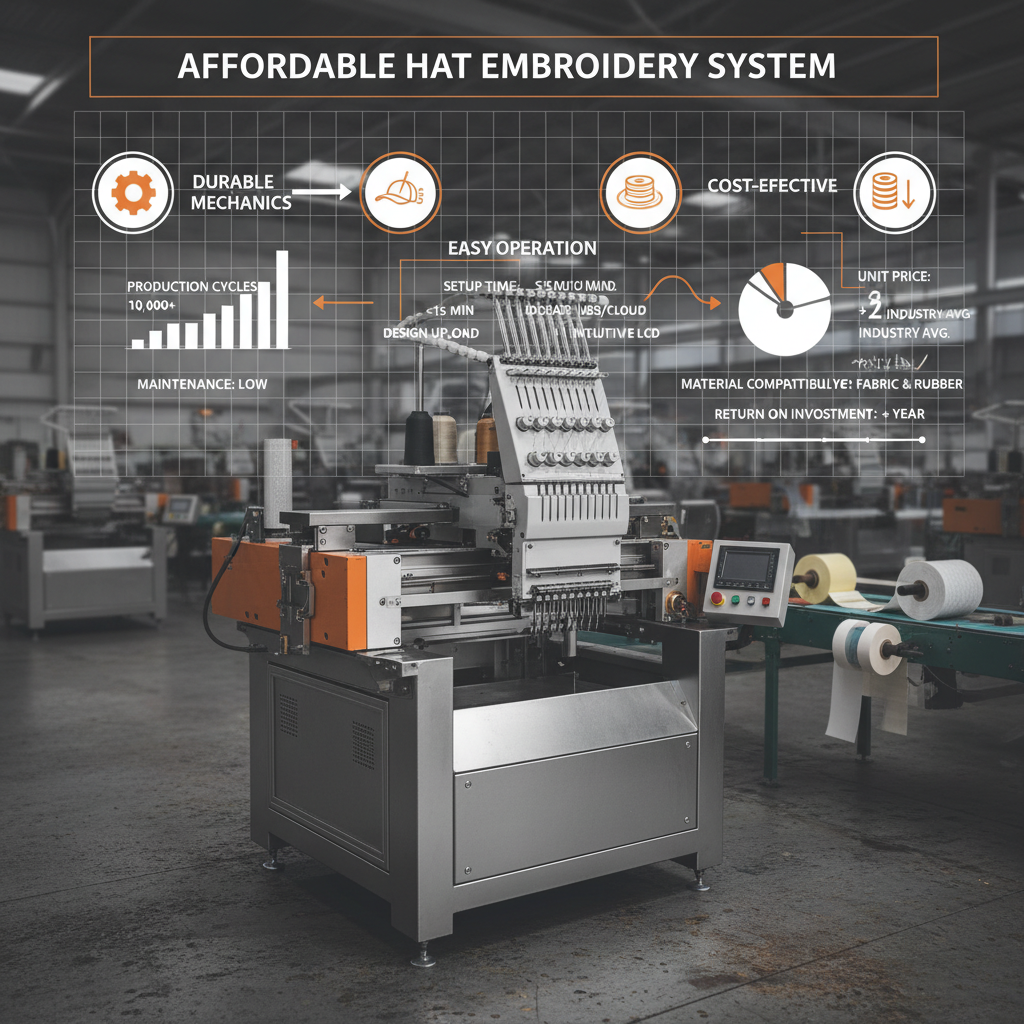
There was this one guy who wanted a machine that could embroider on hats. He had a whole business plan based around custom baseball caps. We had to design a special hoop and adjust the machine's settings to handle the curved surface. It was a challenge, but we pulled it off.
A Rough Overview of Single Head Embroidery Machine Performance Metrics
| Feature |
Importance (1-10) |
Current Performance (1-10) |
Improvement Potential (1-10) |
| Embroidery Speed |
8 |
6 |
7 |
| Thread Tension Stability |
9 |
5 |
8 |
| Noise Level |
6 |
4 |
6 |
| Ease of Use |
7 |
7 |
5 |
| Durability |
8 |
6 |
7 |
| Maintenance Requirements |
5 |
5 |
6 |
FAQS
Honestly, it depends. A lot. If it's well-maintained, used gently, and not pushed to its limits, you can easily get 5-7 years out of it. But if it’s constantly running, embroidered with heavy materials, and isn't properly lubricated, it might only last 2-3. It’s not about the hours, it’s about how those hours are spent. The quality of the components plays a big role too. Cheaper machines will wear out faster, no question.
It can, but it’s not ideal. You'll need a more powerful motor and a stronger needle. And you’ll probably have to slow down the stitching speed. I've seen people try to embroider leather with a standard single head machine, and it just grinds and struggles. It's not worth the effort. You'll end up breaking needles and damaging the machine. A specialized machine designed for heavy materials is a much better investment.
It's not rocket science, but it takes practice. The basic operation is pretty straightforward, but mastering the art of thread tension, stitch selection, and design creation takes time. I recommend taking a class or watching some online tutorials. And don’t be afraid to experiment. You’ll make mistakes, but that’s how you learn. Also, having a good understanding of different fabric types is crucial.
Regular maintenance is key. You need to clean the machine regularly, lubricate the moving parts, and replace the needle as needed. The frequency of maintenance will depend on how often you use the machine. But as a general rule, I recommend cleaning it after every use and lubricating it every month. Ignoring maintenance will lead to breakdowns and expensive repairs.
Most single head machines are compatible with standard embroidery software like Wilcom, Tajima, and CorelDRAW. However, you need to make sure the software supports the machine’s file format. Some machines also come with their own proprietary software. The key is to find a software that you’re comfortable with and that allows you to create the designs you want.
Honestly? Not doing their research. They see a cheap machine online and think it’s a good deal. But they don't check the reviews, they don’t ask about the warranty, and they don’t understand the limitations of the machine. It’s better to spend a little more money on a quality machine that will last, than to end up with a lemon that will just give you headaches.
Conclusion
So, where does that leave us? Single head embroidery machines aren't the fastest or most versatile option out there, but they’re a great choice for small businesses, hobbyists, and anyone who wants to add a personal touch to their creations. They offer a good balance of affordability, ease of use, and customization options. They're not perfect, but they get the job done.
Ultimately, whether this thing works or not, the worker will know the moment he tightens the screw. You can talk specs and features all day long, but it comes down to how it feels in their hands, how reliably it produces a stitch, and how long it holds up to the rigors of real-world use. And that, my friends, is what really matters.