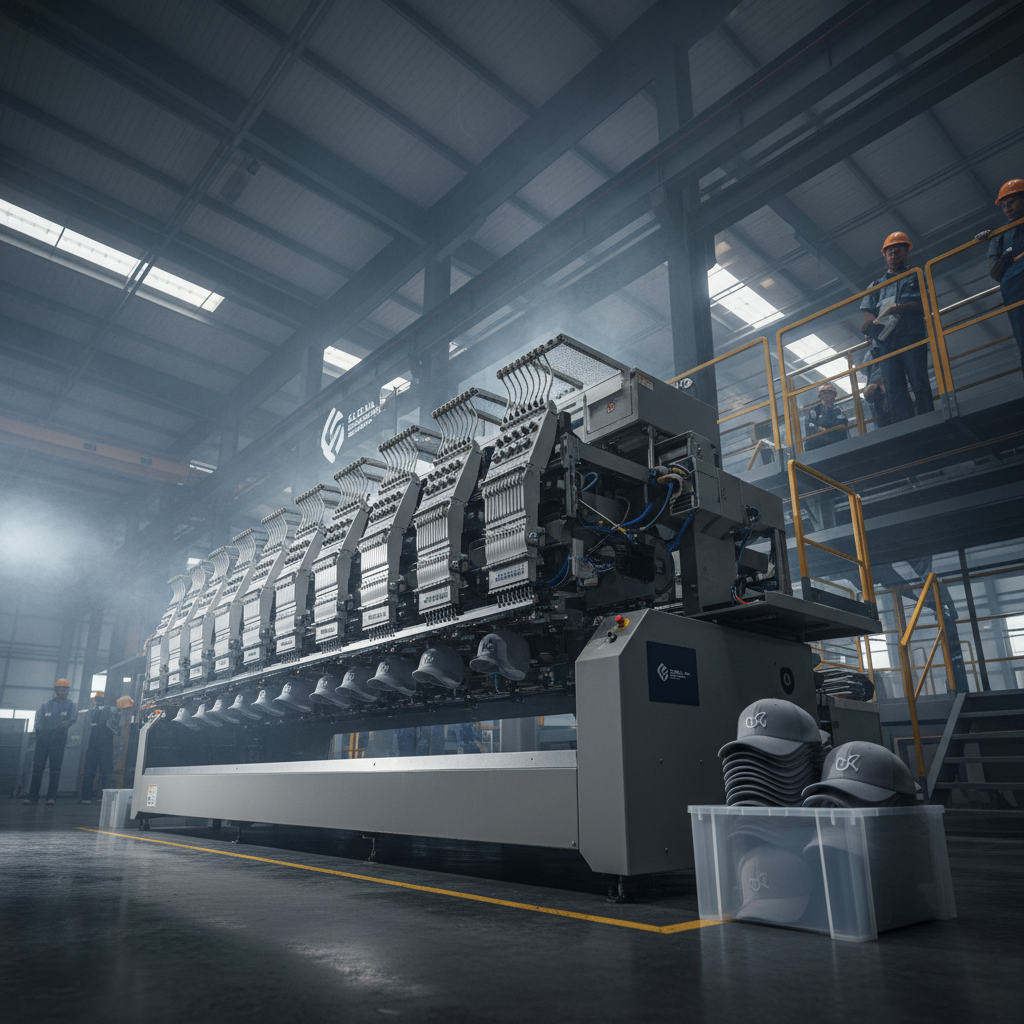
The global textile industry is undergoing a massive digital transformation, where precision and speed have become the primary drivers of profitability. In this landscape, finding a reliable computerized embroidery supplier is no longer just about purchasing hardware, but about securing a partnership that ensures consistent quality and operational uptime for high-volume production.
Modern garment manufacturing demands the ability to switch between complex logos, intricate patterns, and diverse fabric types with minimal downtime. The integration of multi-head systems allows businesses to scale their output exponentially, transforming a small workshop into a high-efficiency production center capable of meeting tight deadlines.
Whether you are managing a gift customization center or a large-scale clothing factory, collaborating with a professional computerized embroidery supplier provides the technical foundation needed to maintain a competitive edge in the fashion and apparel market.
The Role of a Computerized Embroidery Supplier in Modern Manufacturing
A computerized embroidery supplier provides more than just the machine; they provide the bridge between a digital design and a physical product. By offering high-speed equipment like the six-head 12-needle system, these suppliers enable businesses to handle vast amounts of data—up to 200 million needles in pattern storage—ensuring that complex corporate branding and artistic designs are executed with mathematical precision.
The strategic value lies in the ability to maintain consistent quality across multiple heads. When six heads work simultaneously, the output is significantly larger than single-head operations, allowing factories to meet the rigorous demands of the ready-made clothing market while reducing the cost per unit.
Core Technical Components of High-Speed Embroidery Systems
At the heart of a professional embroidery system is the synchronization of needles and frames. High-performance machines typically feature a robust embroidery area—such as 450400mm—and a generous head distance of 400mm, which allows for the seamless processing of various garment types including caps, T-shirts, and flat fabrics.
The integration of an 8-inch touch screen display is critical for real-time monitoring. This interface allows operators to track stitching progress, manage pattern storage for up to 500 pieces in DST format, and execute "mending" functions to skip or back-stitch, reducing waste and improving the overall quality of the finished piece.
Automation further enhances productivity through features like automatic thread trimming and automatic color changes. These components eliminate the need for manual intervention between stitches, while thread break detection ensures that the machine stops immediately if a flaw occurs, protecting the fabric from damage.
Operational Scalability and Output Efficiency
Scalability in the textile industry is defined by the ability to increase volume without compromising detail. A specialized computerized embroidery supplier ensures that machines can handle maximum speeds of up to 1200RPM, allowing for rapid turnaround times in fast-fashion environments.
The flexibility of hoop sizes is a key factor in operational efficiency. By providing adjustable frames that accommodate different shapes, a computerized embroidery supplier allows a single machine to pivot from embroidering a small corporate logo on a cap to a large artistic piece on a flat garment.
Furthermore, the inclusion of an automatic bobbin winder and a 270° wide cap frame unit ensures that the machine is versatile enough for any product line. This versatility reduces the need for multiple specialized machines, lowering the total footprint and electricity costs in the workshop.
Comparative Performance of Industrial Embroidery Hardware
When evaluating hardware, the balance between power consumption and output is paramount. High-efficiency machines utilize cost-effective power settings (100W to 150W) while maintaining a heavy-duty build (approximately 830kg) to ensure stability and minimize vibration during high-speed operations.
The reliability of the control system is another critical metric. Systems that retain current working data during emergency stops or power outages prevent the loss of complex patterns, ensuring that production can resume immediately without the need to restart the entire design.
Industrial Performance Metrics by Component
Global Application Scenarios for Multi-Head Machines
The application of six-head embroidery machines extends across several diverse business models. Gift customization centers utilize these machines to create unique, personalized items for consumers or unified corporate apparel for employees, relying on the machine's ability to handle varied patterns quickly.
In larger industrial contexts, such as clothing factories, the efficiency of multi-head systems is indispensable. The ability to sew six garments simultaneously ensures that high-volume orders are completed within strict deadlines, while the multi-language support (English, French, Spanish, etc.) makes these machines accessible to global markets.
Long-Term Value and Sustainable Production
Investing in professional-grade machinery offers significant long-term financial advantages. The reduction in manual labor through automatic thread cutting and trimming directly lowers operational overhead, while the high durability of the machine frame ensures a long lifecycle with minimal depreciation.
Sustainability in embroidery is achieved through precision. By utilizing pre-sew design tracing and high-accuracy controllers, factories can drastically reduce fabric waste and thread spoilage. This precision not only protects the environment but also maximizes the profit margin on every piece of fabric used.
Moreover, the availability of lifetime online support via WhatsApp, Skype, and Email ensures that technical glitches do not lead to prolonged downtime. This safety net provides business owners with the peace of mind that their production line is backed by expert engineering.
Future Innovations in Computerized Embroidery Technology
The future of the industry is leaning heavily toward deeper digital integration and AI-driven pattern optimization. We are seeing a shift toward smarter sensors that can automatically adjust tension based on the fabric density, further reducing the need for manual calibration.
Cloud-based pattern management is also on the horizon, allowing designers to upload DST files remotely to a machine in a different country, enabling truly globalized production cycles. This digital transformation is making the role of the supplier more about software ecosystem management than just hardware sales.
As sustainability becomes a global mandate, the development of energy-efficient motors and the use of recyclable threads will become standard. Machines that can adapt their power consumption based on the complexity of the stitch will lead the next wave of industrial efficiency.
Core Technical Specifications and Analysis of Six-Head Systems
| Feature Dimension |
Technical Specification |
Production Impact |
Efficiency Rating |
| Stitching Speed |
Max 1200 RPM |
High-volume output |
9.5/10 |
| Pattern Storage |
200 Million Needles |
Extensive design library |
10/10 |
| Embroidery Area |
450400 mm |
Versatile fabric sizing |
8.8/10 |
| Power Usage |
100W - 150W |
Low operational cost |
9.2/10 |
| Interface |
8" Touch Screen |
Intuitive operation |
9.0/10 |
| Automation |
Auto-trim & Color Change |
Minimal manual labor |
9.7/10 |
FAQS
We provide a comprehensive English teaching manual and a full series of instructional videos. These resources cover every single step of the process, including machine disassembly, assembly, and daily operation, ensuring that even beginners can get the machine running quickly.
Our team works with reliable freight forwarders who can handle the entire shipping process. Whether you prefer sea, air, or express shipping, we can deliver the machine directly to your doorstep and help you choose the most cost-effective shipping service available.
Yes, we offer extensive customization options. You can customize the brand name on the machine, choose a specific machine color to match your facility's branding, and we can even help with designing unique patterns tailored to your specific market needs.
We provide lifetime online support through WhatsApp, Skype, WeChat, and Email. For more complex issues, our engineers are available for video calls at any time, and if absolutely necessary, our technical team can travel overseas to provide on-site assistance.
All transactions are conducted through the Alibaba platform to protect the buyer's interests. Your payment is held in the Alibaba bank account and is only released to us after you have received the items and confirmed the detailed information.
To give you the most accurate quote, please include your required embroidery area, the number of needles, the number of heads, the preferred head interval, and any other specific functions or customization needs your business requires.
Conclusion
Selecting a professional computerized embroidery supplier is a foundational decision that impacts every aspect of a garment business—from the precision of the first stitch to the scalability of the entire production line. By integrating high-speed six-head systems with advanced features like automatic thread trimming, 8-inch touch displays, and massive pattern storage, businesses can achieve a perfect balance between artistic quality and industrial efficiency.
As the textile industry moves toward further automation and digital integration, investing in versatile, durable, and well-supported machinery is the only way to ensure long-term competitiveness. We invite you to upgrade your production capabilities and explore our full range of industrial solutions. Visit our website: www.xtpfsm.com