In the competitive landscape of the global textile industry, achieving a balance between precision and volume is the primary challenge for garment manufacturers. The adoption of multi-head systems has revolutionized how businesses approach branding and customization, allowing for the simultaneous production of identical designs across multiple garments. This leap in efficiency is central to the modern embroidery machine multi head service, which empowers small studios and large factories alike to scale their output without compromising on the intricate details of their artistry.
From a global perspective, the demand for high-quality embroidered apparel—ranging from corporate uniforms to luxury sports gear—has surged. The ability to maintain consistent stitch quality across two, four, or six heads ensures that brand identity remains uniform across thousands of units. However, the complexity of managing multiple heads requires a robust support system and intuitive controls to prevent costly downtime and ensure that the machinery operates at peak performance.
Understanding the nuances of embroidery machine multi head service is essential for any business looking to optimize its production cycle. By leveraging advanced servo motors and high-definition control panels, operators can now transition between flat embroidery and cap embroidery with minimal effort, effectively doubling or tripling their revenue potential per hour of operation.
The Mechanics of Multi-Head Efficiency
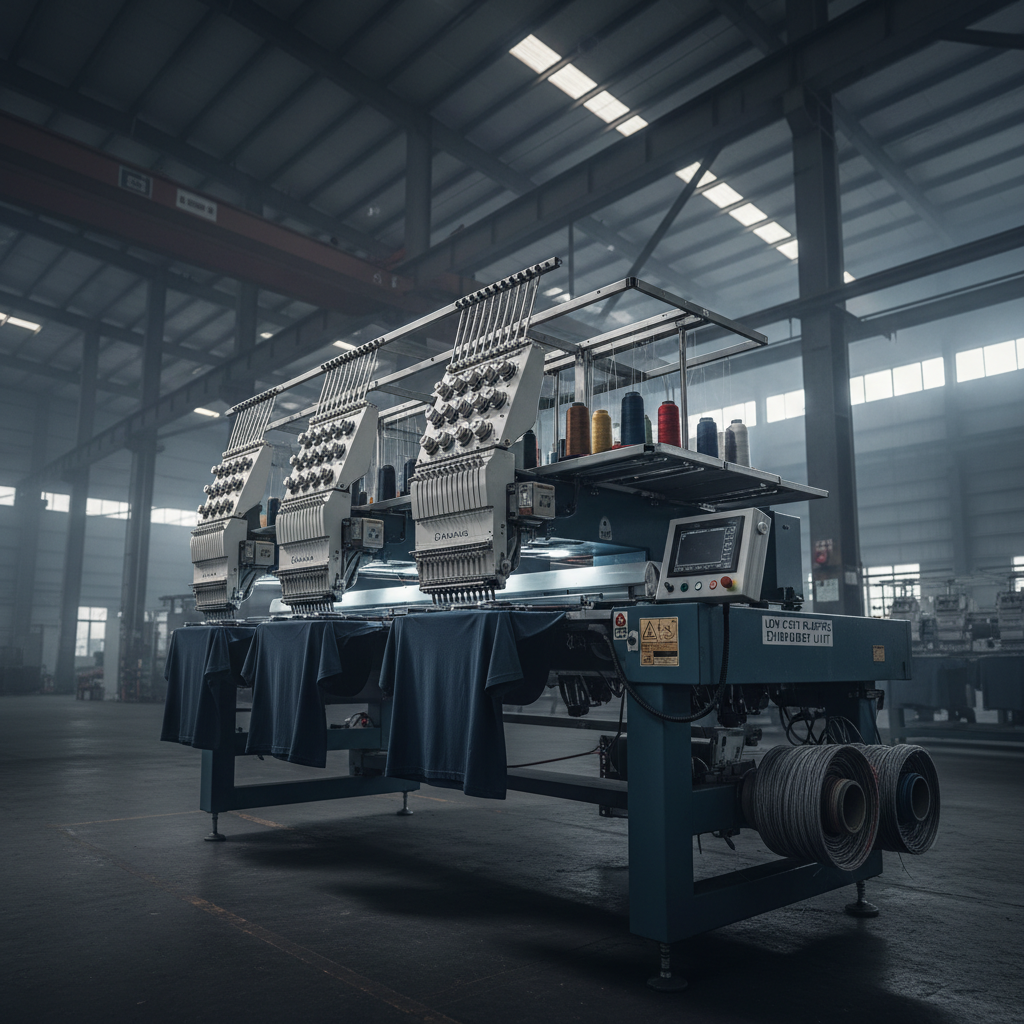
The core of multi-head efficiency lies in the synchronization of multiple needles and heads under a single control system. In a professional embroidery machine multi head service environment, a two-head or four-head configuration allows the operator to process multiple items—such as t-shirts or caps—simultaneously. This eliminates the repetitive setup time required for single-head machines, effectively cutting the production time in half for every additional head added to the system.
Beyond simple duplication, the integration of servo motors ensures that each head moves with absolute precision, maintaining a consistent 400500mm working area. This mechanical synergy allows for high-definition pattern execution, where complex DST formats are translated into real-time stitching. The result is a scalable production model that can handle a sudden influx of orders without requiring a proportional increase in labor costs.
Technical Specifications for High-Volume Output
To maintain a reliable embroidery machine multi head service, the hardware must be built for endurance. The PF-MINI0602 model, for instance, utilizes a high-definition true color Dahao or RUI NENG computer system, providing the brainpower needed to coordinate 9, 12, or 15 needles across multiple heads. This allows for intricate multi-color designs to be executed automatically, with a maximum speed reaching up to 1200 SPM for flat embroidery, ensuring that deadlines are met with ease.
Power stability is another critical factor, with support for both 110V/60Hz and 220V/50Hz electricity to accommodate global industrial standards. The use of high-quality hooks and professional-grade servo motors reduces vibration and noise, which is essential for long-term mechanical health. When machines are running at 1000 RPM for caps and garments, the structural integrity of the stand and the precision of the spindle motor become the primary determinants of stitch quality.
Furthermore, the inclusion of a built-in bobbin winder and a wide cap frame unit (270 degrees) transforms the machine into a comprehensive production hub. These specifications are not merely numbers; they represent the ability to handle a vast array of materials, from thin baby caps to heavy-duty jackets and aprons, all while maintaining the rigid standards expected in professional garment manufacturing.
Versatility in Garment and Cap Application
One of the standout features of a professional embroidery machine multi head service is the ability to pivot between different product types without extensive reconfiguration. Whether it is flat embroidery for T-shirts or specialized cap embroidery, the machine is designed to handle various textile surfaces. The ability to switch modes effectively eliminates the risk of hitting the frame, protecting both the machine and the garment.
In practical application, the embroidery machine multi head service allows users to sew 12 to 15 colors on a variety of finished items, including sweaters, golf shirts, and bags. With a large embroidery space of 360510mm, designers are not limited by the size of their patterns, enabling the creation of bold, full-back designs or subtle, precise logos on a small scale.
The flexibility is further enhanced by the support for multiple languages, including English, Portugal, Turkey, and Germany, making these machines accessible to a global market. This ensures that operators can navigate the touch screen and manage the "find origin" or "border design" functions without linguistic barriers, streamlining the workflow in multicultural production environments.
Performance Analysis of Production Speed
Analyzing the output of a embroidery machine multi head service reveals a stark difference in productivity compared to traditional methods. While a single-head machine requires a full cycle for every piece, a double-head system doubles the efficiency instantly. For those operating in the fast-paced fashion industry, this means the difference between staying up all night to rush a production run and completing the same volume during normal business hours.
The combination of 1200 RPM for flat work and 850 RPM for cap work creates a balanced production flow. This speed is complemented by an automatic color change system and automatic trimming, which removes the need for manual intervention between color shifts, further accelerating the turnaround time for complex, multi-colored patterns.
Productivity Impact of Multi-Head Service
User-Centric Control and Ease of Operation
For many newcomers to the industry, the prospect of operating a complex embroidery machine multi head service can be daunting. However, modern interfaces have been specifically designed for beginners, allowing them to learn the basics in less than one hour. The user-friendly layout of the control panel keys and the intuitive touch screen minimize the learning curve, enabling designers and enthusiasts to transition from a concept to a finished garment rapidly.
Technical support further enhances this user experience. With the provision of English teaching manuals and comprehensive disassembly/assembly videos, the barrier to entry is significantly lowered. Moreover, the availability of professional engineers for one-on-one teaching ensures that operators can master advanced functions, such as mending (back and skip stitches) and pattern previewing, which are essential for high-end custom work.
Quality Assurance and Thread Management
Precision in an embroidery machine multi head service is maintained through a series of automated safety and quality features. Thread break detection is critical; it immediately alerts the operator to a snap, preventing the machine from continuing to "sew" with a missing thread, which would otherwise ruin the entire garment. This is paired with an emergency stop function that preserves current data, ensuring that the work can be resumed exactly where it left off after a power failure or interruption.
The use of USB ports for fast data transmission ensures that DST format patterns are loaded without errors or lag. With a memory size of 2,000,000 stitches, the machine can handle extremely detailed art without slowing down. This high capacity, combined with a mainboard integrated into the control panel to protect against dust and external forces, guarantees that the machine maintains its precision even in dusty industrial environments.
Furthermore, the real-time stitching display on the color LCD allows the operator to monitor the progress and the embroidery track. By previewing the pattern before the needle ever touches the fabric, the risk of misalignment is virtually eliminated, ensuring that every piece coming off the multi-head line meets the same rigorous quality standard.
Strategic Value of Double Head Systems
Choosing a double-head configuration is a strategic move for growing businesses that need to increase their embroidery machine multi head service capacity without the massive overhead of multiple separate machines. It allows an entrepreneur to double their efficiency—producing two items per cycle—while only occupying the footprint of one large machine. This optimization of space and budget is key to maximizing the return on investment (ROI).
The ability to customize these machines—including brand naming, machine color, and unique pattern settings—allows businesses to align their equipment with their corporate identity. Whether providing a specialized service for a local sports team or scaling up for an international apparel brand, the adaptability of the double-head system ensures that the business can evolve alongside its client base.
Ultimately, the strategic value lies in the freedom it provides. No longer constrained by the limits of single-head production, business owners can accept larger orders and tighter deadlines, knowing their equipment can handle the load. This reliability builds trust with clients and establishes the company as a professional player in the garment manufacturing sector.
Core Operational Analysis of Multi-Head Embroidery Systems
| Feature Dimension |
Single Head |
Double Head |
Multi-Head Value |
| Production Volume |
Low (1 unit/cycle) |
Medium (2 units/cycle) |
High (Multi-unit/cycle) |
| Setup Efficiency |
High effort per piece |
Low effort per piece |
Optimized scalability |
| Stitch Consistency |
Manual Sync |
Automatic Sync |
Perfect Uniformity |
| Labor Cost Ratio |
1:1 Operator Ratio |
1:2 Operator Ratio |
High Labor Leverage |
| Space Utilization |
High (Per Unit) |
Efficient |
Industrial Optimized |
| Market Capability |
Boutique/Sample |
Small Business |
Commercial Scale |
FAQS
We provide a comprehensive onboarding package that includes an English teaching manual and a series of detailed instructional videos. These videos cover every critical step, from the initial disassembly and assembly of the machine to the actual operation. Additionally, we offer professional engineering support to ensure you are up and running in less than an hour.
Yes, our machines are designed for maximum versatility. They include a specific switch for Cap/Flat embroidery modes, which eliminates the risk of the needle hitting the frame. Whether you are working on finished caps, T-shirts, sweaters, or jackets, the machine adapts to the fabric type and embroidery area required.
Our systems are equipped with a data-preservation feature. In the event of an emergency stop or a sudden power failure, the machine keeps the current data and work progress in its memory. Once power is restored, you can resume the embroidery process exactly where it stopped, preventing waste and saving time.
We provide lifetime online support via WhatsApp, Skype, WeChat, and Email. For more complex issues, our engineers are available for video calls to diagnose problems in real-time. If necessary, we can even dispatch engineers overseas to provide on-site assistance to ensure your production remains uninterrupted.
Absolutely. We offer comprehensive customization options, including the addition of your brand name, custom machine colors, and the creation of unique patterns. We can also adjust the needle count (9, 12, or 15) and head configuration to perfectly match your specific business requirements.
To ensure total security, all our transactions are processed through the Alibaba platform. Your payment is held in an Alibaba bank account and is only released to us after you have received the items and confirmed the detailed shipping and product information, protecting your interests throughout the entire purchase.
Conclusion
The transition to a professional embroidery machine multi head service represents more than just a technical upgrade; it is a strategic leap in production capability. By integrating high-speed servo motors, intuitive digital controls, and robust thread management systems, businesses can effectively decouple their growth from their labor costs. The ability to maintain flawless consistency across multiple heads ensures that brand integrity is preserved while production volumes are scaled to meet global demand.
Looking forward, the fusion of digital pattern transmission and automated multi-head execution will continue to lower the barrier to entry for independent designers and apparel entrepreneurs. We suggest that businesses evaluate their current output limits and consider a multi-head upgrade to eliminate production bottlenecks. Investing in reliable hardware and comprehensive support today is the most effective way to ensure long-term competitiveness in the ever-evolving textile market. Visit our website: www.xtpfsm.com