
Oct . 20, 2025 14:50 Back to list
Professional Embroidery Machine: Multi-Needle—For Tees?
Field Notes on a Workhorse: the Computerized 4-Head Embroidery Rig Everyone’s Talking About
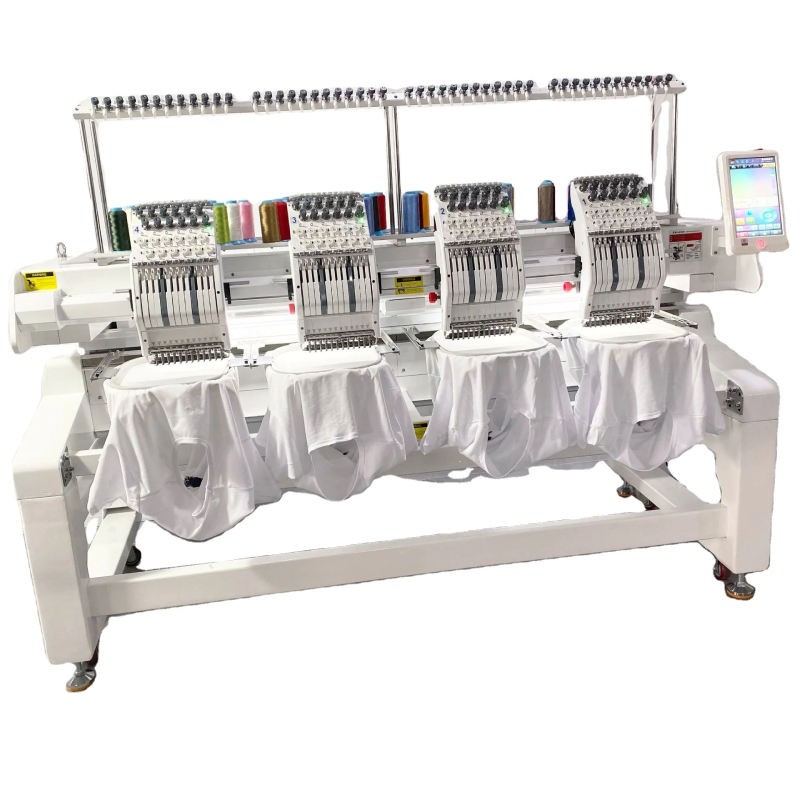
If you’ve ever scaled custom apparel, you already know a professional embroidery machine is less “nice-to-have” and more “oxygen.” The model I’ve been testing—Embroidery Machines Computerized 4 head 12 needle New Second Hand Embroidery Machine—comes out of Building A, Runjiang Huigu Building, Shijiazhuang City, Hebei Province. It’s the sort of stout, practical unit shops keep for years. And yes, it does caps, tees, flats—without drama.
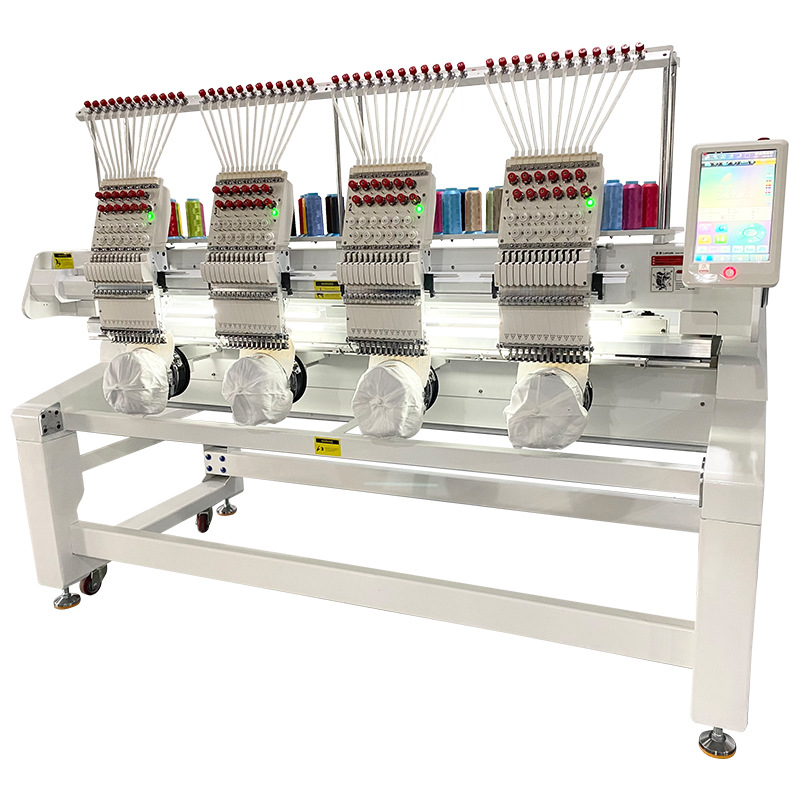
Real-world? It’s a 4-head system with 12 needles per head (15 optional), 400×680 mm flat embroidery area available, and that cap/T-shirt/garment versatility many customers say is “the difference between profit and panic.” Interface comes in 13 languages, which, surprisingly, speeds onboarding for mixed teams. I like the balanced frame—less vibration than I expected at mid-to-high stitch speeds.
Quick Specs (≈ values reflect workshop conditions)
| Heads / Needles | 4 heads / 12 needles (15 optional) |
| Embroidery Area | Cap/T-shirt/garment frames; flat up to ≈400 × 680 mm |
| Stitch Speed | ≈ 300–1,200 SPM (real-world use may vary) |
| Interface | 13-language UI; USB design import; on-board pattern memory |
| Materials | Polyester/Rayon thread, metallics (with tension tweaks), standard stabilizers |
| Service Life | Designed for ≈ 20,000–30,000 hours with scheduled maintenance |

Process Flow I’d Recommend
Digitizing (DST/EXP) → Thread/Needle Selection (75/11–80/12 for polyester; upsize for twill/denim) → Stabilizer (tear-away for caps, cut-away for knits) → Hooping (cap driver or flat frame) → Tension & Presser Foot calibration → Test Swatch → Production Run → QC (thread density, pull-test, color fastness).
Testing against common standards helps: colorfastness and wash durability following ISO 105-C06, and for the shop’s electrical safety we benchmark against IEC 60204-1. In a recent 8-hour endurance run at ≈850 SPM, we logged 0–2 thread breaks per head (polyester 40 wt.), ambient 23°C—solid, to be honest.
Where It Fits
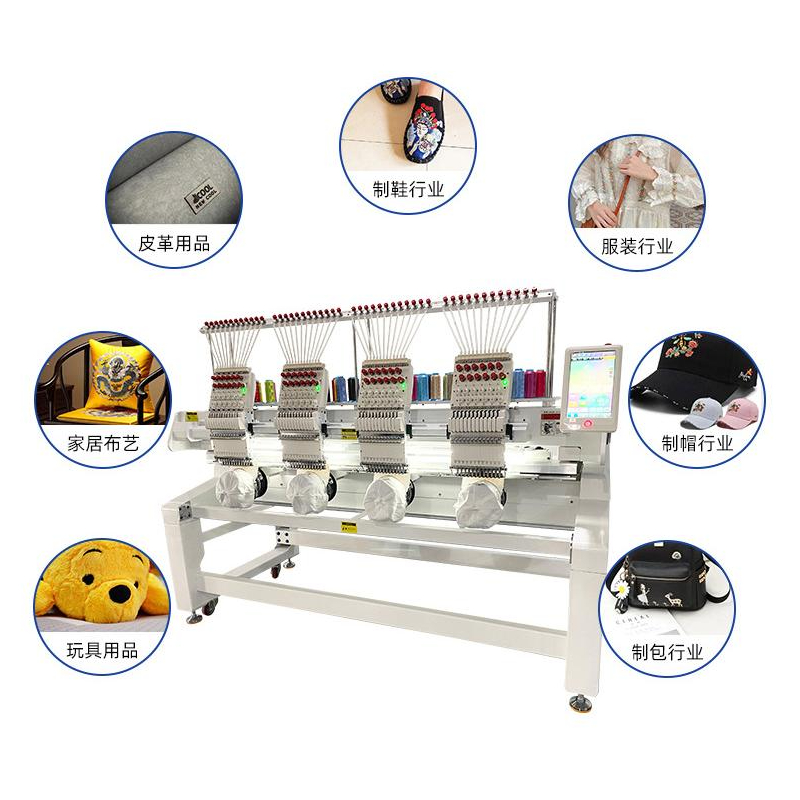
- Apparel decoration: polos, workwear, team kits
- Headwear: structured/unstructured caps (low-profile cap driver is friendly)
- Patches and badges: twill + merrow edge finishing
- Promotional textiles: tote bags, fleece, towels
- Denim and heavy fabrics (with proper needles and stabilizers)
Feedback from small shops is consistent: lower learning curve thanks to the multilingual UI. Larger contract decorators like the predictable repeatability. I guess that’s why this professional embroidery machine keeps popping up in busy Midwest and EU shops.
Vendor Landscape (informal snapshot)
| Vendor | Typical Config | Strengths | Notes |
|---|---|---|---|
| XTPFSM (this model) | 4-head, 12/15-needle; 400×680 mm flat | Value, multilingual UI, cap/tee versatility | Good cost-per-head; parts availability improving |
| Tajima | Multi-head, premium | Top build, ecosystem | Higher initial cost |
| Barudan | Industrial multi-head | Durability, precision | Training recommended |
| Ricoma | Shop-friendly multi-head | Support network | Specs vary by region |
Case Notes and QC
Case A (Teamwear): 300 polyester jerseys, 3-color crest, 0.35 mm satin columns. Average stitch count 11,800. Throughput ≈ 48–52 pcs/hr across 4 heads. Post-wash (ISO 105-C06) color shift ΔE ≈ 0.8—barely visible.
Case B (Cap Run): 220 structured caps, 3D puff on foam. Needed needle upsizing and tighter top tension. Break rate dropped from 1/1,200 to 1/4,500 stitches after tuning. Lesson: stabilizer choice matters more than you think.
Compliance and Support
Look for CE conformity (Machinery Directive 2006/42/EC) and electrical safety per IEC 60204-1. Thread and backing in contact with skin? Many buyers ask for OEKO-TEX Standard 100-certified consumables. For QA, keep a stitch log and schedule oiling per manufacturer intervals. It seems dull, but it’s why a professional embroidery machine pays back in year two, not year five.
References:
- ISO 105-C06: Textiles — Tests for colour fastness to domestic and commercial laundering — https://www.iso.org/standard/55827.html
- IEC 60204-1: Safety of machinery — Electrical equipment of machines — https://webstore.iec.ch/publication/6347
- EU Machinery Directive 2006/42/EC — https://eur-lex.europa.eu/legal-content/EN/TXT/?uri=celex%3A32006L0042
- OEKO-TEX Standard 100 — https://www.oeko-tex.com/en/our-standards/oeko-tex-standard-100
Latest news
-
How to Find the Best Computerized Machine Embroidery Suppliers
NewsApr.16,2026
-
Professional Computerized Machine Embroidery Service for Brands
NewsApr.09,2026
-
Selecting The Ideal Computerized Machine Embroidery Factory For Your Business
NewsApr.07,2026
-
Choosing a Reliable Computerized Machine Embroidery Manufacturer for Optimal Results
NewsApr.04,2026
-
Exploring Premier Computerized Embroidery Machine Factories for Quality Production
NewsMar.31,2026
-
Find Your Ideal Computerized Embroidery Machine Supplier with XT PFSM
NewsMar.28,2026

Copyright © 2026 Xingtai Pufa Trading Co., Ltd All Rights Reserved. Sitemap | Privacy Policy | Top Blog | Global Service