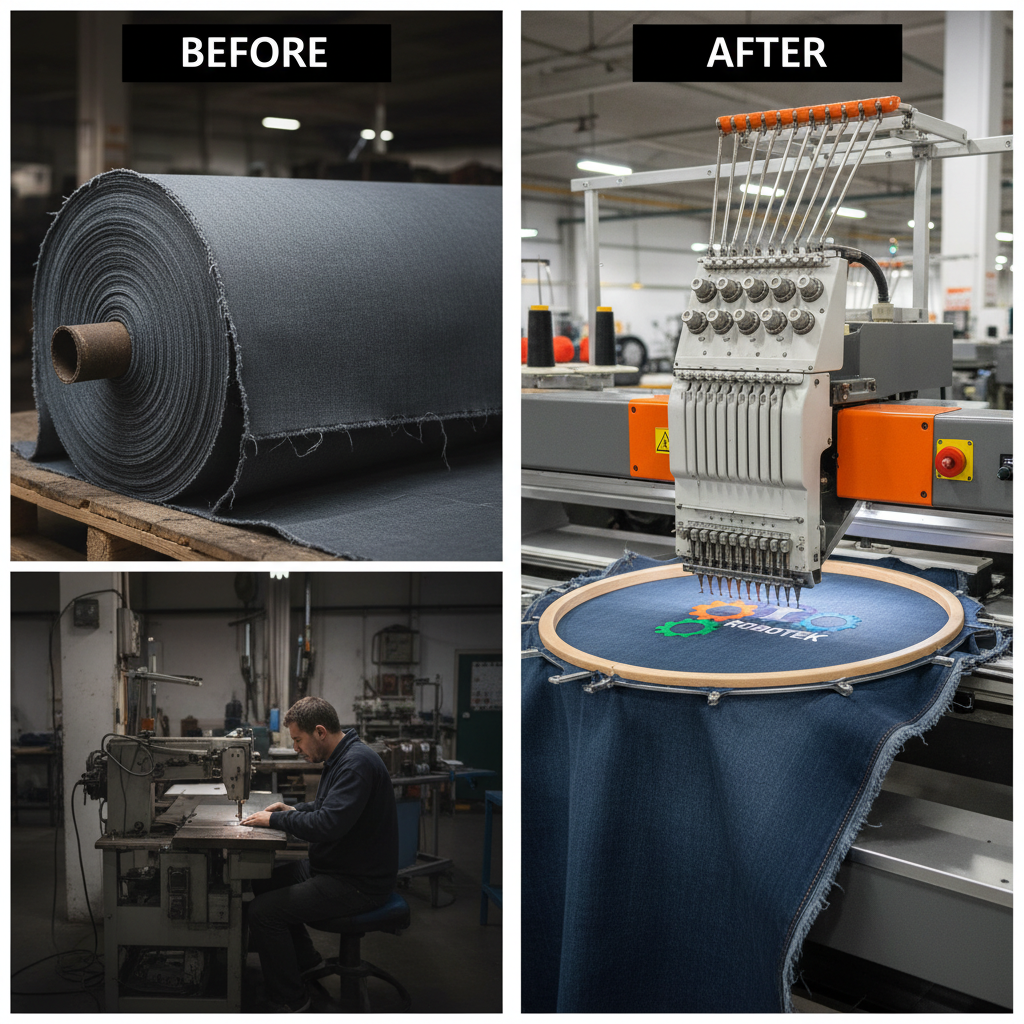
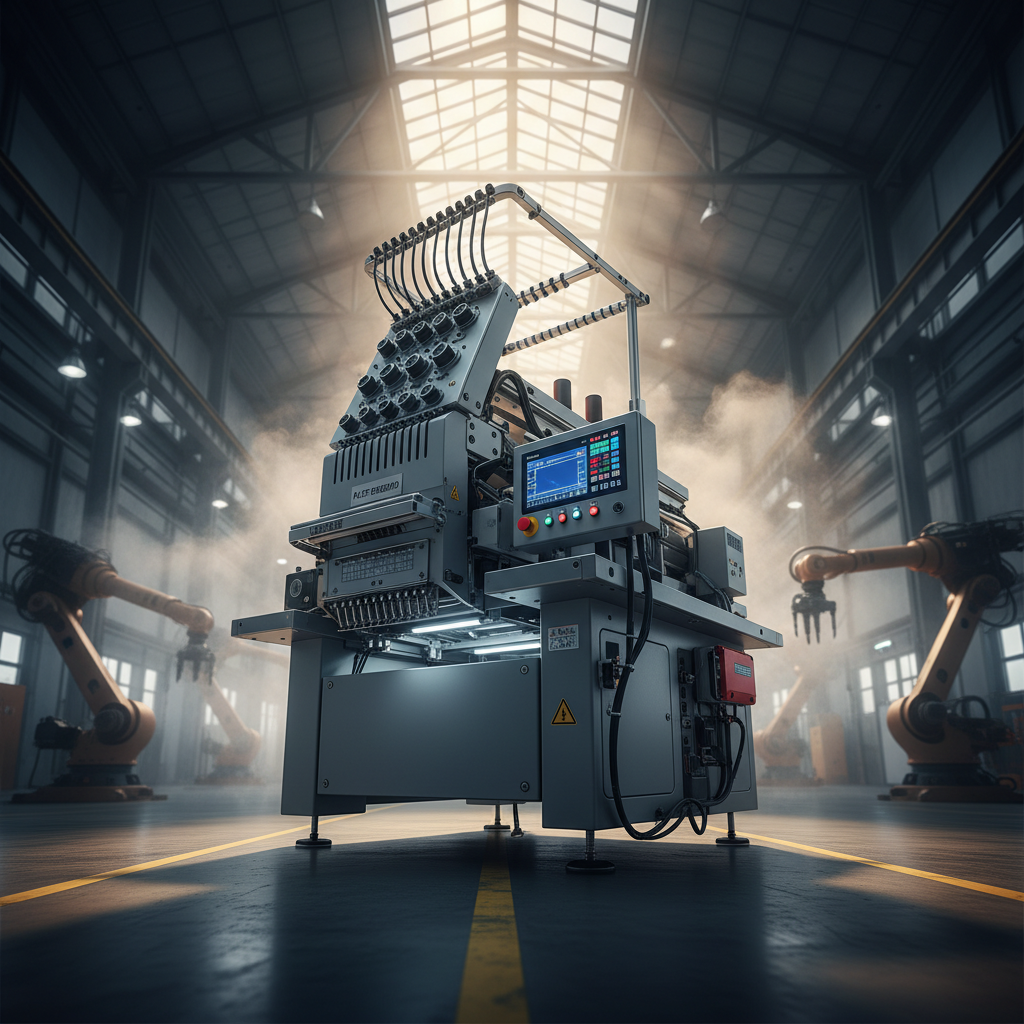
The 6 needle embroidery machine represents a significant advancement in automated textile production, offering increased efficiency and versatility compared to traditional single-needle machines. Its ability to simultaneously embroider multiple designs or colors dramatically reduces production time and expands creative possibilities. Understanding the capabilities and applications of this technology is crucial for businesses looking to optimize their embroidery processes and meet growing market demands.
Globally, the textile industry is a major economic driver, employing millions and contributing significantly to international trade. The demand for customized and high-quality embroidered products continues to rise, fueled by fashion trends, promotional merchandise, and personalized apparel. A 6 needle embroidery machine addresses this demand by providing a scalable and cost-effective solution for businesses of all sizes.
From small-scale home-based businesses to large-scale commercial operations, the 6 needle embroidery machine is becoming increasingly prevalent. Its ability to handle complex designs and diverse fabric types positions it as a vital tool for staying competitive in a dynamic market. Exploring its features and potential benefits is essential for anyone involved in the embroidery and textile industries.
Introduction to 6 Needle Embroidery Machine
A 6 needle embroidery machine represents a significant leap forward in embroidery technology, enabling the simultaneous use of up to six different thread colors during a single embroidery process. This dramatically increases efficiency and allows for more complex and vibrant designs. The ability to switch between colors without manual intervention is a key benefit for both small businesses and large-scale production facilities.
These machines are designed to handle a variety of fabrics and applications, from clothing and accessories to home décor and promotional items. The precision and reliability of modern 6 needle embroidery machines ensure consistently high-quality results, minimizing waste and maximizing productivity.
Global Relevance and Industry Context
The global textile industry is a multi-trillion-dollar market, with embroidery representing a significant and growing segment. According to Statista, the global embroidery market is projected to reach \$4.8 billion by 2028. This growth is driven by increasing demand for personalized products, fast fashion trends, and the rising popularity of custom branding. A 6 needle embroidery machine allows businesses to capitalize on these trends by offering faster turnaround times and more intricate designs.
Many regions, particularly in Asia (China, India, Vietnam), are major hubs for textile manufacturing and embroidery. These countries benefit from lower labor costs and established infrastructure. However, increased automation, powered by machines like the 6 needle embroidery machine, is becoming increasingly important for maintaining competitiveness even in these regions. This helps offset rising labor costs and ensure consistent product quality.
A significant challenge within the embroidery industry is the need for efficient, cost-effective production. Manual embroidery is time-consuming and labor-intensive, making it difficult to meet large-volume orders and maintain profitability. The 6 needle embroidery machine directly addresses this challenge by automating a significant portion of the embroidery process, leading to increased productivity and reduced costs.
Defining the 6 Needle Embroidery Machine
A 6 needle embroidery machine is an automated textile decorating machine capable of creating intricate designs on fabric using six different threads simultaneously. Unlike traditional single-needle machines, it significantly reduces the need for manual thread changes, allowing for faster and more complex designs. This makes it ideal for businesses requiring high-volume or multi-colored embroidery work.
The core function of a 6 needle embroidery machine lies in its ability to precisely control the movement of multiple needles, guided by pre-programmed designs. These designs are typically created using specialized embroidery software and transferred to the machine via USB or network connection. The machine then automatically stitches the design onto the fabric, following the programmed path with remarkable accuracy.
This technology connects directly to the modern manufacturing landscape and addresses a vital need for efficient and customizable textile production. Whether it’s creating branded apparel for corporate events or producing personalized gifts, the 6 needle embroidery machine empowers businesses to deliver high-quality, customized products quickly and efficiently, satisfying the growing demand for personalized goods.
Key Factors and Core Components
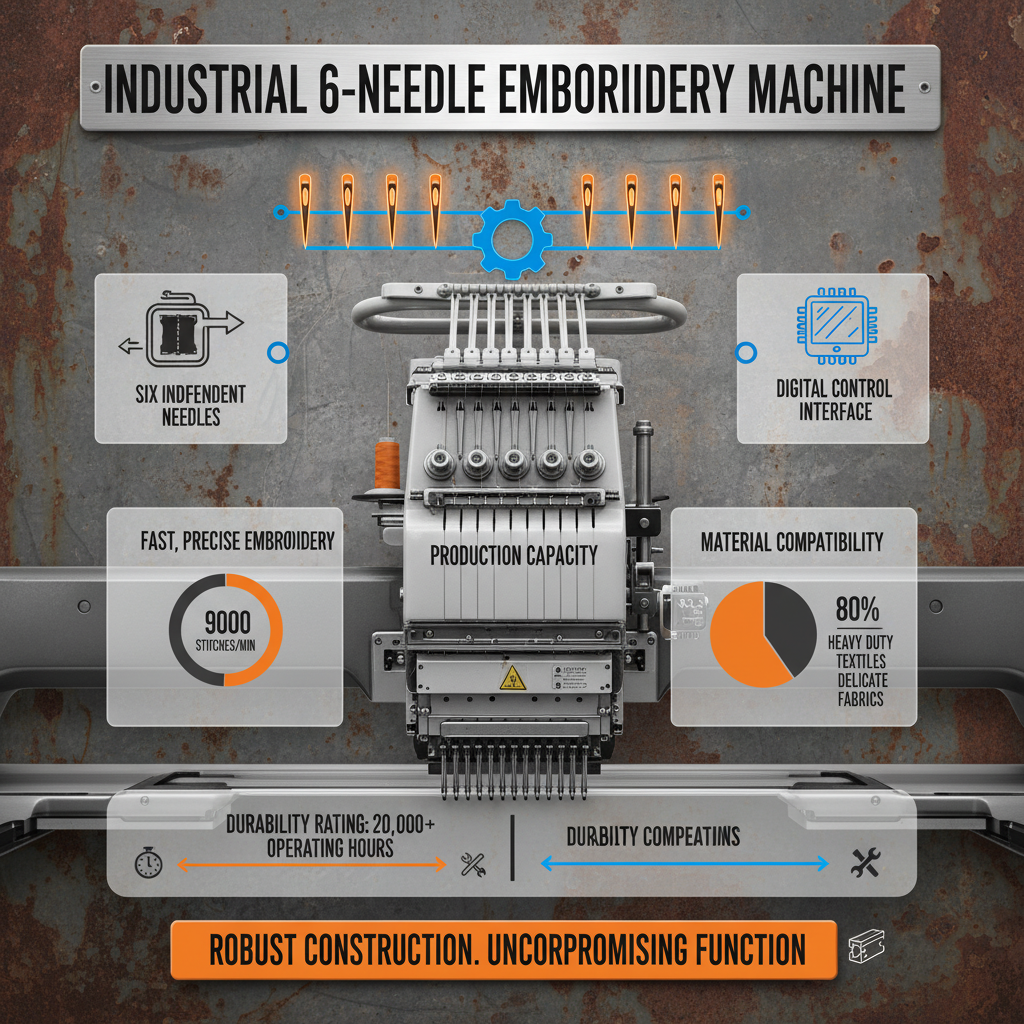
Several key factors contribute to the effectiveness of a 6 needle embroidery machine. Durability is paramount, as these machines are often used extensively in demanding production environments. High-quality components and robust construction are essential for ensuring long-term reliability and minimizing downtime.
Speed and Efficiency are also crucial. Modern 6 needle machines can achieve impressive stitching speeds, significantly reducing production time. Features like automatic thread trimming and color changes further enhance efficiency.
6 Needle Embroidery Machine Performance Metrics
Global Applications and Use Cases
6 needle embroidery machines are used extensively in a wide range of industries globally. In the apparel industry, they are used to customize clothing with logos, designs, and monograms. Fashion designers utilize them to create intricate embellishments and unique textile art. Furthermore, they play a crucial role in creating promotional merchandise, such as branded caps, bags, and uniforms.
In remote industrial zones, where access to skilled labor might be limited, the 6 needle embroidery machine provides a reliable and efficient solution for textile production. This is especially valuable in developing countries striving to establish their own manufacturing capabilities. They are also utilized by home-based businesses and craftspeople, enabling them to offer personalized embroidery services to local customers.
Advantages and Long-Term Value
The advantages of investing in a 6 needle embroidery machine are numerous. Firstly, it delivers significant cost savings through increased production speed and reduced labor requirements. Secondly, it promotes sustainability by minimizing waste and enabling the creation of durable, long-lasting products.
Beyond the practical benefits, these machines foster innovation and allow businesses to offer unique, high-quality products that differentiate them from competitors. They enhance brand reputation by delivering consistently professional results. The increased efficiency and reliability also translate to increased trust from customers.
Future Trends and Innovations
The future of 6 needle embroidery machine technology is poised for further advancements. Integration with Artificial Intelligence (AI) is expected to automate design creation and optimize stitching parameters. Digital transformation will allow for seamless connectivity with online ordering systems and inventory management.
Sustainable materials and eco-friendly inks will become increasingly important, aligning with growing consumer demand for environmentally responsible products. Automation, coupled with cloud-based design software, will enable remote monitoring and control of machines, increasing flexibility and efficiency.
We're also seeing a trend toward more sophisticated multi-needle machines (8, 10, or even more needles), allowing for even greater design complexity and color variation. These advancements will continue to shape the future of the embroidery industry, driving innovation and enhancing capabilities.
FAQS
The primary difference is speed and complexity. A 6 needle machine can use up to six colors simultaneously, eliminating the need for frequent thread changes. This significantly reduces production time for multi-colored designs. A single-needle machine requires manual thread changes for each color, making it less efficient for intricate designs. The 6 needle machine also offers increased design flexibility and allows for more complex patterns.
Most modern 6 needle embroidery machines are versatile and can handle a wide range of fabrics, including cotton, polyester, denim, leather, and more. However, the appropriate needle type, thread weight, and stabilizer are crucial for achieving optimal results. It's essential to select the correct settings based on the fabric's weight and texture to prevent damage or puckering.
With regular maintenance, including cleaning, lubrication, and timely replacement of worn parts, a high-quality 6 needle embroidery machine can last for 10-15 years or even longer. Regular preventative maintenance is key to maximizing the machine’s lifespan and ensuring consistent performance. This includes oiling moving parts, cleaning the bobbin area, and calibrating the machine periodically.
Embroidery machines usually require digitizing software to create designs and convert them into a format the machine can understand. Popular software options include Wilcom EmbroideryStudio, Tajima DG/ML by Pulse, and Embrilliance Essentials. These programs allow users to create, edit, and manage embroidery designs, as well as send them to the machine for stitching.
While some machines are relatively user-friendly, proper training is essential to operate a 6 needle embroidery machine effectively and avoid costly mistakes. Training typically covers machine operation, design loading, thread selection, fabric stabilization, and basic maintenance. Online tutorials, workshops, and vendor-provided training programs are available.
The power consumption of a 6 needle embroidery machine varies depending on its size, features, and usage. Generally, they range from 200 to 500 watts. It’s essential to ensure the machine is properly grounded and connected to a dedicated electrical circuit to prevent power surges or fluctuations. Energy-efficient models are also becoming available, offering reduced power consumption.
Conclusion
In conclusion, the 6 needle embroidery machine has revolutionized the textile industry, providing businesses with a powerful tool for efficient, high-quality, and customizable embroidery production. Its ability to handle multiple colors, diverse fabrics, and complex designs makes it an invaluable asset for a wide range of applications, from apparel and promotional merchandise to home décor and personalized gifts. Investing in this technology offers significant cost savings, improved productivity, and enhanced brand reputation.
As technology continues to evolve, we can expect even more sophisticated 6 needle embroidery machines with integrated AI, cloud connectivity, and sustainable features. Embracing these innovations will be crucial for businesses looking to stay competitive in a dynamic market and meet the growing demand for personalized and eco-friendly products. For further information and to explore our range of 6 needle embroidery machines, visit our website: 6 needle embroidery machine.