The global textile industry is undergoing a massive digital transformation, shifting from manual artistry to high-precision automation. At the heart of this evolution is the emergence of the modern embroidery machine computerized factory, which integrates advanced software with robust hardware to deliver unmatched consistency and speed in garment decoration. By leveraging programmable logic, these facilities can now execute complex designs that were once impossible to replicate at scale, ensuring that every stitch is placed with mathematical precision.
For entrepreneurs and established studios alike, the ability to source equipment from a reliable embroidery machine computerized factory means gaining access to tools that reduce human error and drastically lower production costs. Whether it is for corporate branding, high-fashion couture, or personalized accessories, the transition to computerized systems allows for a seamless workflow from digital design file to physical fabric. This technological leap is not just about speed; it is about expanding the creative possibilities for designers worldwide.
Understanding the specifications of a professional-grade setup, such as the PF-MINI0601, allows users to maximize their ROI. By partnering with a dedicated embroidery machine computerized factory, businesses can ensure they receive machines capable of handling caps, garments, and flat embroidery with a high-definition touch screen interface and automatic trimming features.
The Technical Foundations of Computerized Embroidery
Modern computerized embroidery is built upon the synergy of high-precision servo motors and intuitive control software. In a professional embroidery machine computerized factory, the focus is on creating a system where the operator can import DST format patterns via USB and immediately preview the embroidery track. This eliminates guesswork and reduces material waste, as the high-definition true color screens allow for real-time monitoring of the stitching process.
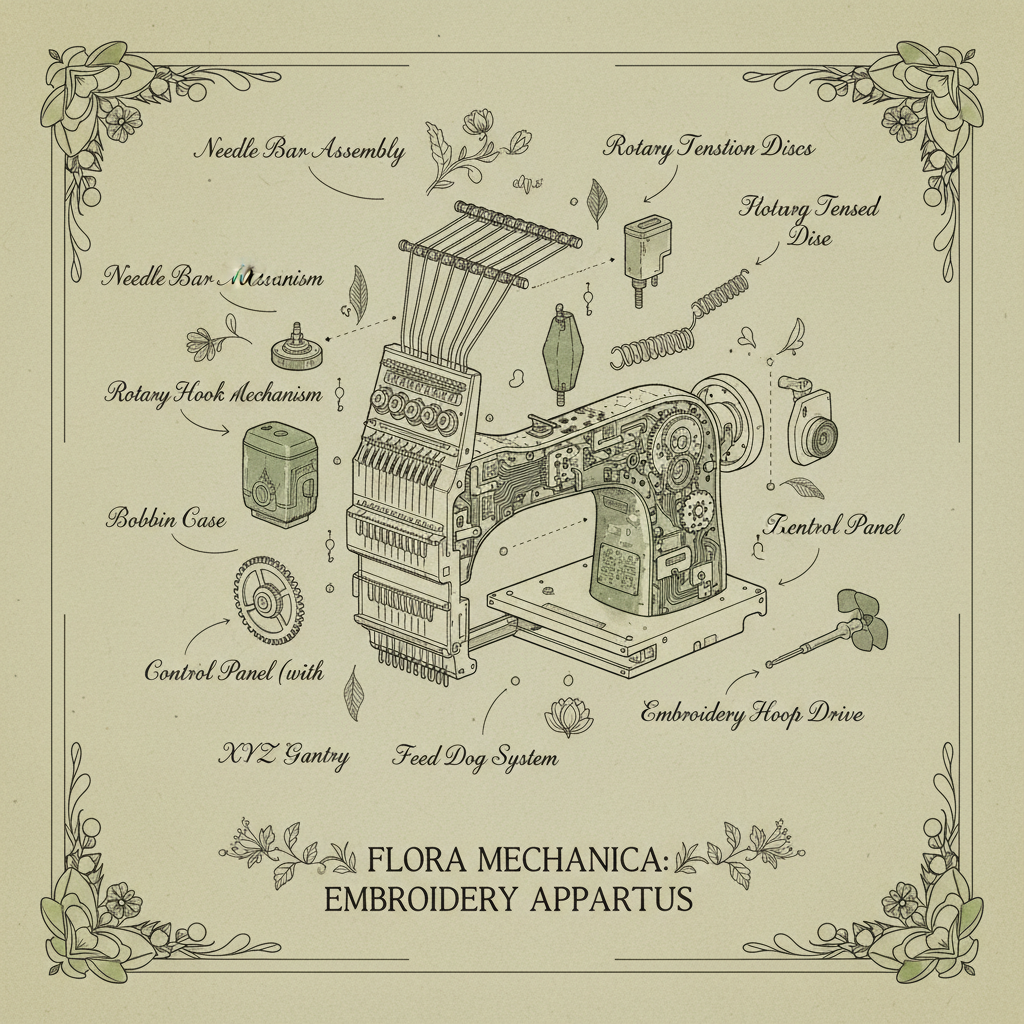
The technical foundation also extends to the mechanical versatility of the machine. For instance, the PF-MINI0601 model supports multiple needle options (9, 12, or 15 needles), allowing for complex color palettes without frequent manual intervention. The integration of automatic color changes and automatic trimming ensures that the workflow remains uninterrupted, which is critical for maintaining high throughput in a commercial environment.
Core Components for Industrial Efficiency
To achieve industrial-grade output, the hardware must be rugged yet precise. A key component is the Servo Motor, which provides the necessary torque and stability for speeds reaching 1000 RPM on caps and garments. This ensures that the machine can handle high-density patterns without skipping stitches or causing fabric puckering.
The control system, often featuring Dahao or RUI NENG high-definition screens, acts as the brain of the operation. These systems support multiple languages, including English, French, German, and Arabic, making the technology accessible to a global market. The touch-screen interface simplifies complex tasks such as setting the origin, adjusting acceleration/deceleration, and managing border designs.
Furthermore, the quality of the hook and the spindle is paramount. Using "Good hook" technology ensures smooth thread transition and reduces the likelihood of thread breaks. When these components are engineered within a specialized embroidery machine computerized factory, they are tested for longevity and consistency, ensuring the machine can run for hours on end in a start-up shop or a large studio.
User-Centric Design for Beginners and Pros
One of the biggest barriers to entry in the textile industry is the steep learning curve of machinery. However, a modern embroidery machine computerized factory now prioritizes "Easy to Use" principles. New users can typically learn to operate these machines in less than one hour, thanks to intuitive interfaces and the availability of professional engineer guidance.
The transition from a single-needle hobby machine to a multi-needle system from a reputable embroidery machine computerized factory is a pivotal moment for many designers. It transforms a hobby into a profit-generating business by allowing the creation of complex, multi-colored designs on various substrates, including caps and clothing, without the need for constant thread changes.
To support this user-centric approach, these machines come with rich accessories that are ready for use straight out of the box. From professional standard consumables to versatile blanks, the goal is to empower the user to handle different types of embroidery business—from small customized orders to larger batch productions—with minimal stress and maximum efficiency.
Scalability and Production Performance
Scalability is the bridge between a home-based side hustle and a commercial enterprise. By starting with a single-head machine like the PF-MINI0601, entrepreneurs can validate their designs and build a client base. As demand grows, the infrastructure provided by an embroidery machine computerized factory allows for an easy transition to multi-head machines, such as two-head, four-head, or six-head configurations, to multiply output without multiplying labor.
Performance is measured not just in RPM, but in the reliability of the "Automatic" features. Automatic trimming and color changing are not just conveniences; they are productivity multipliers. When a machine can handle these tasks autonomously, the operator can focus on prepping the next garment, effectively doubling the hourly production rate.
Production Efficiency Comparison by Machine Type
Global Applications and Market Versatility
The versatility of computerized embroidery machines allows them to be deployed across diverse industries. In the corporate sector, they are used for high-volume polo shirt and cap branding. In the creative arts, studios use them to push the boundaries of textile art, creating intricate patterns that serve as a fusion of technology and fashion. Because these machines are designed by an embroidery machine computerized factory to be adaptable, they can switch between flat embroidery and cap embroidery with minimal setup time.
Geographically, these machines are empowering entrepreneurs in emerging markets. From Turkey to Thailand, and Portugal to Arabia, the multi-language support and robust shipping logistics enable small business owners to import commercial-grade technology. This democratization of production tools allows local artisans to compete on a global scale by offering high-quality, computerized precision in their local garments.
Long-Term Value and Operational Sustainability
Investing in a machine from a professional embroidery machine computerized factory provides more than just immediate production capacity; it offers long-term operational security. With lifetime online support via WhatsApp, Skype, and Email, users are never left stranded. The availability of video tutorials for disassembly, assembly, and operation ensures that the machine remains in peak condition throughout its lifecycle.
Sustainability in this context refers to both environmental and financial longevity. By utilizing DST format and digital previews, the waste of fabric and thread is significantly reduced. Furthermore, the ability to customize the machine's brand name and color allows businesses to integrate the equipment into their own corporate identity, adding an element of professional branding to their facility.
Finally, the secure transaction process through platforms like Alibaba ensures that the investment is protected. The phased release of funds—only after the buyer confirms the detailed information—builds a foundation of trust between the factory and the end-user, which is essential for long-term partnerships and future equipment upgrades.
Future Innovations in Automated Stitching
The future of the embroidery machine computerized factory lies in deeper integration with AI and cloud computing. We are moving toward a world where patterns can be updated remotely and machines can self-diagnose mechanical issues before they lead to downtime. The current shift toward higher-definition true color screens is just the first step toward more immersive, AR-guided setup processes for beginners.
Materials science is also evolving, with new threads and fabrics requiring more precise tension control and needle configurations. The next generation of machines will likely feature adaptive tension systems that automatically adjust based on the fabric density detected by sensors, further reducing the need for manual "inching" and trial-and-error.
As automation continues to advance, the focus will shift toward "green" manufacturing. This includes the use of energy-efficient servo motors that reduce power consumption during idle periods and the development of biodegradable components. The goal is to maintain high-speed production while minimizing the ecological footprint of the textile decoration industry.
Comparative Analysis of Computerized Embroidery Machine Tiers
| Machine Tier |
Primary User |
Efficiency Score |
Key Advantage |
| Single Head Mini |
Beginners / Hobbyists |
6/10 |
Low Entry Cost |
| Single Head Pro |
Start-up Shops |
7/10 |
Versatile Application |
| Two Head System |
Small Businesses |
8/10 |
Balanced Throughput |
| Four Head System |
Medium Enterprises |
9/10 |
High Batch Speed |
| Six Head System |
Industrial Studios |
10/10 |
Maximum ROI |
| Customized Multi-Head |
Large Factories |
10/10 |
Tailored Workflow |
FAQS
We provide a comprehensive support package including an English teaching manual and a series of detailed videos. These videos cover every essential step, from machine disassembly and assembly to full operational guidance. Additionally, professional engineers are available to provide one-on-one teaching to ensure you are confident in using your machine within the first hour.
Yes, our embroidery machine computerized factory offers extensive customization options. We can customize the brand name on the machine, change the machine color to match your studio's aesthetic, and even help with designed unique patterns. Simply provide your requirements during the inquiry process to receive a tailored solution.
We provide lifetime online technical support via WhatsApp, Skype, WeChat, and Email. If a problem arises, our engineers can join a video call at any time to diagnose the issue in real-time. In extreme cases, our engineers are also available to travel overseas to provide on-site assistance to our customers.
We partner with reliable forwarder agents who can handle the entire logistics chain, shipping items by sea, air, or express directly to your doorstep. We help you choose the most suitable shipping service based on your budget and urgency. Additionally, we provide free shipping to your convenient sea port or to your own agent in China.
All transactions are processed through the Alibaba platform to protect the buyer's interests. Your payment goes directly to the Alibaba bank account and is only released to the factory after you have received the items and confirmed the detailed information, ensuring a secure and transparent transaction.
To get the most accurate quote, please include your required embroidery area, the number of needles you need (e.g., 9, 12, or 15), the number of heads, the desired head interval, and any other specific functions you require for your business model.
Conclusion
The integration of high-precision hardware and intuitive software from a specialized embroidery machine computerized factory has revolutionized the textile industry. From the PF-MINI0601's accessibility for beginners to the massive throughput of multi-head industrial systems, these machines provide the scalability and reliability needed to turn creative designs into commercial success. By focusing on automatic trimming, multi-language support, and robust technical assistance, the industry has lowered the barrier to entry for entrepreneurs worldwide.
As we look toward a future of AI-driven design and sustainable manufacturing, the importance of partnering with a factory that values both innovation and customer support cannot be overstated. Whether you are starting a part-time business or scaling a professional shop, investing in computerized embroidery technology is a strategic move toward efficiency and growth. Visit our website to explore our full range of solutions: www.xtpfsm.com