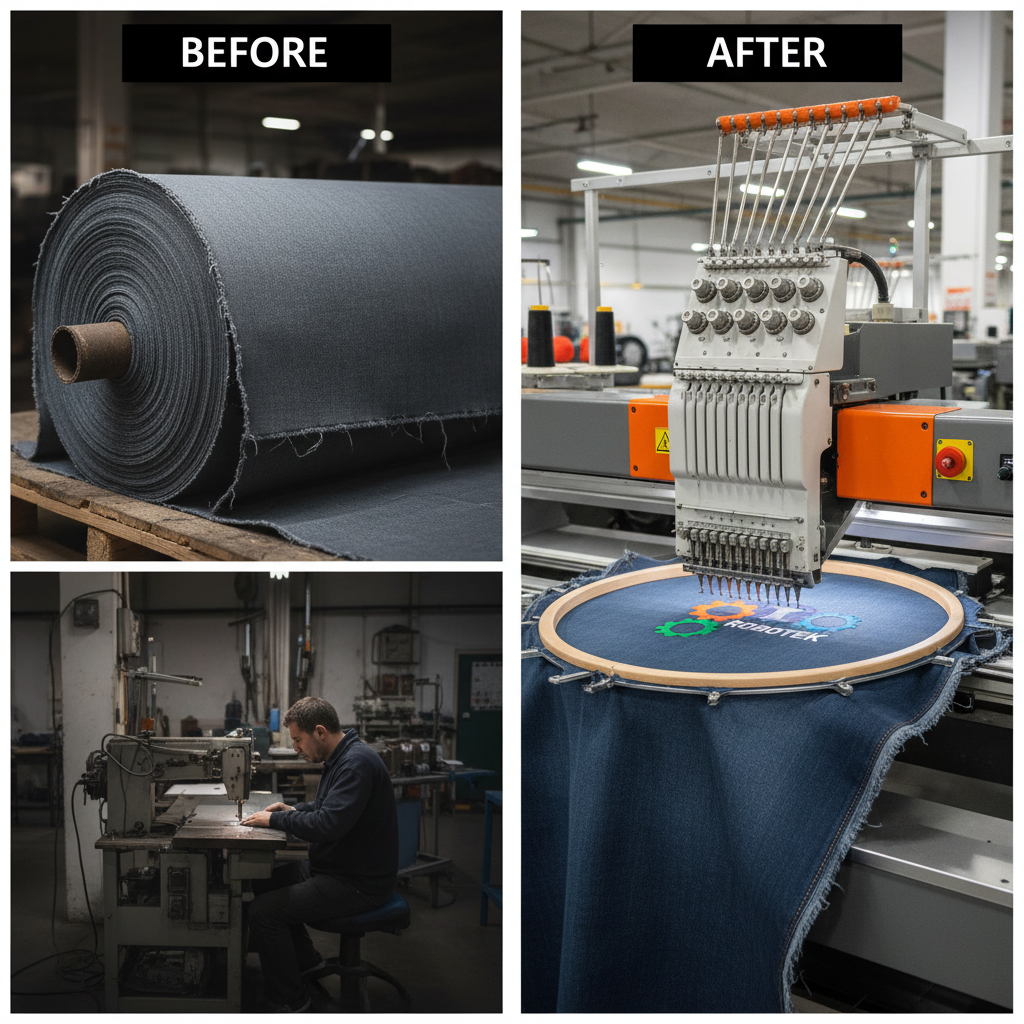
The global textile industry has undergone a massive transformation, shifting from manual artistry to high-precision automated production. Central to this evolution are embroidery machine professional factories, which provide the critical infrastructure needed for brands to scale their designs without compromising on intricate detail. By bridging the gap between creative vision and industrial output, these manufacturers ensure that high-quality embellishments are accessible for everything from luxury couture to corporate uniforms.
Understanding the operational standards of embroidery machine professional factories is essential for any business looking to optimize its supply chain. These facilities do not merely assemble hardware; they integrate advanced servo motors, high-definition color screens, and precision hooks to ensure every stitch is consistent. As the demand for customized apparel grows, the role of these factories becomes pivotal in maintaining the balance between rapid turnaround times and the high-fidelity execution of complex patterns.
Ultimately, partnering with established embroidery machine professional factories allows entrepreneurs to mitigate the risks associated with production bottlenecks. Whether utilizing a single-head machine for bespoke samples or a multi-head system for mass production, the technical support and engineering expertise provided by these factories are what enable a small studio to evolve into a global brand. The focus on durability, scalability, and user-centric design makes these industrial hubs the heartbeat of modern garment decoration.
Global Context of Embroidery Machine Professional Factories
On a global scale, the textile machinery sector is a multi-billion dollar industry, with embroidery machine professional factories serving as the primary drivers of technological adoption. According to international trade data, the shift toward "smart factories" has seen an increase in the integration of IoT and automated trimming systems, reducing waste by nearly 15% in high-volume environments. This global shift is not just about speed, but about meeting the ISO standards for precision and safety that modern consumers expect.
However, many emerging markets still struggle with outdated equipment that leads to high thread-breakage rates and inconsistent tension. This challenge is where professional factories step in, providing high-speed servo motor systems and intuitive control panels that lower the barrier to entry for new operators. By standardizing the production of single-head and multi-head machines, these factories ensure that a garment produced in one part of the world maintains the same quality as one produced elsewhere.
Defining the Standards of Professional Embroidery Facilities
When we speak of embroidery machine professional factories, we are referring to specialized manufacturing hubs that blend mechanical engineering with software development. These facilities are defined by their ability to produce machines that can handle a diverse range of materials—from delicate silk to heavy-duty denim—while maintaining a constant speed of up to 1200 RPM. A professional factory doesn't just sell a machine; they provide a complete ecosystem including DST format compatibility and multi-language support.
The connection between these factories and modern industrial needs is rooted in the demand for "mass customization." In an era where consumers want personalized apparel, these factories produce modular machines (such as two-head, four-head, and six-head options) that allow businesses to scale their capacity based on real-time demand. This flexibility is crucial for maintaining lean inventory levels while maximizing output.
Furthermore, the humanitarian and economic impact of these professional facilities is significant. By producing affordable yet high-performance equipment, they enable small-scale entrepreneurs in developing regions to start their own garment businesses. The accessibility of "easy-to-use" interfaces means that a new operator can become proficient in less than an hour, democratizing the means of production in the textile world.
Core Components of Industrial Embroidery Hardware
The durability of equipment from embroidery machine professional factories begins with the spindle motor. The transition from clutch motors to high-torque servo motors has revolutionized the industry, allowing for quieter operation, lower energy consumption, and significantly higher precision during slow-running or inching movements.
Scalability is achieved through the versatility of the head configurations. Professional factories offer a spectrum from Single head machines for boutique work to Six head machines for industrial throughput. Each unit is equipped with high-definition true color screens (such as Dahao or Rui Neng systems) that allow operators to preview embroidery tracks and monitor stitch progress in real-time, ensuring zero-defect production.
Cost efficiency is further enhanced by automatic functions. Integrated automatic thread trimmers and automatic color change systems reduce the need for manual intervention, which in turn lowers labor costs. When combined with a large embroidery area (e.g., 400500mm), these components allow a single machine to handle everything from small cap logos to large-scale jacket back-pieces.
Practical Applications and Production Scalability
In real-world contexts, the output from embroidery machine professional factories is utilized across diverse sectors. In the corporate branding industry, multi-head machines are used to produce thousands of identical polo shirts with precision logos. In the fashion world, designers use single-head mini machines to iterate on complex prototypes before moving to full-scale production.
For instance, in remote industrial zones or small-town studios, the "Double Head" machine is often the sweet spot for growth. It allows a business to double its efficiency without the massive footprint of a six-head machine, making it an ideal choice for those transitioning from a hobbyist to a professional service provider.
Efficiency Ratings of Various Equipment from Embroidery Machine Professional Factories
Long-Term Value and Operational Reliability
The tangible benefits of investing in equipment from embroidery machine professional factories extend far beyond the initial purchase. Reliability is the cornerstone of profitability; a machine that prevents "hitting the frame" through smart mode switching (Cap vs. Flat) saves hours of downtime and prevents costly material waste. This technical reliability builds trust between the manufacturer and the end-user, ensuring that the business can meet tight deadlines without the fear of mechanical failure.
From a sustainability angle, professional factories are now integrating energy-efficient power supplies and durable components that extend the machine's lifespan to over a decade. The social impact is equally profound, as these machines empower designers to maintain their creative dignity by producing high-end work in-house rather than outsourcing to third parties. The combination of a 1200 SPM speed and a user-friendly interface means that innovation is no longer throttled by technical complexity.
Digital Transformation and Future Innovation
The future of embroidery machine professional factories lies in the total digitalization of the workflow. We are seeing a move toward cloud-based pattern management, where designers can upload a DST file to a remote server and have the machine in a different country begin stitching instantly. This "Industry 4.0" approach reduces the reliance on physical USB transfers and allows for real-time quality control from anywhere in the world.
Furthermore, the integration of AI is beginning to play a role in predictive maintenance. Future machines will likely alert operators to potential thread breaks or bobbin depletion before they occur, using sensors to analyze vibration and tension patterns. This shift toward "zero-downtime" production will further increase the competitive edge of professional factories.
Sustainability is also driving innovation, with a push toward using recycled threads and biodegradable stabilizers. Professional factories are redesigning their hook systems to minimize friction and heat, further reducing the energy footprint of each garment. As green energy becomes a global mandate, the transition to fully electric, low-emission embroidery hubs is inevitable.
Overcoming Technical Challenges in Mass Production
Despite the advancements, mass production still faces challenges such as thread tension instability on complex fabrics and the steep learning curve for advanced border designs. Professional factories address these by implementing "Mending Functions" (back and skip stitches under controller) and providing comprehensive video tutorials and English manuals. This educational approach ensures that the hardware's potential is fully realized by the operator.
Another common hurdle is the logistical complexity of importing heavy machinery. Leading embroidery machine professional factories now partner with reliable forwarders to provide door-to-door sea and air shipping, removing the customs barrier for international buyers. This end-to-end service transforms a simple transaction into a long-term business partnership.
Finally, the challenge of customization—such as unique machine colors or brand-name integration—is solved through flexible manufacturing lines. By offering customized needle counts (9/12/15) and specific embroidery areas, factories ensure that the equipment fits the specific business model of the client, rather than forcing the client to adapt to a rigid product line.
Comparative Analysis of Production Capacities by Machine Configuration
|
Machine Type
|
Target User
|
Primary Application
|
Efficiency Score
|
| Single Head Mini |
Boutique/Hobbyist |
Custom Samples |
6/10 |
| Two Head System |
Small Studio |
Small Batch Orders |
8/10 |
| Four Head Machine |
Mid-sized Shop |
Corporate Uniforms |
9/10 |
| Six Head Industrial |
Full Factory |
Mass Retail Production |
10/10 |
| Custom Cap Unit |
Headwear Specialist |
270 Degree Cap Embroidery |
7/10 |
| Flat Embroidery Mod |
Textile Artist |
Large Panel Decor |
8/10 |
FAQS
Professional factories provide comprehensive English manuals and a series of detailed instructional videos. These cover everything from initial disassembly and assembly to daily operation. Additionally, many suppliers offer a dedicated engineer to provide a one-hour crash course, ensuring beginners can start production almost immediately.
You don't need prior experience. Professional factories utilize reliable forwarding agents who can ship your embroidery machine via sea, air, or express directly to your doorstep. They can also provide free shipping to your preferred sea port or ship to your agent in China for free.
Most professional factories use platforms like Alibaba to protect buyer interests. Payments are held in an escrow-style account and only released to the factory after you have received the item and confirmed the shipping and quality details, ensuring a secure and transparent transaction.
Lifetime online support is standard, typically provided via WhatsApp, Skype, WeChat, or Email. For complex issues, engineers can conduct live video calls to troubleshoot. In rare and necessary cases, professional factories may even send engineers overseas to assist with on-site maintenance.
Yes, professional factories offer extensive customization options. This includes custom machine colors, adding your own brand name to the chassis, and designing unique patterns. You can also specify the number of needles, heads, and the exact embroidery area to fit your business needs.
The industry standard for professional embroidery machines is the DST format. Most machines feature USB ports for fast data transmission and are compatible with high-definition control panels that can read these files and preview the stitch track in real-time before the process begins.
Conclusion
In summary, the partnership between a growing textile business and embroidery machine professional factories is the most critical factor in achieving scalable, high-quality production. By integrating advanced servo technology, intuitive digital interfaces, and flexible head configurations, these factories enable businesses to move from simple sampling to industrial-grade manufacturing with minimal friction. The long-term value lies not just in the hardware, but in the comprehensive technical support and reliability that allow a brand to focus on design rather than mechanical troubleshooting.
Looking forward, the continued evolution of AI-driven maintenance and cloud-based design will further dissolve the barriers to entry in the garment decoration industry. For those looking to upgrade their capacity or start a new venture, investing in professional-grade equipment is the only way to ensure consistency and competitiveness in a global market. To explore the best options for your production needs, visit our website: www.xtpfsm.com